


Silent Collapse: Germany’s Fallen Facade Hides Unanswered Questions
POLICY WIRE — Ratingen, Germany — The rhythmic scrape of heavy machinery, usually a sign of progress in Europe’s economic engine, has been replaced by something far more sinister: the hushed,...

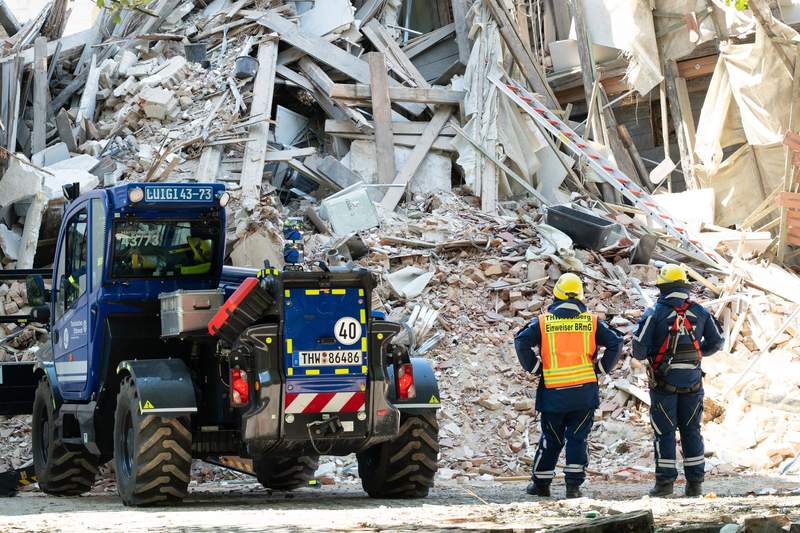
POLICY WIRE — Ratingen, Germany — The rhythmic scrape of heavy machinery, usually a sign of progress in Europe’s economic engine, has been replaced by something far more sinister: the hushed, methodical search for bodies. Amidst the jumbled concrete and twisted rebar of a collapsed industrial building near Ratingen, rescuers press on, their movements calibrated between urgency and the cold, hard science of structural integrity. It isn’t the kind of headlines Germany usually makes, known more for its meticulously engineered infrastructure than for spectacular structural failures.
Authorities concede that the prognosis for the trio of missing workers grows grimmer with each passing hour. A city that prides itself on order and an almost religious adherence to technical standards finds itself grappling with a scene of utter, unpredictable chaos. You’d think in a place like Germany, buildings simply didn’t fall down like this. But here we’re. It’s a sobering reminder that even the most robust systems can—and do—have breaking points.
Bernd Richter, head of the local fire and rescue operations, spoke with a weariness etched onto his face, visible even under the dust and grim of the operation. “Every shovel stroke, every piece of debris removed — it’s agonizingly slow. We’re fighting against the clock, against physics, — and against hope itself, but we won’t stop. We owe them that.” He paused, scanning the dangerous pile. “This isn’t Hollywood; it’s brutally real work.”
Because, really, what’s left when the ground gives way beneath your feet? In Germany, this kind of incident doesn’t just cause local shock; it sends ripples through the deeply ingrained cultural confidence in engineering and regulatory oversight. And let’s be honest, that confidence has always been a cornerstone of its international brand. Suddenly, those bedrock assumptions feel a little shaky.
Investigators, working alongside rescue teams, have begun the painstaking task of piecing together the catastrophe. Was it a material defect? A design flaw? Or, perhaps, a lapse in construction protocol—an unforgivable sin in a nation where precision is practically a birthright? The state prosecutor’s office has launched a formal inquiry, promising thoroughness. As well they should. Dr. Ingrid Kohl, an engineer with the State Building Authority, didn’t mince words. “This isn’t just a construction accident; it’s a profound breach of the trust we place in our infrastructure. We’ll leave no stone unturned to understand precisely what went catastrophically wrong here. No corners cut, no shortcuts taken, period.”
This particular incident hits harder for some than others. Many developing nations, like Pakistan, often look to countries like Germany as a benchmark for robust construction practices and stringent safety regulations. It’s a cruel twist when the supposedly ‘safer’ environments also yield such devastating results. Just last year, an estimated 1,500 construction workers perished in various site accidents across South Asia, as reported by the International Labour Organization (ILO)—figures that dwarf European numbers but highlight a global susceptibility to systemic failures. The methods and materials might differ, but the inherent dangers of raising structures to the sky remain a shared, unspoken burden across continents. Sometimes, the unseen shadows of construction risks stretch farther than anticipated, much like those quietly scrutinizing Asia’s air hubs for similar vulnerabilities.
The silence now hanging over Ratingen isn’t merely the quiet of a paused construction site. It’s the palpable hush of a community waiting, praying, — and undoubtedly questioning. They’re asking the hard questions that the architects and engineers, the inspectors and project managers, will eventually have to answer. Was this an isolated, tragic anomaly, or a canary in the coal mine for construction practices that have perhaps grown a bit too complacent, even here?
But the raw, human cost eclipses all else. Three families are adrift in a limbo of desperate uncertainty. Their futures, once tied to the diligent work of their loved ones, are now tangled in a nightmare of steel — and dust. And it serves as a stark reminder: buildings might seem solid, permanent even, but the lives that build them are profoundly fragile. A simple truth, brutally delivered.
What This Means
This collapse in Ratingen, while seemingly localized, carries weight far beyond its geographical coordinates. Politically, it immediately pressures state and federal authorities to re-evaluate construction safety protocols and regulatory enforcement. Germany prides itself on being an exemplar of engineering and safety; this incident directly challenges that narrative, potentially leading to increased scrutiny and tighter oversight in the construction sector, particularly for large-scale industrial projects. It might also spark debates within the broader European Union about standardized safety inspections, especially given the transnational nature of construction labor.
Economically, the immediate impact is a halt in operations, significant costs for rescue and demolition, and potentially massive insurance claims. Longer-term, if the investigation uncovers systemic issues or negligence, it could tarnish the reputation of implicated construction firms or even specific building materials, affecting contract bids and investment. Trust, once fractured, is incredibly expensive to rebuild. a perceived lapse in German engineering prowess could have subtle, negative effects on the competitiveness of German construction companies in international markets. It’s a high-stakes moment for the country’s industrial reputation and the governmental bodies charged with protecting its people and its image. This isn’t just about three missing souls; it’s about the very foundations of public trust — and economic standing.