
Phantom Fleet: Inside America’s Unseen Trucking Accountability Crisis
POLICY WIRE — Albuquerque, N.M. — It’s a sleight of hand played on America’s highways every single day, often with deadly consequences. Businesses dissolve into thin air, only to...

POLICY WIRE — Albuquerque, N.M. — It’s a sleight of hand played on America’s highways every single day, often with deadly consequences. Businesses dissolve into thin air, only to re-materialize moments later with fresh papers, scrubbed clean of their sins. We’re not talking about some elaborate con in a dark alley; this happens right out in the open, part of the nation’s sprawling, often unregulated, commercial trucking arteries. This quiet, disturbing maneuver — performed by so-called ‘chameleon carriers’ — keeps dirty operators rolling while safety records vanish, leaving a trail of grief and unanswered questions.
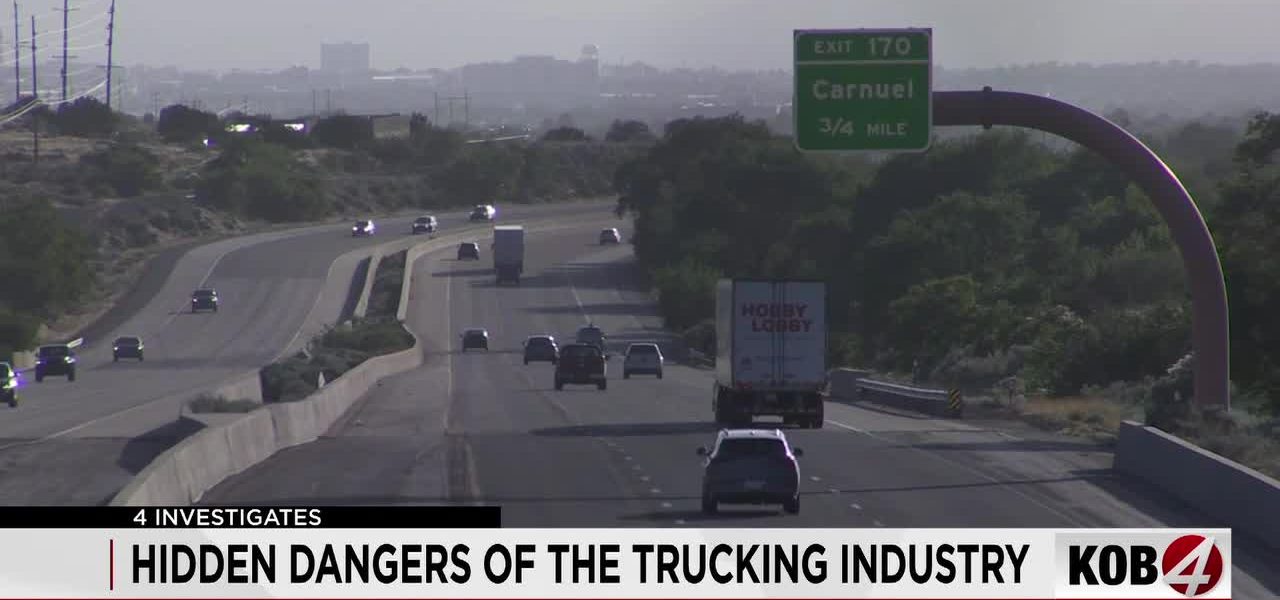
Take the grim incident that claimed Bernalillo County Sheriff’s Sgt. Michael Schlattman. A roadside stop turned deadly when a semi-truck plowed into his patrol unit. No braking detected before impact, authorities say. Speed wasn’t a factor. But failure to yield? Yeah, that one landed squarely. While investigators determined the trucking firm involved wasn’t a ‘chameleon’ in the typical sense (though it did have previous inspection issues), the tragedy peeled back layers of an industry where accountability often gets lost in the mail.
But the story gets thicker. That driver, Miguel Perez, a naturalized U.S. citizen, found his immigration status suddenly — and predictably — fodder for public speculation. Sheriff John Allen didn’t mince words about it. “There was a lot of outlandish comments,” Allen stated, swatting away the noise. “Everything checked out.” Still, the very presence of this rumor machine highlights another undercurrent: the increased reliance on ‘non-domiciled CDLs’ for non-citizens, a direct result of chronic driver shortages. Many of these folks, like those drawn from countries like Pakistan and other South Asian nations, enter an employment landscape with vastly different regulatory expectations than back home. It’s a classic case of demand creating murky incentives.
This whole mess stems from Washington’s grand experiment: the Motor Carrier Act of 1980. Its aim? Efficiency, price cuts for consumers. Its effect? A trucking free-for-all. You don’t need a corporate empire; you just need a few hundred bucks — and an internet connection. Boom, you’re a motor carrier. That kind of open-door policy, coupled with cutthroat competition, doesn’t exactly breed cautious operators. Instead, it pushes long hours, tight schedules, and—you guessed it—shaved safety margins.
The District Attorney, Sam Bregman, has Schlattman’s case now, pondering charges against Perez. “We do know how important this case is to the community,” Bregman reassured, hinting at the political tightropewalk involved. “We’re going to make sure that we have all the information we need to make an informed decision on whether or not to bring charges.” But what about the wider systemic failures that set the stage?
And those chameleon carriers? They’re the poster children for systemic rot. A firm gets dinged for safety violations or a horrific crash, simply shuts its doors, then reopens a few blocks away under a new name and a shiny, clean Department of Transportation number. Attorney Chance Gauthier laid it bare: “These bad actors are starting that new business under a completely new name and a fresh set of safety regulations.” It’s an almost perfect escape hatch.
Here’s a grim reality check: a paltry 350 federal investigators are supposed to keep tabs on well over 500,000 interstate carriers nationwide. That’s one investigator for every 1,428 trucking companies. Let that sink in. It’s an overwhelming, frankly impossible, task. Because of this, plenty of operators effectively hit the reset button on their public safety histories, carrying on business as usual.
But perhaps the tide’s turning. Just last week, the U.S. Supreme Court, in a unanimous 9-0 decision on Montgomery v. Caribe Transport II, chucked out one of the industry’s most potent legal shields. Justice Amy Coney Barrett’s opinion made it clear: state negligence claims against freight brokers (the middlemen linking shippers and truckers) can now proceed, especially if motor vehicle safety is involved. This doesn’t mean brokers are automatically liable. But it does mean they can no longer simply shrug off their responsibility to properly vet the carriers they put on the road. Analysts are already whispering about more aggressive background checks, deeper scrutiny of small-timers, and a wave of new lawsuits against everyone in the supply chain.
In Schlattman’s wake, officers launched ‘Operation Schlotty,’ a targeted enforcement drive along I-40. Deputy Jordan Skinner told one pulled-over driver, “You’re supposed to get over one lane, or really slow down.” It’s about enforcing ‘move-over’ laws, often carrying a $50 fine. It’s a tangible response, yes. And inside the department, Schlattman’s death was deeply, truly felt. Skinner himself saw the sergeant just two days prior. Recalling the funeral procession, he mentioned a child holding a sign, thanking the fallen. “That hit me right in the feels,” he confessed. It’s personal, but this tragedy highlights a bureaucratic indifference far less so.
What This Means
The Supreme Court’s decision, while not a silver bullet, just ratcheted up the financial pressure on the entire logistics chain. Expect to see increased vetting costs, which will ultimately be passed down. Smaller, independent truckers and the shadier ‘chameleon carriers’ will find it much harder to slip through the cracks, at least theoretically. Politically, this sets the stage for a push for more federal oversight resources, though given the prevailing winds in Washington, any substantial increase seems unlikely without another major public outcry. Economically, don’t be surprised if freight costs nudge up as brokers scramble to mitigate risk, a subtle tax on everything from groceries to gadgets. For ordinary citizens, this is less about catching the bad guy after the fact and more about a systemic failure that allowed danger onto the road in the first place. This isn’t just about trucking anymore; it’s about the invisible hands that shape supply chains, global labor dynamics, and the true cost of unchecked deregulation on public safety.