


Deja Vu on the Mediterranean: Gaza Aid Flotilla Meets Inevitable End
POLICY WIRE — Tel Aviv, Israel — The sea, they say, holds secrets. But for Gaza, the Mediterranean has become a stage for an altogether more familiar script: one of hopeful departures and...

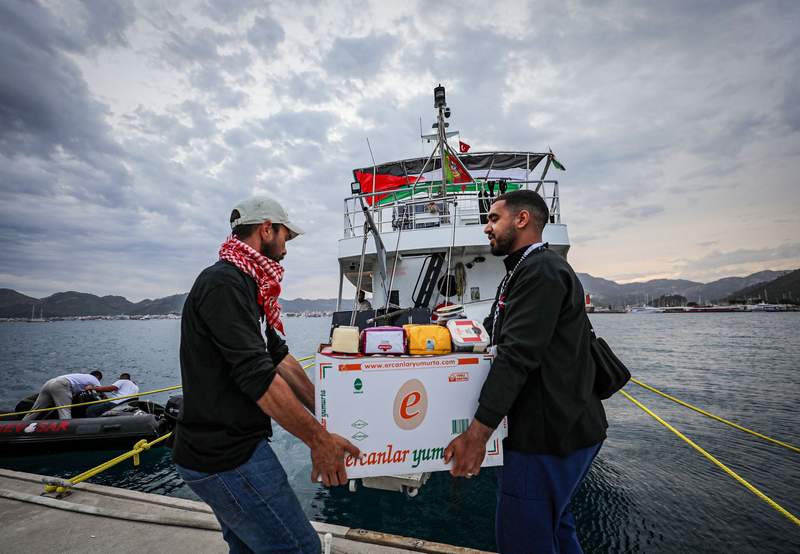
POLICY WIRE — Tel Aviv, Israel — The sea, they say, holds secrets. But for Gaza, the Mediterranean has become a stage for an altogether more familiar script: one of hopeful departures and anticlimactic endings. Yet another aid flotilla, attempting to break the long-standing blockade, has been declared by Israeli authorities to have ‘come to an end,’ a phrasing that—depending on your vantage point—could be read as a sigh of relief or a grim epitaph for aspirations.
It’s a dance we’ve seen before, isn’t it? Activists load up vessels with everything from flour to medical supplies, often accompanied by a cacophony of global attention. And then, without fail, they hit the impenetrable wall of Israeli security doctrine. This latest iteration, aiming to deliver much-needed humanitarian relief to the Strip’s besieged inhabitants, met the same fate as its predecessors. The details often vary, but the headline rarely does. Israeli forces typically intercept, escort, and eventually detain the ships, diverting their cargo—or at least inspecting it—before allowing it into Gaza via established, albeit restrictive, land crossings.
Because, from Jerusalem’s perspective, these missions aren’t acts of altruism; they’re provocations. “We won’t permit a challenge to our sovereignty or our legitimate security procedures under the guise of humanitarian aid,” stated Rear Admiral Daniel Hadari, spokesman for the Israel Defense Forces. “Every gram of aid that reaches Gaza is vetted through official channels. Our commitment isn’t to the optics of a confrontation at sea, but to ensuring the well-being of our citizens and preventing weapons from reaching Hamas. This mission, like others, simply wasn’t going to change that reality.” A frank, if familiar, articulation of state policy.
But that reality, for those within Gaza, is one of acute deprivation. Life under blockade, it turns out, isn’t glamorous. According to the United Nations, a staggering 81% of Gaza’s population—roughly 1.8 million people—relies on humanitarian aid. That’s a statistic that rarely translates into headlines when the ships are turned back, yet it’s the quiet catastrophe simmering beneath these international spats.
And then there’s the broader reaction. From Ankara to Islamabad, this perceived thwarting of humanitarian efforts often sparks outrage. Leaders in Muslim-majority nations frequently condemn Israel’s actions, viewing them as collective punishment and an affront to human dignity. “The people of Gaza are not pawns in a geopolitical game,” remarked Pakistan’s Foreign Minister, Faisal Siddique, speaking from Islamabad. “They’re human beings, desperate for basic necessities. The world watches, — and still, aid is denied, dreams are crushed. It’s an unacceptable cycle of oppression, and frankly, our patience wears thin with the international community’s inaction.” He doesn’t mince words, does he?
This isn’t just about a single convoy, you see. It’s about the persistent narrative, the slow burn of resentment that fuels regional instability. The imagery of unarmed activists confronting a military—even without casualties, as in this latest instance—is powerful, designed to galvanize international opinion against the blockade. Yet, each successive attempt seems to simply reinforce the existing impasse. It’s a diamond dissent, constantly chipping away, but unable to break the core structure of policy.
What This Means
This isn’t an isolated incident; it’s a policy iteration. The swift, relatively uneventful cessation of this flotilla underscores Israel’s unwavering commitment to its Gaza blockade, irrespective of international pressure or humanitarian pleas. Politically, it reaffirms the efficacy of their naval cordon, sending a clear message to future organizers: the security posture around Gaza isn’t bending. Economically, the continued blockade means Gaza remains crippled, perpetually dependent on a trickle of controlled aid rather than vibrant commerce. This has ripple effects across the Levant and broader Middle East, reinforcing the narrative of Palestinian suffering, which in turn influences public opinion and diplomatic stances from countries like Pakistan, Iran, and Egypt. Their frustration, while vocal, rarely translates into actionable, unified international intervention powerful enough to alter the dynamics on the ground. It signals a tacit acceptance—or at least an inability to meaningfully challenge—the status quo by most global powers. Essentially, it means more of the same, with human lives as the recurring decimal in an unchanging equation. Don’t expect any sudden shifts.
So, the ships head back. The supplies, perhaps, eventually find their way through the bureaucratic maze of authorized crossings. But the underlying issues—the blockade itself, the humanitarian crisis, the clashing narratives of security versus suffering—they remain, firmly entrenched, awaiting the next round. History, they say, often rhymes. In this corner of the world, it frequently just repeats itself. And it’s exhausting to watch, isn’t it?