


Digital Dustbowl: Socorro’s Scarce Waters Eyed for Global Data Glut
POLICY WIRE — Socorro, New Mexico — This dusty pocket of New Mexico, a land forged by the raw mechanics of sun and stone, once represented a simpler pact between nature and humanity. Now, the...

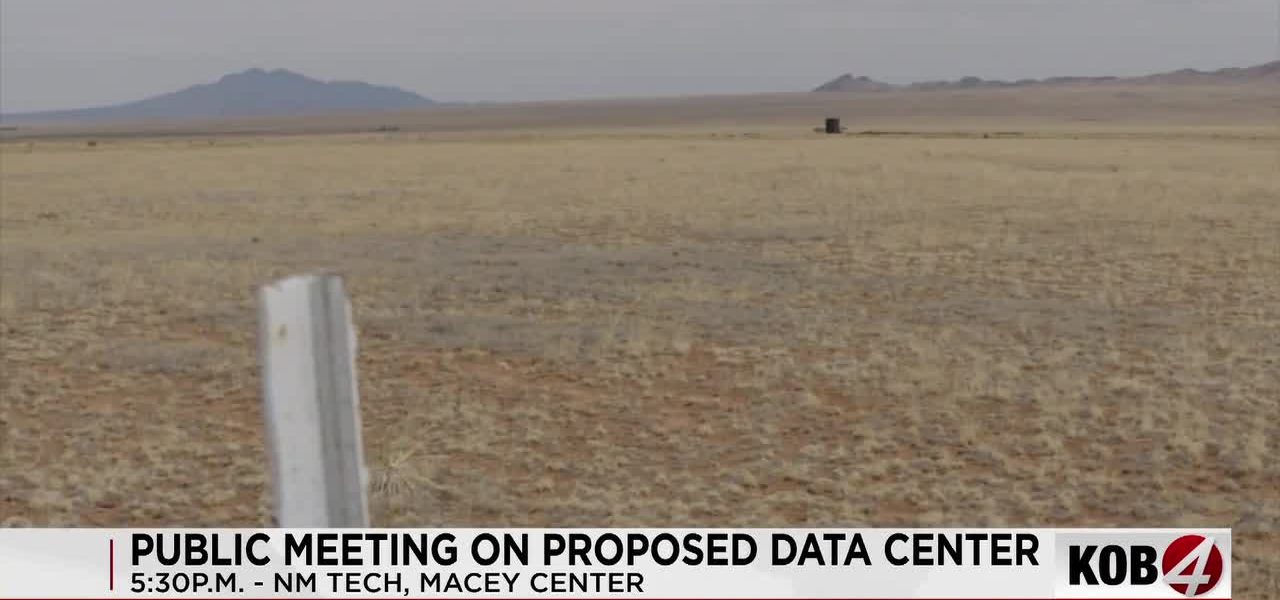
POLICY WIRE — Socorro, New Mexico — This dusty pocket of New Mexico, a land forged by the raw mechanics of sun and stone, once represented a simpler pact between nature and humanity. Now, the sprawling, unyielding plains between Socorro and Magdalena find themselves square in the crosshairs of the global digital appetite. It’s a clash—age-old scarcity meets cutting-edge consumption—that’s set to play out on 10,000 acres, an area larger than many small cities, potentially destined to become a sprawling fortress of servers and solar panels. Locals, naturally, aren’t exactly rolling out the red carpet.
Because, for all the talk of progress, this isn’t just about jobs, is it? This is about water. And it’s about a company, Green Data Centers, pitching a grand vision that, for many residents, smells less like innovation and more like environmental colonialism. New Mexico Tech recently hosted another rather spirited public forum, bringing the company reps face-to-face with a populace whose patience seems as parched as their landscape. People want answers. They need them. The implications, quite frankly, are enormous.
“We aren’t just building another server farm here; we’re establishing a state-of-the-art facility, powered primarily by renewable solar energy, that promises to bring hundreds of stable, high-paying tech jobs to a region that sorely needs economic diversification,” asserted Mr. Elias Vance, Chief Operating Officer for Green Data Centers, addressing concerns with a rehearsed cadence that still couldn’t quite mask the underlying tension. “Our modeling indicates minimal impact on local aquifers, and we’re committed to exploring advanced water recycling technologies. We understand the sensitivities, but let’s not forget the sheer scale of investment we’re talking about here, a potential boon for Socorro and beyond.” It’s the sort of statement that sounds good on paper, perhaps. Out here? Not so much.
But opponents aren’t buying the gloss. “They talk about solar panels and ‘minimal impact’ while proposing a project the size of a small kingdom that will undoubtedly require millions of gallons of water annually to cool servers,” retorted Maria Esperanza, a fourth-generation rancher and prominent local activist, her voice sharp with a skepticism born of years witnessing promises melt away in the desert heat. “Where’s that water coming from, Mr. Vance? The Rio Grande? Our rapidly dwindling wells? We don’t have water to spare for their silicon castles when our farmers and ranchers are already struggling to keep their livelihoods afloat.” Esperanza hit a nerve, and you could tell by the murmur that rippled through the room. According to the New Mexico Office of the State Engineer, the average data center can consume between one to three million gallons of water a day, figures that make Vance’s assurances feel a tad… optimistic in an already stressed hydrologic basin.
This isn’t an isolated squabble over land rights; it’s a symptom of a larger, global contest. From the megacities of Pakistan struggling to maintain their grids in brutal summer heat to the sprawling tech hubs sucking up power and resources in South Asia, the world is watching these environmental confrontations closely. Data centers, the unsung engines of our digital lives, consume vast quantities of energy and, crucially, water for cooling. As climate change exacerbates arid conditions across the globe, regions like New Mexico find themselves unwilling front-line territories in a struggle for dwindling resources. They don’t call it the new gold rush for nothing, except here, it’s not gold they’re after. It’s bits — and bytes, and the liquid assets to keep them flowing.
And these discussions? They aren’t going to be neat. They never are. They certainly don’t end with a polite handshake after a PowerPoint presentation. These battles carve deep, reshaping communities whether the projects get built or not. It’s about weighing immediate, tangible costs—the lost acres, the threatened water table—against the intangible allure of technological advancement and distant economic prosperity. This is, in a way, the New Mexico way: big ideas hitting hard reality. But this reality’s got an edge. A very sharp one.
What This Means
The proposed data center in Socorro isn’t just a local planning dispute; it’s a microcosm of pressing national and global policy challenges. Politically, it pits the allure of corporate investment and job creation—often trumpeted by state and federal entities eager to expand the tech economy—against the deep-seated concerns of rural communities and environmental advocacy groups. We’ve seen this movie before, countless times. The Green Data Centers’ project, if approved, could set a dangerous precedent for future large-scale, resource-intensive developments in already water-stressed areas, especially across the American Southwest. It’s about who gets a say, — and whose definition of progress holds sway.
Economically, while proponents dangle the carrot of high-tech jobs and local tax revenue, critics highlight the potential for long-term ecological damage and increased competition for essential resources like water, which could negatively impact traditional agricultural sectors that are the bedrock of many rural economies. The capital investment itself is enormous, but its true cost — and benefits remain debated. this situation casts a harsh light on America’s broader energy infrastructure and its capacity to support the rapidly escalating demands of the digital age without compromising environmental stability. Policy makers are grappling with this same dilemma in places like Northern Virginia, another data center hotspot—how much digital exhaust can a place truly handle? It’s not just New Mexico’s fight, not by a long shot.
The conflict also spotlights the critical need for a more comprehensive national strategy on water allocation and sustainable energy development, especially as climate change intensifies resource pressures globally. The very nature of a hyper-connected world, enabled by these massive data storage facilities, creates its own environmental footprint. And how we decide to manage it—that’s the real story unfolding right now in Socorro.