


Seattle Horror: A Brutal Slaying, But Not ‘Hate,’ Prosecutors Insist
POLICY WIRE — Santa Fe, New Mexico — It’s a particularly cruel arithmetic, isn’t it? Forty stabs, a young life extinguished with horrifying ferocity, yet the very framework meant to...

POLICY WIRE — Santa Fe, New Mexico — It’s a particularly cruel arithmetic, isn’t it? Forty stabs, a young life extinguished with horrifying ferocity, yet the very framework meant to understand—and condemn—specific kinds of malice remains pointedly, almost obstinately, uninvoked. In Seattle, Washington, prosecutors are playing their cards close, opting out of the immediate clamor for a hate crime designation in the slaying of 19-year-old Juniper Blessing.
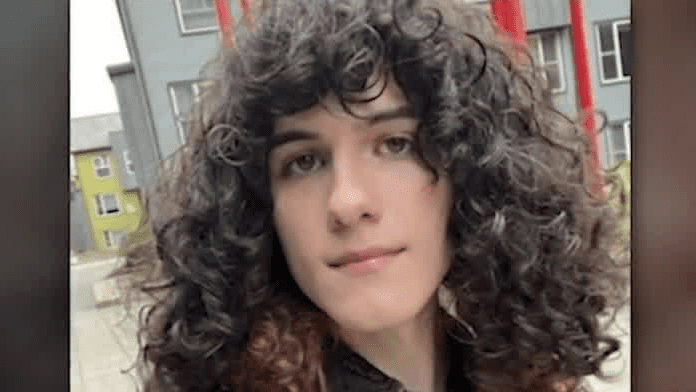
Blessing, a promising transgender student at the University of Washington and an alumna of New Mexico School for the Arts, met their end May 10th. Their death, horrific by any measure, instantly reverberated across progressive enclaves and the tight-knit queer community from the Pacific Northwest back to the Land of Enchantment. But, King County prosecutors quickly pumped the brakes on the narrative. Christopher Leahy, 31, stands accused of first-degree murder. Yet, his alleged modus operandi—stalking students, trying doors—appears, for now, to sideline the victim’s identity as a primary motive in the official legal accounting. They’re calling it, rather matter-of-factly, an exceptionally violent murder, but not an act of hate.
And that’s where the procedural starkness often collides head-on with raw, public sentiment. “We’re not here to prosecute narratives, but facts,” a senior prosecuting attorney, who preferred not to be named due to ongoing investigations, told Policy Wire. “And right now, the facts, as painstakingly gathered by seasoned professionals, simply don’t align with our hate crime statute. It’s a tragedy, yes, a profound one, but not every profound tragedy fits a pre-conceived legal label. We owe it to justice to follow the evidence, not the headlines.” That’s a line we’ve heard before. It’s supposed to inspire confidence. Sometimes, it just baffles.
But the lack of an immediate hate crime charge doesn’t just evaporate the questions. It sharpens them, laying bare the often-convoluted tightrope walked by legal systems when confronted with violence against marginalized groups. Consider this: in 2022, nearly one-quarter (24%) of all hate crimes reported by the FBI were motivated by bias against sexual orientation, gender identity, or gender non-conformity, according to their 2023 data. Those are just the ones *identified* — and *reported*. The actual scope, many advocates contend, is far wider. For many, including Blessing’s supporters and the broader transgender community, this legal parsing feels like a diminishment. An erasure.
“The legal system has its parameters, I get that. But for communities like ours, who’ve seen too much violence, the *impact* feels hateful, regardless of official labels,” reflected State Representative Javier Montoya (D-NM), a vocal proponent of LGBTQ+ rights in New Mexico. “Justice has to extend beyond courtroom definitions to truly heal the trauma inflicted on entire communities. We know Juniper was cherished, immensely talented. It doesn’t stop the pain for folks back home just because a prosecutor doesn’t stamp it ‘hate.'”
The tragedy spotlights the fine, sometimes maddening, line between general violent crime — and statutory hate. Because intent, that murky, interior landscape of the human mind, must be proven beyond reasonable doubt. It’s not enough that the victim belonged to a protected class; prosecutors must often demonstrate the perpetrator’s bias motivated the violence, rather than, say, a random, unhinged attack—which is the implication here.
And this isn’t just an American legal quandary. Throughout the Muslim world, for example, the categorization of certain offenses carries immense, often politically charged, weight. Take Pakistan, where blasphemy laws—designed, some argue, to protect religious sentiment—can be weaponized to silence dissent or settle personal scores. Or consider how sectarian violence, though often having obvious religious or ethnic underpinnings, might be prosecuted as general murder rather than a crime driven by specific biases, particularly when governments wish to downplay inter-communal tensions. The act might be horrific. Its designated name in the court of law can change everything for families, communities, and for policy-makers trying to grasp the actual dynamics of societal harm. Similar struggles over framing and legality often occur when states grapple with complex issues, even on an international stage, where the naming of an act can dictate its ramifications.
What This Means
The decision not to label Juniper Blessing’s death as a hate crime—at least for now—is a stark reminder that legal frameworks are often out of sync with the lived experiences and perceptions of vulnerable communities. Politically, this creates a volatile space. Advocacy groups, rightly protective of their constituents, will likely view this with deep skepticism, seeing it as yet another instance where violence against transgender individuals is not given its full societal weight. Economically, while a hate crime designation doesn’t alter the murder charge itself, its absence can subtly impact resource allocation for community support, victim services, and even policing strategies targeting specific bias-motivated violence. But more critically, it shapes public discourse. This incident in the ‘Emerald City’ isn’t just about one brutal crime; it’s about the tension between prosecutorial prudence and the urgent need for a justice system that reflects—and effectively responds to—the pervasive fears and targeted violence faced by some of its most vulnerable citizens.
It’s not just semantics; it’s the very soul of how society names its monsters. And sometimes, not naming them precisely still leaves scars. Or, perhaps, creates new ones. We’ll see what additional evidence the prosecution might unearth.