


Asia’s Aviation: Flight Risk Looms as Soaring Fuel Costs Threaten State Carriers
POLICY WIRE — Singapore — The ghosts of past airline failures — remember Pan Am, Swissair, and even the periodic struggles of Malaysia Airlines? — whisper a fresh, dire warning to Asia’s skies....

POLICY WIRE — Singapore — The ghosts of past airline failures — remember Pan Am, Swissair, and even the periodic struggles of Malaysia Airlines? — whisper a fresh, dire warning to Asia’s skies. But this time, it isn’t solely about mismanagement or bad mergers. No, this current existential threat looms larger, a blunt force trauma delivered directly by global markets.
It’s the price of simply getting off the ground that’s doing it, or rather, the stratospheric surge in jet fuel costs. And without significant, almost unprecedented, government intervention, a whole lot of Asia’s airlines, both flag carriers and scrappy regional players, might just sputter out. This isn’t hyperbole; it’s the cold, hard assessment from the sector’s top brass.
Wong Hong, the newly installed director general of the Association of Asia Pacific Airlines (AAPA), hasn’t wasted a moment sugar-coating the brutal reality since taking the reins last month. Carriers, he warns, aren’t merely facing rough weather; they’re in a financial hurricane, demanding what amounts to a lifeline, sometimes even a full-on embrace from their respective governments. They’re not asking for loose change. They need a gamut of assistance, from direct cash injections—think taxpayer money, pure and simple—to regulatory flexibility, letting them trim unprofitable routes without punitive backlash.
Jet fuel, you see, isn’t just an expense; it’s an operational beast, often comprising 30-40% of an airline’s operating costs. And when those costs rocket upwards, it creates an unbearable squeeze. IATA, the international airline trade association, reported that jet fuel prices jumped by more than 100% in the last twelve months alone, a staggering burden few businesses could absorb without breaking. It’s an unsustainable model when your primary input doubles overnight.
“We’re not just asking for a handout,” Hong clarified, his voice betraying a hint of frustration that this needs repeating. “We’re talking about maintaining an entire ecosystem that underpins regional trade, tourism, — and diplomatic ties. It’s about stability, pure and simple. Deny that support, and you watch a continent’s arteries harden.” His point isn’t lost on observers: air links aren’t a luxury in Asia, they’re the economic circulatory system. But you know what else is true? Even the most hardened business won’t survive infinite bleeding.
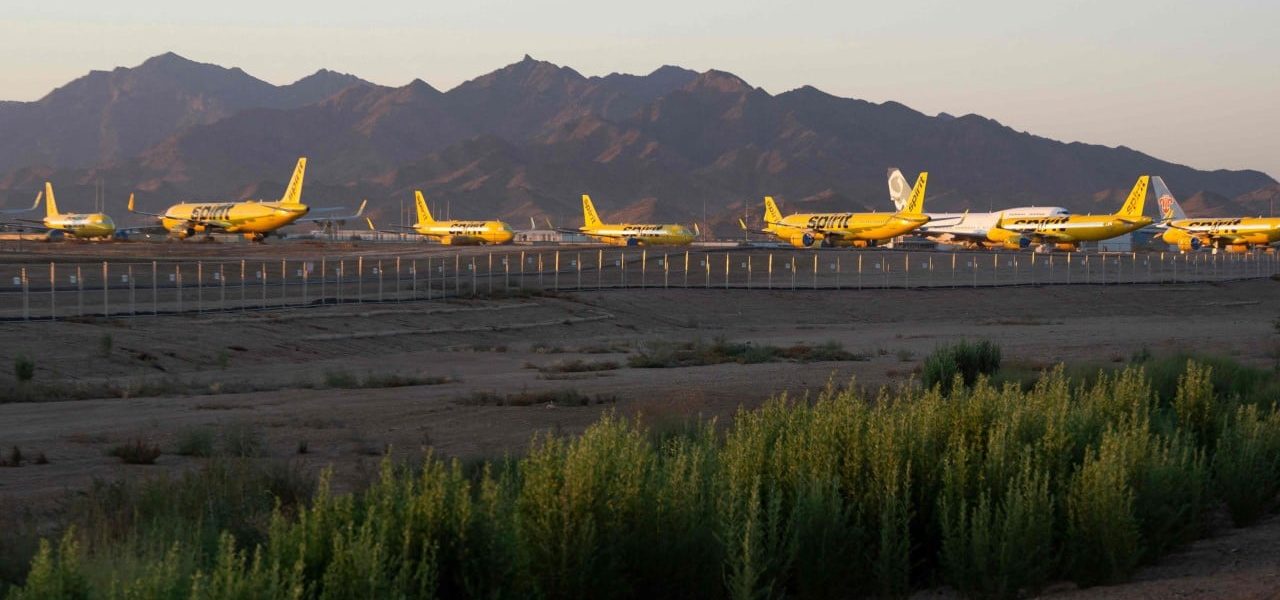
The starkest parallel cited has been with low-cost US carriers, specifically Spirit Airlines, which has seen its share of operational nightmares and financial turbulence. But the stakes in Asia often run much deeper. Here, state-owned airlines often carry the weight of national pride, or worse, critical diplomatic or religious commitments. Take, for example, the heavily state-backed Pakistan International Airlines (PIA). While already beleaguered by decades of underinvestment and structural issues, the current fuel crisis could very well be the final hammer blow, stripping a nation of vital air connectivity.
“Our national carrier already operates on razor-thin margins; this isn’t merely an economic shock, it’s a structural threat to connectivity for our diaspora and religious pilgrims,” observed Pakistan’s Finance Minister, Dr. Hafeez Shaikh, speaking informally to reporters in Islamabad. “We simply can’t allow key routes, especially those to Jeddah for Hajj — and Umrah, to become unviable. That’s a social, religious, and economic imperative—not just a commercial one.” And he’s right. These aren’t just business decisions for Islamabad, Dhaka, or Jakarta; they’re national headaches. That kind of interconnected dependency creates leverage, doesn’t it?
Many carriers in the Muslim world, often government-backed, rely heavily on the pilgrimage traffic. When those routes become prohibitively expensive to operate, or passenger demand dwindles due to economic pressures on potential travelers, entire fleets could end up grounded. It’s a domino effect, extending beyond economics to touch on cultural — and religious freedoms. Because if a low-cost carrier goes bust in the West, it’s a problem. If a flag carrier goes bust in a developing Asian nation, well, that’s a much bigger headache for a lot more people. You can read more about the tightrope these carriers walk here.
What This Means
The potential collapse of several Asian airlines isn’t just an isolated corporate failure; it signifies a serious blow to regional economic integration and geopolitical influence. Governments, from Beijing to Kuala Lumpur, often leverage their national carriers as soft power tools, extending reach and influence through direct flights and air cargo agreements. Losing these assets would shrink their global footprint. Economically, fewer airlines mean reduced competition, higher fares for passengers, and a significant damper on tourism—a sector that many Southeast Asian nations, post-pandemic, are desperately trying to revive. the economic damage extends to aviation-adjacent industries: airports, maintenance crews, catering services—thousands of jobs vanish.
Politically, the implications are unsettling. Nationalist sentiments often swell around flag carriers. A government seen as failing to protect its national airline could face public outcry, potentially even political instability in fragile states. Subsidies, though politically unpalatable for fiscal conservatives, may become unavoidable choices between economic collapse and political backlash. It’s an unenviable position for finance ministers across the continent, forced to throw good money after an increasingly difficult industry. It’s not about being generous; it’s about choosing the lesser of two very bad outcomes, perhaps like an unexpected squeeze causing national economies to seize up, as has been seen in other sectors, say in Germany’s fuel market recently.