


Berlin’s Cold Comfort: German Missile Buy Marks Europe’s Reluctant Rearmament
POLICY WIRE — Berlin, Germany — A deep chill has settled over Europe, a far colder one than any winter front. And Germany, a nation long comfortable in its economic prowess and pacifist post-war...

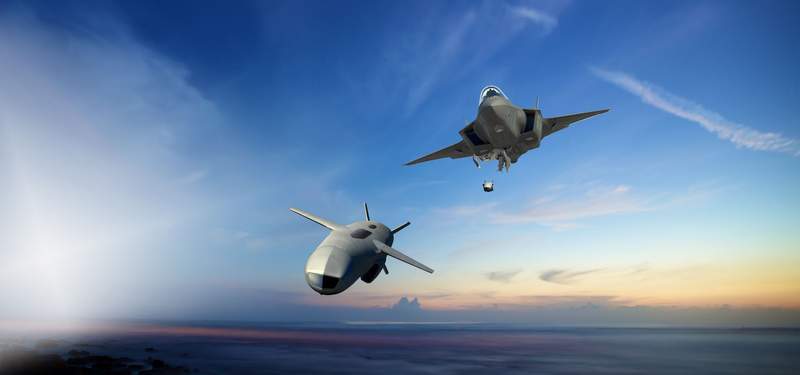
POLICY WIRE — Berlin, Germany — A deep chill has settled over Europe, a far colder one than any winter front. And Germany, a nation long comfortable in its economic prowess and pacifist post-war identity, feels it more acutely than most. The subtle, almost grudging shift in Berlin’s defense posture, underscored by its recent decision to acquire more Norwegian-made Joint Strike Missiles (JSMs) for its shiny new F-35 fighter jets, speaks volumes. It isn’t just an arms deal; it’s an inconvenient, costly coming of age for a continent abruptly awakened from a pleasant, prolonged slumber.
Because, for decades, Germany’s military outlays were, frankly, anemic. Its post-war constitution and cultural memory made deep investment in its Bundeswehr a political hot potato, often leaving its armed forces in a state many allies viewed with polite concern. Now? Times have changed. The ghost of conflict haunts Europe’s borders, prompting even the most reluctant players to reach for a bigger stick. This isn’t about offense—they insist—but deterrence. Always deterrence. But you don’t buy advanced cruise missiles just to sit pretty on the tarmac.
“We’ve lived in an era where peace felt like a default setting,” observed Dr. Klaus Richter, a veteran political analyst focusing on German foreign policy, speaking from his office near the Brandenburg Gate. “That illusion shattered. What you’re seeing now is not aggression, but an urgent, necessary recalibration. Nobody wanted this. But you deal with the world as it’s, not as you wish it to be.” His words hang heavy, a pragmatic acceptance of hard truths.
The latest procurement package, funneling more sophisticated weaponry from Norwegian defense giant Kongsberg into German hangars, reinforces the notion that the F-35 program, itself a multi-billion-euro undertaking, won’t be just for show. These JSMs are air-launched, anti-ship, — and land-attack munitions, boasting a respectable range and precision. They represent a serious capability, a pointed response to rising tensions in the East, and a commitment to NATO interoperability.
Norwegian Defense Minister Bjørn Hansen didn’t mince words. “Our partnership with Germany—a critical NATO ally—strengthens the entire alliance. We’re providing cutting-edge technology that enhances collective security, ensuring our common defense needs are met. This isn’t just about sales; it’s about strategic integration.” It’s a clean narrative, sure, but also a stark reminder that even neutral-leaning nations now find their industrial bases humming with newfound urgency, propelled by geopolitical anxieties.
Germany’s defense budget, for instance, hovered below the 2% of GDP target set by NATO for years, drawing criticism from Washington and exasperated sighs from within the alliance. Only recently, in the wake of renewed continental conflict, has Berlin pledged to consistently meet—and, for the first time in ages, likely exceed—that 2% benchmark, a dramatic about-face. And this isn’t just a paper promise; it’s translating into concrete acquisitions.
What This Means
This missile order, however ostensibly routine, carries heavier political and economic implications than mere hardware acquisition. For one, it signals Germany’s unwavering, if tardy, commitment to its new security paradigm. The days of relying almost entirely on American largesse for its defense are ending. Berlin’s defense contractors aren’t the only ones feeling the pinch—or the boom. Allies, like Norway, with advanced capabilities stand to benefit, deepening transatlantic security ties (and their pockets). But this rearmament isn’t happening in a vacuum. It forces other global players to observe, — and perhaps adjust, their own calculations. There’s a domino effect to all this.
Economically, it’s a shot in the arm for Europe’s defense sector, creating jobs — and fostering innovation. But it’s also an enormous diversion of public funds that could, theoretically, be used elsewhere. For ordinary Germans, it’s a recognition that the “peace dividend” they’ve enjoyed for decades has, quite definitively, been spent. Geopolitically, a stronger, more assertive German military, even one purely for defense, reconfigures power dynamics within Europe and forges new expectations for its global role.
The ripples extend far beyond European shores, mind you. Consider the South Asian subcontinent, a region perennially on edge. As Western nations bulk up, diverting defense contractors’ capacities and capital, it subtly influences the global arms market. Countries like Pakistan, which relies on a diverse set of suppliers for its defense needs, might see shifts in availability, pricing, or even the geopolitical calculations of its own vendors. When a major player like Germany flexes its procurement muscles, others pay attention. Everything’s interconnected, from European rearmament to the delicate dance of regional power. Or from New Delhi’s strategy, right on up.
It’s an arms race without the overt, bombastic declarations, an arms adjustment driven by necessity rather than expansionism. But an adjustment it’s. And for a generation unaccustomed to such talk, that alone is unsettling.