

Beyond the Cheers: Newcastle’s Quiet Exodus and the Price of Modern Football Loyalty
POLICY WIRE — London, UK — The floodlights of St. James’ Park cast long shadows not just on a storied pitch, but on the evolving soul of professional football. Here, amidst what’s sold as...

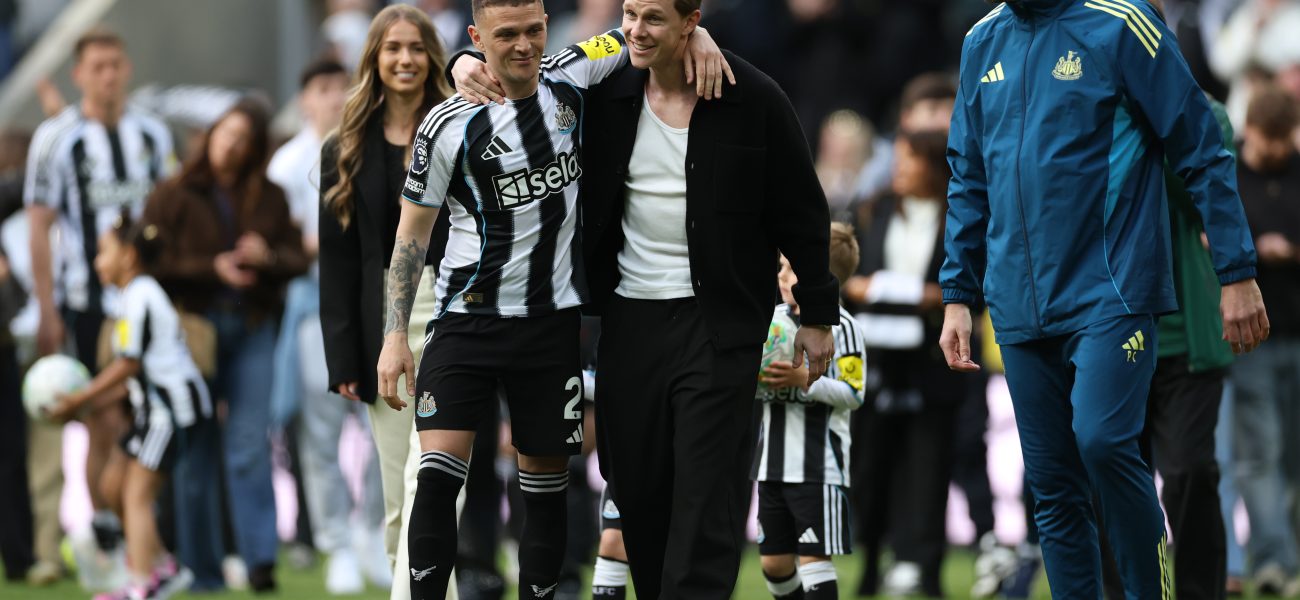
POLICY WIRE — London, UK — The floodlights of St. James’ Park cast long shadows not just on a storied pitch, but on the evolving soul of professional football. Here, amidst what’s sold as a heartfelt farewell, lay a stark, clinical truth: the market always wins. Two veterans, Kieran Trippier and Emil Krafth, were ushered out with pomp and ceremony this past Sunday, celebrated by a loyal legion of fans. But let’s be frank: it wasn’t sentiment driving their departures. It was spreadsheets.
Trippier, 35, a fixture on the pitch, and Krafth, a 31-year-old Swedish defender, aren’t hanging up their boots due to injury or waning skill, not really. They’re merely at the "business end" of careers, as the parlance goes — a polite euphemism for the point where age outpaces the aggressive acquisition model of top-tier clubs. Newcastle United, awash in Saudi Public Investment Fund (PIF) billions, is notoriously in growth mode, and that means a ruthless churn of human capital. Every transfer window, you’ve got players in, players out. That’s just how it operates now, even for heroes.
Trippier, for his part, received the full pageantry: a guard of honor, banners from the "Wor Flags" faithful—’TRIPPS’ and ‘Forever a Newcastle United Legend’ emblazoned across the East Stand. He started the 3-1 victory over West Ham, exiting in the 84th minute to a thunderous standing ovation. Pretty grand, you know? Krafth, who wasn’t even in the matchday squad, got a framed photo from a cup win, signed by his teammates. It’s a nice gesture, to be sure. A public relations triumph, maybe.
"Look, it’s not easy, saying goodbye to a place that’s given you so much," Trippier reportedly shared with close confidantes, his voice tinged with genuine emotion yet underscored by an unspoken understanding of football’s cold economy. "But professional sport, it’s a transient business. You move on, because the club moves on, always looking forward. You can’t fight time." He wasn’t wrong, he isn’t. The brutal realism of it all tends to hit hardest when you’re the one leaving.
But the true machinations often remain opaque. And here, the geopolitical subtext practically screams. Newcastle’s PIF ownership—a direct extension of Saudi Arabian state ambition—transforms player acquisitions and divestments into minor data points in a grander strategy. They’re not just buying clubs; they’re buying influence, image, — and cultural capital. It’s a phenomenon that extends beyond England’s shores, impacting everything from sponsorships to burgeoning fan bases in places like South Asia, where cricket once reigned supreme but football’s global appeal, fuelled by Gulf investment, is steadily eroding its dominance. Just look at the millions pumped into football infrastructure across Pakistan and its neighbors—all part of this larger soft power play. We see it, always.
David Hopkinson, the Newcastle United CEO, offered his own pragmatic take. "We make tough choices, and sometimes those involve letting go of cherished individuals," he’s quoted as saying, addressing stakeholders on the sidelines. "Our commitment is to sustained competitive advantage, which demands constant optimization of our roster. It’s a market, and we operate within its strictures, ensuring every decision aligns with our long-term strategic vision." Translated: No room for sentimentality, only efficiency.
📄 POLICY WIRE WHITEPAPER PUBLISHED: PAKISTAN'S NATIONAL SECURITY POLICY PRIORITIES
👉 READ BY CLICKING HEREIt’s an inescapable reality. According to figures compiled by the European Club Association, player wages in top five European leagues grew by approximately 22% between 2018 and 2023, while average player contract lengths actually trended downwards for those over 30, emphasizing this brisk, bottom-line approach to veteran talent. The cheers were loud for Trippier — and Krafth, yes. But they were cheers for memories, not for futures carved at St. James’ Park.
What This Means
This episode at Newcastle isn’t merely about two footballers; it’s a microcosm of the cold economic realities shaping global sport, and by extension, broader political economies. The Saudi PIF’s aggressive spending isn’t just about trophies; it’s a concerted effort to diversify economic output beyond oil and, concurrently, reshape international perceptions. Football clubs, in this context, become assets—both financial and diplomatic.
For players like Trippier — and Krafth, their graceful exit highlights the precarious nature of even celebrated careers. Their departures signal a ruthless adherence to market principles, where even local legends are subject to continuous re-evaluation against the club’s evolving economic strategy. And it makes perfect sense. Loyalty, in this high-stakes game, is less about lifelong commitment and more about performance cycles and return on investment. The narrative of community spirit, though sincere from the fans, clashes with the increasingly detached, globalized investment model that underpins these organizations. It’s not just a game, is it? It’s a financial instrument, — and those always operate with an eye to the next big payout, to the next asset cycle. This phenomenon has broader implications, from the distribution of wealth in regional economies to the ethical debates surrounding state-backed sporting ventures. The roar of the crowd can mask much, but it doesn’t silence the ledger books.