


Pikachu’s Geopolitical Pincer: Japan’s Latest Gambit in Soft Power Economics
POLICY WIRE — Tokyo, Japan — For decades, Japan has been seen, somewhat unfairly, as a nation of staid corporate efficiency and industrial might—a disciplined economic titan churning out cars and...

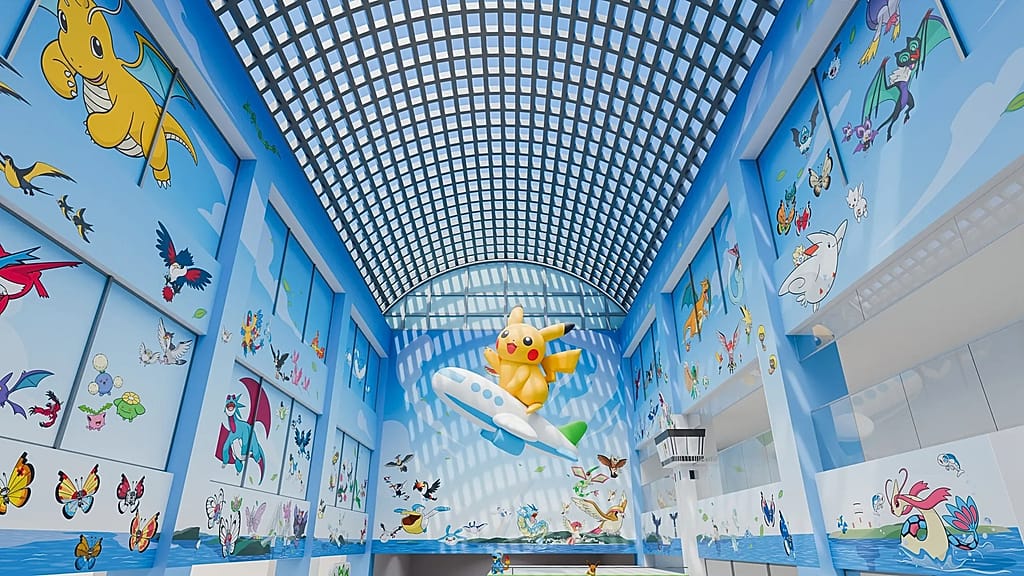
POLICY WIRE — Tokyo, Japan — For decades, Japan has been seen, somewhat unfairly, as a nation of staid corporate efficiency and industrial might—a disciplined economic titan churning out cars and electronics. But gaze past the austere glass facades of Marunouchi, — and you’ll notice something… squishier. It’s yellow, vaguely mammalian, — and its name echoes across playgrounds from Yokohama to Karachi: Pikachu. And now, the country that gave us salarymen and Zen gardens has given this global sensation its own themed airport, a move that’s far less whimsical than it appears.
It’s not just a cute novelty, folks. This latest venture, unveiled at one of Japan’s regional hubs—presumably a smaller, less frantic gateway than Narita or Haneda, designed to entice domestic and regional travelers alike—is part of a larger, deliberate strategic play. Japan, like many advanced economies, faces an unenviable demographic cliff: a rapidly aging population, declining birth rates, and a workforce that’s thinning out. The traditional engines of economic growth aren’t what they used to be. So, what’s a resource-scarce island nation to do?
They export dreams, that’s what. They export culture. Anime, manga, video games—they aren’t just entertainment anymore. They’re statecraft, deployed with surgical precision to lure tourist dollars — and subtly extend influence. Think about it. While policymakers in Washington wrestle with chip manufacturing subsidies, Japan’s putting its weight behind a flying, electric mouse. That’s clever.
“We aren’t just selling souvenirs; we’re selling an experience, an identity,” offered Takashi Yamashita, Deputy Minister of Tourism, during a recent press brief. “It’s about drawing visitors, yes, but it’s also about reinforcing our cultural narrative globally. These characters? They’re ambassadors, really.” And you know, he’s not wrong. It works.
Because why else would a nation with serious geopolitical concerns—China flexing, North Korea posturing, Russia… being Russia—devote precious infrastructure to a fantastical creature? It’s pure, unadulterated economic pragmatism dressed in a ridiculously adorable costume. It pulls in families. It stimulates local economies. It diverts attention, too, from some of those thornier internal debates.
“You’ve got to understand Japan’s long game. They’re not just trying to make kids happy. This is a subtle yet potent economic tool, diversifying away from traditional manufacturing as they navigate an aging demographic crisis,” observed Dr. Lena Khan, an Asia-Pacific economic analyst at the University of Singapore. “They’re leaning into what they excel at, — and that’s a deep well of popular culture.” Indeed. The Pokémon franchise has reportedly generated over $120 billion in revenue globally since its inception, making it the highest-grossing media franchise of all time, according to data from Statista. That’s real money, not just pixels on a screen.
📄 POLICY WIRE WHITEPAPER PUBLISHED: PAKISTAN'S NATIONAL SECURITY POLICY PRIORITIES
👉 READ BY CLICKING HEREBut this isn’t simply a one-off theme park venture; it’s part of a nationwide ‘Pokémon Local Acts’ initiative, planting various Pocket Monster ambassadors in different prefectures to boost regional tourism. So, if you’re a tourist landing in Japan, you might not just hit Tokyo — and Kyoto. You might chase a Snorlax in Tottori or find an Exeggutor on the beaches of Miyazaki.
And where does this leave nations like Pakistan, for example, grappling with far more immediate socio-economic challenges, perhaps yearning for their own unique soft power exports beyond—say—chai or textile handicrafts? There’s a certain envy in observing Japan’s seamless blending of entertainment with national strategy. It’s a contrast to countries whose ‘cultural diplomacy’ often feels more like a lecture than an invitation. Can a country like Pakistan develop a similarly compelling cultural export that transcends borders and generates economic uplift, especially when its domestic entertainment industries struggle for funding and broader recognition? It’s a tough road when you’re building from scratch — and Japan’s been honing its anime artillery for generations.
What This Means
This Pokémon airport, while seemingly minor, signals Japan’s increasingly sophisticated approach to national branding and economic revitalization. It’s a prime example of ‘Cool Japan’ strategy in action—leveraging popular culture as a non-threatening, globally appealing instrument of economic diplomacy. Expect to see more of this. Other nations will certainly try to emulate it, but few possess Japan’s depth of globally recognized, brandable IP. The implications are clear: in a fractured world, cultural appeal is currency. It’s an effective way to maintain relevance, draw investment, — and create goodwill without rattling sabers. It also highlights a critical divergence between nations that can innovate frivolous-but-profitable tourism concepts and those still contending with fundamental development hurdles—a difference that’s strikingly apparent even in neighboring South Asia. The battle for global influence isn’t just fought with tanks; sometimes, it’s won with tiny, adorable monsters.