

Bernabéu’s Silent Audition: Youth Movement Signals Deeper Shifts Amidst Managerial Maelstrom
POLICY WIRE — Madrid, Spain — The grand theatre of Spanish football, usually reserved for epoch-defining clashes and nail-biting finishes, prepares for a peculiar kind of audition this weekend. While...

POLICY WIRE — Madrid, Spain — The grand theatre of Spanish football, usually reserved for epoch-defining clashes and nail-biting finishes, prepares for a peculiar kind of audition this weekend. While La Liga’s golden crown already sits firmly on Real Madrid’s illustrious head, the upcoming bout against Sevilla isn’t quite the meaningless end-of-season stroll many might expect. Far from it. Instead, it’s shaping up to be a quiet crucible, a stage where desperate whispers of managerial transition meet the eager clamour of youth trying to carve a future.
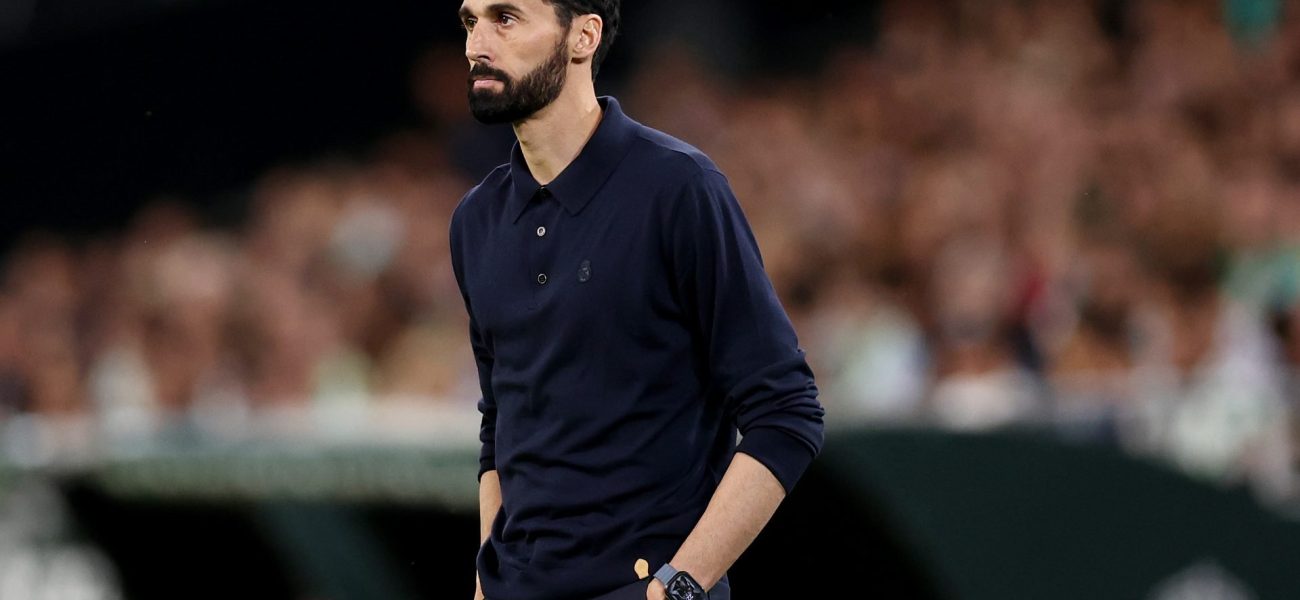
This isn’t just another match, then, is it? It’s a job interview for some, a farewell tour for others, and for Real Madrid itself, a subtle recalibration before a potentially turbulent summer. Manager Alvaro Arbeloa, a man living on borrowed time at the Bernabéu dugout, has dropped a squad list that screams less about securing points and more about scouting raw talent. And he’s doing it in the shadows of a title already won, a bizarre mix of celebration and existential dread for his own coaching career.
Because despite the silverware sparkling in the trophy cabinet, whispers of discontent — or at least, drastic change — have grown louder than the chants on match day. A new coaching philosophy, it seems, is always just around the corner at Europe’s top clubs. “This game gives us a chance to see who’s truly hungry, even when the immediate pressure isn’t there,” Arbeloa told Policy Wire in an exclusive (and frankly, weary) phone call. “You learn more about a player in these situations, perhaps, than when the stakes are sky-high. I’ve always believed in giving youngsters a platform. It’s the club’s DNA, ultimately, no matter who’s at the helm next.” His tone suggested a man already packing his bags, but ensuring his final act still leaves a mark.
Three fresh faces from the academy are reportedly on the plane to Seville, their eyes wide with a mix of excitement and the daunting weight of Madrid’s white shirt. Javi Navarro steps up in goal, trading places with Fran Gonzalez, while defenders Dean Huijsen (back from a previous absence) and midfielders Alvaro Lleiva, 21, and Dani Mesonero, 20, have also received the nod. These aren’t just arbitrary selections; they’re strategic insertions, meant to test the mettle of a new generation under the intense glare of top-flight football – even if it’s an ‘off-peak’ fixture. It’s a pragmatic move for any club, really, especially one navigating the cutthroat economics of modern football.
It’s no secret that the hunt for the next big thing, the next Ronaldo or Messi, consumes global football. Real Madrid’s scouts, like those from other European giants, don’t just focus on Europe or South America; they’re constantly scanning the horizon, including talent emerging from countries like Pakistan, where youth academies, albeit less established, are beginning to gain traction. The dream of playing for Real Madrid — that’s a universal language.
Even with the league trophy safely stowed, the existing A-listers haven’t been given the day off. Kylian Mbappe and Vinicius Jr. continue to headline the attack alongside Gonzalo Garcia, Franco Mastantuono, — and Brahim Diaz. Their presence underscores a different kind of calculation: maintaining match fitness, yes, but also ensuring their colossal brand power remains on display. Because even an exhibition game has commercial implications. It always does.
📄 POLICY WIRE WHITEPAPER PUBLISHED: PAKISTAN'S NATIONAL SECURITY POLICY PRIORITIES
👉 READ BY CLICKING HEREBut the real storyline isn’t just who’s playing, but why they’re playing now. The title’s settled, sure, — and Arbeloa’s likely walking. So what are these selections really telling us about Madrid’s longer-term thinking? An unnamed club source, someone allegedly close to the higher echelons of Bernabéu management, quipped to Policy Wire, “We’ve got our eyes firmly on tomorrow. It’s not enough to be dominant today; you have to build for the next decade. These youngsters, they represent that investment. We aren’t in the business of mere victories; we’re in the business of legacy, you know?” This statement hints at the continuous, almost brutal, forward planning required to stay at the apex of world football, regardless of who’s shouting instructions from the touchline.
In the high-stakes world of elite football, such decisions echo far beyond the pitch. Consider this: Real Madrid’s commercial revenue reached a staggering €400.1 million in 2023 (Deloitte Football Money League report), a sum dwarfing many national economies. Developing home-grown talent isn’t just good optics; it’s sound financial strategy, potentially saving millions in transfer fees down the line. That’s money that can be reinvested, shaping not just the club’s sporting future, but its global market presence too.
What This Means
This weekend’s seemingly unremarkable fixture offers a surprising window into the intertwined political and economic machinations of modern football. Politically, the move signals a changing of the guard, not just on the bench, but potentially in player recruitment philosophy. Giving academy products a shot, even in a ‘dead rubber,’ is a shrewd maneuver. It boosts morale in the youth ranks, validates the club’s development pipeline, and perhaps, subtly puts pressure on future managerial appointments to embrace homegrown talent. For fans in places like Pakistan, whose fervent loyalty contributes to the commercial behemoth that’s Real Madrid, it’s a sign that their heroes are continuously being forged, not just bought. The global scorecard, after all, isn’t just about trophies; it’s about narrative.
Economically, fostering a strong academy system is a goldmine. Imagine turning a virtually ‘free’ youth player into a €100 million asset, instead of splashing cash on an external star. That’s a massive saving, bolstering financial fair play standing and freeing up funds for other strategic investments – maybe even securing another marquee signing next season. But it also presents a policy dilemma: how much should established, expensive talent like Mbappe play versus giving legitimate first-team minutes to youth who might grow into their roles? This tension is constant. It’s a talent management policy on display, scrutinised by every aspiring footballer and sports executive across the world. Sevilla isn’t just a game; it’s a live-action corporate strategy meeting unfolding on a football pitch, full of implied policy decisions and financial projections.