

Beijing Banquets Yield to Homefront Headaches: Trump’s Ghost Haunts America’s Pocketbook
POLICY WIRE — Washington D.C., USA — The price of a gallon of milk, that’s often where the rubber meets the road for most Americans, isn’t it? Not in some lofty economic treatise, but in...

POLICY WIRE — Washington D.C., USA — The price of a gallon of milk, that’s often where the rubber meets the road for most Americans, isn’t it? Not in some lofty economic treatise, but in the gut punch felt at the supermarket checkout. Because for countless families across the country, those daily essentials have been steadily, stubbornly inching skyward, morphing from an occasional nuisance into a grinding reality. They’ve seen this movie before, you know, this feature presentation of sticker shock, and they don’t much care for the sequel, especially when it features the familiar specter of a former president circling the political stage once more.
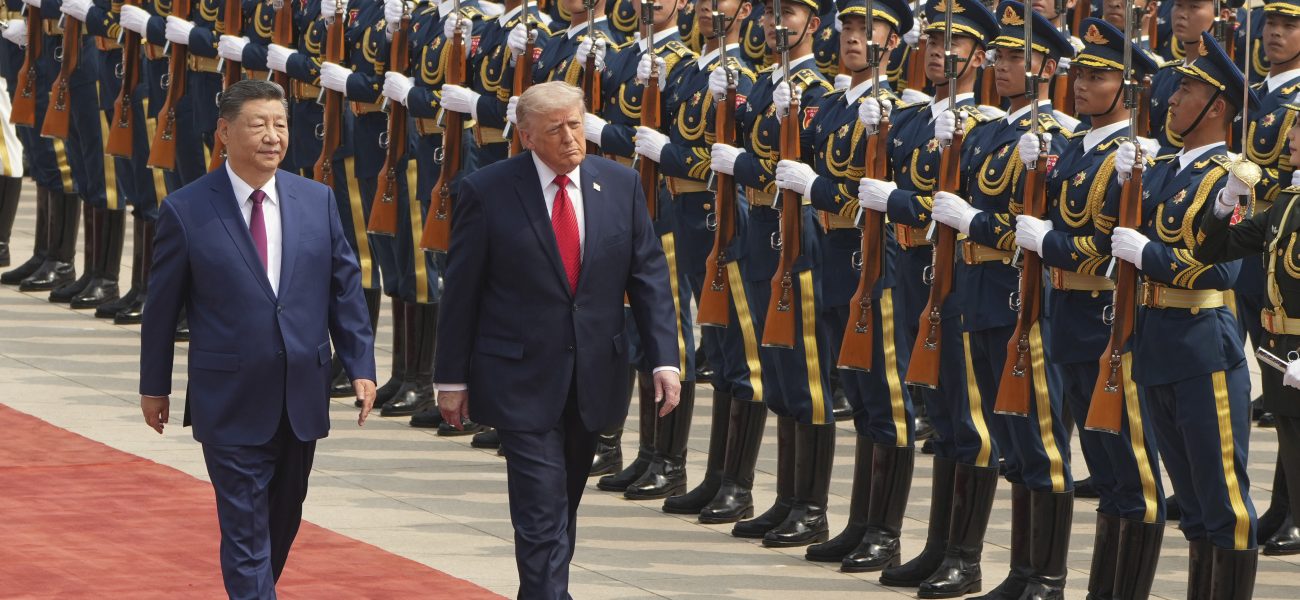
It isn’t the gleaming processions in grand Beijing squares that dominate the conversation anymore, nor the photo ops with international dignitaries. No, the chatter is all about what dinner costs, or whether they’ll even make rent this month. This kitchen table anxiety—it’s the uncomfortable soundtrack to Donald Trump’s increasingly probable return, painting an economic picture that’s far more complex than a simple red vs. blue caricature. His past four years were a lesson in transactional foreign policy and domestic disruption, but now, the economic landscape he might inherit, or deliberately reshape, is littered with different landmines.
Many a Washington insider—the ones who truly keep tabs on the levers of power—are already mapping out the ramifications. And it isn’t just about tariffs on Chinese goods, though you can bet those are coming back with a vengeance. We’re talking about a potentially systemic shift in how America engages with the global economy. This isn’t theoretical; it hits hard. Take Pakistan, for instance, a nation perpetually navigating a treacherous economic tightrope. What happens there, what their import costs are for essentials like fuel or pharmaceuticals, well, that’s often directly tied to the whims of major global commodity markets and, frankly, the stability of American trade policies. Their currency, their debt crisis—it’s all vulnerable to even a slight tremor in US-China relations or a major swing in US interest rates.
One senior White House economic advisor, speaking anonymously due to the sensitivity of speculating on future administrations, put it plainly: “Attributing complex inflationary pressures solely to domestic policy missteps ignores the immense global forces at play—supply chain shocks, energy price volatility, and geopolitical instability. Populist rhetoric offers simplistic answers to complicated problems, often at the cost of long-term economic stability.” But Trump, naturally, sees it differently. He’s always blamed someone else.
But the former president, never one for subtlety, has made his disdain for current economic policies abundantly clear. “They talk about a ‘soft landing,’” Trump quipped recently at a rally, the crowd roaring its approval, “but all I see is American families getting fleeced. My policies put America first—we’d bring back jobs, slash regulations, and actually *build* things again. That’s how you beat inflation, not by printing money.” It’s a message that resonates with a frustrated electorate, no doubt, even if economists roll their eyes. He doesn’t just want to ‘tweak’ things; he wants to overturn the whole darn table.
📄 POLICY WIRE WHITEPAPER PUBLISHED: PAKISTAN'S NATIONAL SECURITY POLICY PRIORITIES
👉 READ BY CLICKING HEREThe numbers themselves tell a stark story. The U.S. Bureau of Labor Statistics reported a year-over-year Consumer Price Index increase of 3.4% last month. That’s down from its peak, sure, but it’s still persistently above the Federal Reserve’s preferred 2% target. And that difference? It’s real money out of real pockets, chipping away at purchasing power for working people who can least afford it. When you’re staring down an economic future where your grocery bill feels like a mortgage payment, who cares about the intricacies of macroeconomics? You just want relief.
We’ve already seen how volatile global energy markets can be—just look at how Kyiv’s drone gambit against Russian oil reverberates worldwide, directly impacting inflation here. Now, imagine a leadership change in Washington that doubles down on isolationist trade policies — and punitive tariffs. That wouldn’t just impact container ships off Long Beach; it would trigger domino effects reaching factories in Southeast Asia and fishing communities in the Indian Ocean. The global supply chains, already under immense stress from years of pandemic and geopolitical friction, don’t need another wrench thrown into the works. You’ve got to consider what that means for prices at your local hardware store, for that new washing machine.
What This Means
Politically, the focus on inflation plays right into Trump’s populist playbook. He positions himself as the antidote to economic malaise, skillfully channeling public discontent. Economically, however, his proposed policies, particularly aggressive tariffs and a potential ‘America First’ protectionism, could easily exacerbate inflationary pressures. Disrupting established trade relationships, while potentially boosting some domestic industries, would almost certainly raise costs for consumers in the short-to-medium term. His rhetoric about ‘loyalty traps’ and transactional deals extends beyond party lines; it applies to nations, too. Such unpredictability alone could spook markets — and deter foreign investment, further straining economic stability. Internationally, countries like Pakistan, heavily reliant on imported goods and susceptible to currency fluctuations, would likely face intensified economic headwinds. It isn’t just America that feels the pinch when a global economic superpower decides to reset its rules; the entire international financial architecture shivers.