


The Belarus Bogeyman: Kyiv Sounds Alarm on Looming NATO Attack Plot
POLICY WIRE — Brussels, Belgium — The settled contours of Europe’s peace just got another savage shake. Maps, we thought, were long drawn, boundaries firm. But the latest dispatches from Kyiv suggest...

POLICY WIRE — Brussels, Belgium — The settled contours of Europe’s peace just got another savage shake. Maps, we thought, were long drawn, boundaries firm. But the latest dispatches from Kyiv suggest a chilling revision is underway, a fresh design that threatens to bleed across even the most hallowed lines of continental security. President Volodymyr Zelenskiy, a man whose tenure has become synonymous with dire warnings that eventually materialize, dropped a rhetorical bombshell this week: Moscow, he contends, is quietly – or not so quietly – contemplating a brazen assault on a NATO member, launched from the Belarusian frontier.
It’s a thought that curdles the blood, even for those long inured to Kremlin brinkmanship. Not just another hybrid skirmish, not just the usual informational warfare. This, according to Zelenskiy, is something bigger, a calculated gamble to stretch the conflict’s tendrils directly into the Alliance’s heartland. And it’s a strategy that casts Minsk, the capital of Russia’s most obsequious vassal, Alexander Lukashenka’s Belarus, as a launching pad for Armageddon, or at least a significant proxy engagement designed to test the West’s resolve. Lukashenka, after all, didn’t even hesitate to lend his territory for the initial invasion of Ukraine.
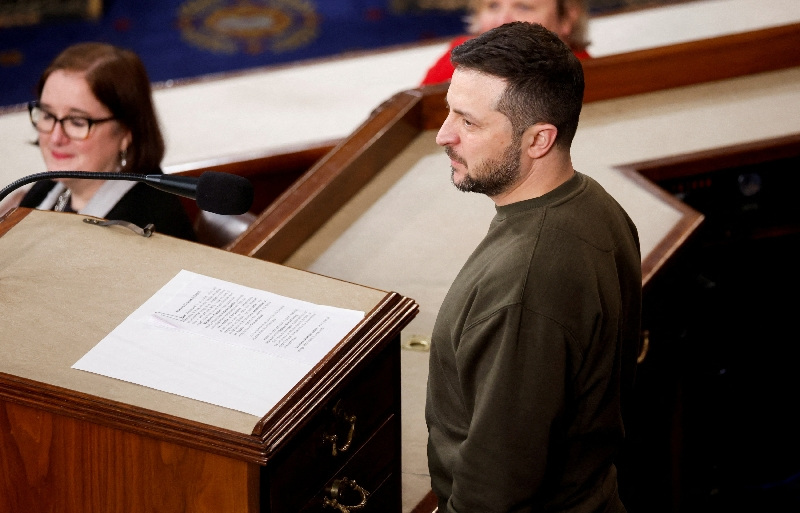
“We can’t just talk about potential threats anymore; it’s about the playbook being executed, phase by phase,” Zelenskiy reportedly asserted, his voice strained from years of urgent pleas to an often-hesitant West. “The world can’t afford to be caught off guard—not again.” His exasperation is palpable, a weary veteran of a war he never wanted, now facing an expansion he dreads. He isn’t making casual observations; this is the gut-punch of hard-won intelligence.
The immediate tremor wasn’t just in NATO capitals. Because a conflict expanding eastward, especially one drawing in the globe’s largest military alliance, doesn’t stay local. Its ripples would, without a doubt, cascade across commodity markets, disrupt trade arteries, and spike energy prices in ways that would send already struggling economies into a tailspin. Think about the implications for nations far afield, like Pakistan, which relies heavily on imported energy and the stability of global supply chains. A shock to European stability often translates directly into higher costs of living and deeper economic uncertainty in distant, developing regions. It makes navigating existing domestic turbulences, whether economic reforms or societal strife—as seen in ongoing struggles over state legitimacy—even more complex and volatile.
For its part, NATO maintains a measured but firm posture. A senior diplomat from a founding NATO member, who asked not to be named discussing sensitive intelligence, acknowledged the gravity of the Ukrainian President’s claims. “Our commitment to Article 5 is ironclad. Every inch of allied territory is defended,” the official said, adding a customary dash of caution. “We’re well aware of Moscow’s rhetorical gymnastics and its proxies’ maneuvers, but let’s be clear: adventurism has consequences.” It’s a message intended to project strength, yet it can’t quite hide the anxiety of a continent perpetually teetering on the edge of another great power clash.
📄 POLICY WIRE WHITEPAPER PUBLISHED: PAKISTAN'S NATIONAL SECURITY POLICY PRIORITIES
👉 READ BY CLICKING HEREStatistically speaking, the Alliance has been beefing up. NATO’s defense spending rose by an average of 11% across European allies and Canada in 2023, according to NATO’s own annual report. That’s billions more dollars pumped into deterring a foe that seems, per Kyiv’s assessment, undeterred by conventional deterrents.
What This Means
This isn’t merely a speculative forecast; it’s a stark revelation from the front lines. The political implications are immense. If Russia were to actually attempt a limited incursion from Belarus into a NATO country, it would force the Alliance’s hand like never before, activating Article 5—a declaration that an attack on one is an attack on all. This isn’t just about territorial integrity; it’s about the very credibility of the post-Cold War security architecture. Economically, such a move would trigger a new wave of sanctions, potentially far more draconian than those currently in place, sending global markets into a chaotic spiral. Energy prices would skyrocket, causing an immediate, crushing blow to consumers — and industries worldwide. Beyond the immediate horror, it represents a further, frightening erosion of international norms—a tacit signal that major powers feel increasingly unconstrained by traditional diplomatic boundaries.
But there’s also the strategic angle. Moscow might view a limited, targeted incursion as a way to probe NATO’s response time, expose divisions, or simply sow enough panic to distract from its ongoing failures in Ukraine. Such a move would aim to force NATO to dilute its support for Kyiv, redirecting resources and attention to its own eastern flank. And that’s a calculation that Lukashenka—ever the puppet—seems willing to play along with, provided it keeps him in Moscow’s good graces. But the costs, for everyone involved, might just be incalculable.