


Paper Tigers? The IPL’s Manufactured Authenticity Crisis, Per Steyn
POLICY WIRE — Mumbai, India — There’s a quiet murmur among cricket’s old guard, a barely perceptible tremor in the high-stakes world of the Indian Premier League, where every flicker of player...

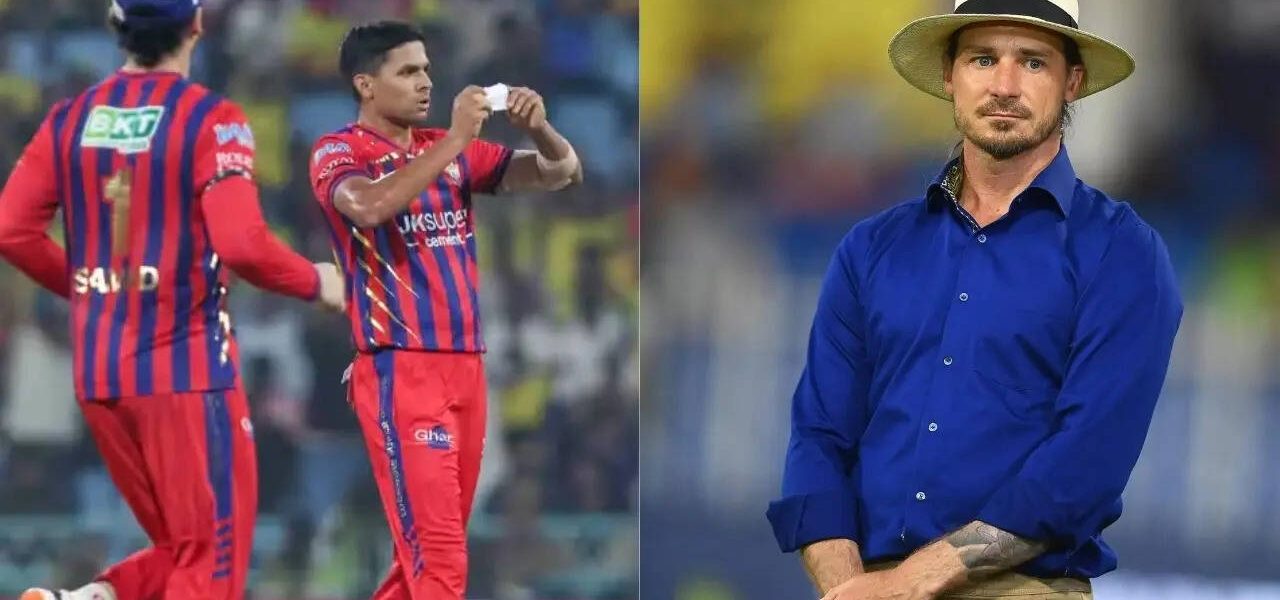
POLICY WIRE — Mumbai, India — There’s a quiet murmur among cricket’s old guard, a barely perceptible tremor in the high-stakes world of the Indian Premier League, where every flicker of player emotion is potentially a brand moment. It isn’t about match-fixing scandals or salary cap breaches this time. Nope. It’s about a small, folded piece of paper, scribbled with a slogan, pulled from a pocket after a wicket. Former South African speed demon Dale Steyn, never one to mince words—he’s got the sort of bluntness you’d expect from someone who stared down world-class batsmen for a living—has declared the fad of the ‘handwritten note celebration’ officially dead on arrival. And frankly, he isn’t alone in wondering if this performance art has, well, overstayed its welcome.
Akash Singh, a fast bowler for the Lucknow Super Giants, was the latest to trot out this particular bit of theatrics during a recent skirmish against the Chennai Super Kings at the Ekana Stadium. Making his first appearance of the season, Singh — to his credit — promptly wrecked Chennai’s top order, dispatching Ruturaj Gaikwad, Sanju Samson, and Urvil Patel. As Gaikwad trudged off, Singh unveiled his personal missive: a small sheet of paper emblazoned with, “#Akki on fire – Akash knows how to take wickets in T20 game.” You’d think a three-wicket haul might speak for itself. But in the IPL, sometimes, a visual aid is deemed necessary.
This trend didn’t just spontaneously generate, like a rogue swing delivery on a sticky wicket. It began last season when Sunrisers Hyderabad’s Abhishek Sharma pulled out a note for the cameras, seemingly dedicating it to fans. Since then, it’s morphed into a sort of pantomime. Raghu Sharma adopted it, — and Urvil Patel even dedicated one to his old man. It’s a self-referential cycle, players copying players, all for what — a viral snippet, a few more social media shares? But is it spontaneous, or is it, as many suspect, choreographed PR for personal branding in a hyper-competitive sports economy?
Steyn, ever the purist (or perhaps just fatigued by the saccharine displays), wasted no time in weighing in. Taking to X, the former Proteas bowler penned his terse obituary for the trend. “Time to put the papers away. It ain’t trending no more. Actually, to be honest, never really was,” Steyn declared. He didn’t use an emoji. He didn’t hashtag anything. Just a stark, unambiguous dismissal. That’s vintage Steyn for you – short, sharp, — and cuts straight through the noise.
Even the Lucknow Super Giants’ own head coach, Justin Langer, appeared to be left scratching his head. When asked about Singh’s impromptu literary display during the broadcast, Langer admitted he hadn’t a clue it was coming. “I confess, we didn’t brief him on that particular prop. Frankly, our focus is on actual wickets, not on pre-written fan messages,” Langer was reported to have quipped, reflecting a wry bewilderment typical of coaches grappling with player antics. And Akash himself? He clarified, rather blandly, that it was simply a motivational tactic. “It just gives me motivation. There’s no reason behind it. Whatever motivates me during the game, I’ll keep backing it,” he explained. Sounds a bit like saying ‘because I can’ to a parent, doesn’t it?
But here’s the rub: this seemingly trivial note business reflects a far larger narrative within South Asian cricket, specifically the commercial juggernaut that’s the IPL. It’s a league that has transcended mere sport, evolving into a cultural and economic phenomenon that dwarfs many national economies. Consider this: the IPL’s brand value soared to an astonishing $10.9 billion by 2023, according to a report by consulting firm Brand Finance. That’s a lot of zeroes, which translates into immense pressure on players not just to perform, but to entertain, to build a persona, and to provide content. It isn’t enough to simply take wickets or smash boundaries; you must also provide the soundbite, the GIF-able moment, the brandable quirk. The IPL’s blueprint for monetizing individuality and creating spectacle is one that leagues across the region, from the Pakistan Super League to the Bangladesh Premier League, often eye with envy and aspire to emulate. The pursuit of global sporting dominance isn’t just about trophies; it’s about market share, attention, and perpetual content generation. For many fans in countries like Pakistan, the IPL’s approach sets a high bar, often leading to debates about authenticity versus sheer entertainment value.
📄 POLICY WIRE WHITEPAPER PUBLISHED: PAKISTAN'S NATIONAL SECURITY POLICY PRIORITIES
👉 READ BY CLICKING HEREWhat This Means
This whole ‘note celebration’ debacle—if you want to call it that—isn’t merely about one player’s questionable taste in self-promotion. Oh no. It’s a bellwether for the increasing commercialization of athlete personas. Players aren’t just athletes anymore; they’re mini-brands, required to constantly cultivate a public image that resonates, often quite literally, with a mass market hungry for novelty. Their on-field performances are now just one part of a multi-faceted content package.
It raises a genuinely uncomfortable question: where does authentic self-expression end and manufactured spectacle begin? When players feel compelled to bring a pre-written prop to the pitch, is it for genuine motivation, or is it a calculated attempt to go viral, to grab headlines beyond their statistical output? This blurring of lines—between sport as competition and sport as entertainment product—can, and does, alienate a segment of the fan base who crave raw, unscripted emotion and pure athletic prowess. But, and this is where it gets complex, it also speaks to a new generation of fans, perhaps drawn more to personalities and viral moments than to technical nuance.
From an economic standpoint, the IPL thrives on this very blend. It leverages individual players’ marketability to draw unprecedented viewership and advertising revenue, setting a trend that ripples across global sports, especially in developing markets. The emphasis shifts from collective team ethos to individual highlight reels, complete with branded celebrations. And it forces coaches and administrators to navigate a treacherous landscape where athlete welfare, team cohesion, and the relentless demands of the market often collide. How long can a player sustain this curated performance? When does it overshadow the actual game, and crucially, what does it mean for the soul of cricket in a region where the game is akin to a religion?