


The Brutal Ballet of the Bundesliga: Survival Hinges on a Final, Fateful Kick
POLICY WIRE — Hamburg, Germany — The air in the Millerntor-Stadion on this particular Saturday isn’t just thick with anticipation; it’s practically humming with existential dread. For FC...

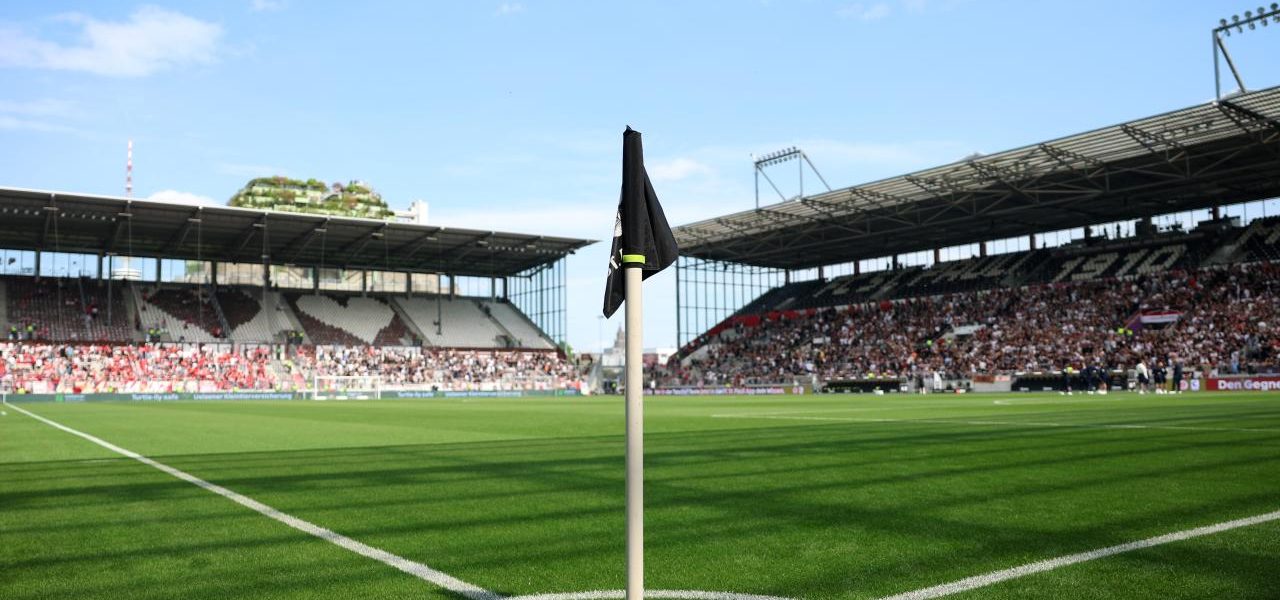
POLICY WIRE — Hamburg, Germany — The air in the Millerntor-Stadion on this particular Saturday isn’t just thick with anticipation; it’s practically humming with existential dread. For FC St. Pauli and VfL Wolfsburg, the final whistle of the 2025/26 Bundesliga season won’t merely signal the end of a match—it’ll cleave their very futures. One will almost certainly get a stay of execution, albeit via a treacherous playoff. The other, alongside an unsuspecting 1. FC Heidenheim, could find themselves plummeting into the financial — and reputational abyss of Germany’s second tier. It’s a brutal ballet of economics — and athletics, playing out on a meticulously manicured pitch.
It’s all down to one last, frantic ninety minutes. Both St. Pauli and Wolfsburg sit precariously tied on 26 points with Heidenheim, poised to either claw their way to a relegation playoff spot or suffer direct demotion. A draw or a loss at this stage doesn’t just mean disappointed fans; it means gutted budgets, desperate transfer sales, and years, perhaps, of rebuilding. They’re playing for survival, and the cold, hard cash that comes with staying in Europe’s premier football league, which, according to DFL figures, collectively hauled in approximately 3.97 billion euros in the 2022/23 season alone.
The permutations are headache-inducing. St. Pauli, currently propping up the table in 18th, must secure a victory at home against Wolfsburg. Even then, their fate isn’t entirely their own. They need Heidenheim—playing 1. FSV Mainz 05 simultaneously—to stumble. A Heidenheim win by too wide a margin, — and St. Pauli’s own heroics might mean nothing. But what if Wolfsburg wins? They’re almost certainly in the playoff, their slightly healthier -26 goal difference (compared to St. Pauli’s — and Heidenheim’s -29) providing a thin but present lifeline. Or is it?
“Look, you can’t get bogged down in all the what-ifs,” declared Wolfsburg coach Ralph Hasenhüttl, his voice gruff yet tinged with a palpable urgency. “We control our performance. We win this game, — and we give ourselves a chance. That’s all we can ask for. The lads know the gravity of this moment. They’ve prepared—physically, mentally—for war.” And that’s just it, isn’t it? For these clubs, it’s nothing less than a war for economic solvency.
The stakes couldn’t be higher. For the Kiezpiraten of St. Pauli, a club steeped in working-class ethos and an ardent global following (their social initiatives have seen partnerships extending even to projects in Pakistan, funding educational schemes), relegation would feel like a betrayal of more than just on-field aspirations. Their CEO, Andreas Rettig, speaking earlier in the week, didn’t mince words. “The community, the fans—they’re the heart of this club. We fight for them. We fight for the livelihoods tied to our badge. A drop in division means real-world impact for staff, for sponsors, for the entire district. It’s a heavy burden, but also a tremendous source of strength.” He isn’t wrong; the economic tether between football clubs and their cities runs deeper than most acknowledge.
The potential downfall would resonate far beyond Hamburg’s city limits. German football is a global spectacle, its players often hailing from every corner of the world. Take Wolfsburg’s promising young forward, Amin Daghim. Danish by nationality but with ancestral ties to the Muslim world—his presence on the field a quiet reminder of how far Bundesliga’s scouting networks reach, how diverse its talent pool truly is. Players like him, even at their burgeoning career stages, represent significant investments, both human — and financial. And losing top-flight status jeopardizes that developmental trajectory. These decisions reverberate globally, impacting aspirations of young talents from Dhaka to Dortmund.
📄 POLICY WIRE WHITEPAPER PUBLISHED: PAKISTAN'S NATIONAL SECURITY POLICY PRIORITIES
👉 READ BY CLICKING HEREThe official word from the dugouts paints a picture of readiness, but it’s a nervous one. Here are the determined souls who’ll be stepping onto the precipice:
FC St. Pauli (3-4-1-2): Vasilj – Dźwigała, Wahl, Andō – Oppie, Chima Fujita, Irvine, Pyrka – Metcalfe – Hountondji, Kaars.
VfL Wolfsburg (3-3-2-2): Grabara – Koulierakis, Vavro, Belocian – Mæhle, Souza, Kumbedi – Eriksen, Svanberg – Pejčinović, Daghim.
What This Means
Beyond the simple fact of who stays up or goes down, this final matchday embodies the increasingly cutthroat economics of modern football. For the losing side, relegation translates into a dramatic plunge in broadcasting revenue, which constitutes a lion’s share of a top-tier club’s income. It’s a shockwave that rattles everything from sponsorship deals to season ticket sales. Local businesses that thrive on matchday traffic feel the pinch almost immediately. For St. Pauli, a club with deep social and political roots, a descent might force uncomfortable choices between financial austerity and maintaining their progressive image and community projects. Wolfsburg, backed by Volkswagen, arguably has a softer landing net, but the reputational damage and impact on future player recruitment would still sting, forcing uncomfortable boardroom conversations in their automotive headquarters. Conversely, survival, even through the playoff, injects renewed vigor and a sense of collective purpose, fueling local pride and ensuring that a significant economic engine keeps sputtering along. The broader implication is clear: even in seemingly stable leagues like the Bundesliga, the margin for error is razor-thin, and the consequences for failure are swift and severe, extending far beyond the pitch itself. It’s a reminder that sports, at this level, are big business, with profound socio-economic footprints.