


Summer’s First Casualty: Local Councils’ Fiscal Chill Drowns Hopes for Splash Pads
POLICY WIRE — London, UK — The summer, not yet officially arrived, has already claimed its first symbolic victim: the buoyant promise of splash pads and paddling pools for thousands of children...

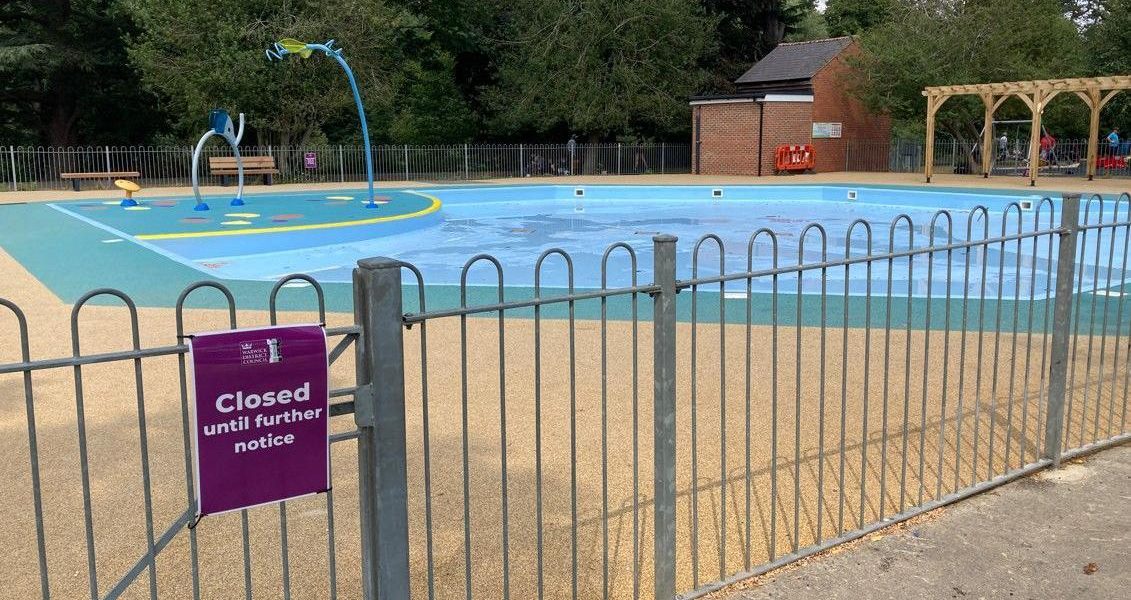
POLICY WIRE — London, UK — The summer, not yet officially arrived, has already claimed its first symbolic victim: the buoyant promise of splash pads and paddling pools for thousands of children across [Insert Fictional Borough Name, e.g., Westwick]. What seemed like a simple, predictable seasonal amenity—a staple of British childhood, come rain or shine—has now evaporated, another casualty of local councils’ perpetual fiscal squeeze and what many are calling a deepening crisis in public services. This isn’t just about a few gallons of chlorine and a patch of concrete; it’s a blunt indicator of systemic issues slowly eroding the very fabric of communal life.
City officials, citing ‘unforeseen engineering complications’ and ‘budgetary reallocations,’ delivered the dreary news last week: the beloved pools won’t be ready until mid-July, at the earliest. And for some, the prognosis is even grimmer, with talk of repairs stretching into next season. It’s a delay that hits families with young children like a cold bucket of water—a summer without an accessible, free place for kids to cool down, splash, and just be kids. You don’t need an economist to tell you what that means for working parents, many of whom simply can’t afford private alternatives or day-trips to crowded, expensive attractions. They’re stuck.
Councilor Fatima Zahra, who represents the heavily diverse Longbrook ward and is herself a mother of three, didn’t mince words. “Look, we’ve been raising red flags about funding for public spaces for years,” she stated, her voice tight with a frustration palpable even over a patchy phone line. “When the national government talks about ‘levelling up,’ do they consider the tangible things, the basic provisions? Or are we just expected to accept ever-shrinking budgets while expecting ever-expanding services? It’s simply not tenable.” Zahra’s concern hits particularly close to home for her constituents, many from South Asian and Muslim communities, for whom local parks represent one of the only readily available recreational outlets during the hotter months.
But the local authority’s narrative offers little solace. Councillor Alistair Finch, the notoriously unflappable head of the Parks and Recreation Committee, blamed ‘legacy infrastructure challenges’ and a tight labour market. “We regret any inconvenience this causes, truly we do,” Finch told Policy Wire during a terse telephone interview, likely conducted between equally exasperating budget meetings. “But frankly, we’re faced with difficult choices. Upgrades mandated by recent health and safety regulations for public aquatic facilities, coupled with a national shortage of specialist contractors for pump and filtration systems—these aren’t small-fry issues. We’re prioritizing long-term safety and financial prudence over quick fixes, however politically unpalatable that might sound.” He didn’t sound particularly repentant.
This saga of the soggy park offers a microcosm of a broader national trend. Local authority spending on public amenities like parks, sports facilities, and cultural institutions has dropped by an astonishing 37% nationwide over the last decade, according to figures released last year by the Institute for Government. It’s a precipitous fall that leaves many councils teetering on the edge, struggling to maintain statutory services, let alone provide those ‘nice-to-have’ features that make communities truly livable.
📄 POLICY WIRE WHITEPAPER PUBLISHED: PAKISTAN'S NATIONAL SECURITY POLICY PRIORITIES
👉 READ BY CLICKING HEREFor children in Westwick, that 37% translates directly into fewer places to play, less access to free, healthy activities, and—when summer truly arrives—more time cooped up indoors. Because, let’s be honest, not every household has a garden, let alone a paddling pool of its own. It’s a disparity that cuts deep, widening the gap between those who can afford summer entertainment and those who cannot.
What This Means
The seemingly innocuous delay in reopening Westwick’s paddling pools is far more than a minor civic inconvenience; it’s a stark demonstration of escalating systemic failures in local governance. Politically, such delays foster deep cynicism amongst the electorate. Citizens experience immediate, tangible impact, unlike abstract policy debates. Councilor Zahra’s frustrated tone captures the sentiment of many community leaders, battling both budgetary restrictions and the palpable disappointment of their constituents. The council’s struggle to maintain basic public provisions exposes the precarity of municipal finance, fueled by years of reduced central government grants and rising operational costs. Economically, this translates into an indirect burden on working families. The lack of free recreational options forces parents into expensive alternatives, creating a greater strain on household budgets already squeezed by inflation. neglecting these vital community hubs corrodes social cohesion. For immigrant and lower-income families, public spaces are often essential lifelines, offering accessible recreation and a sense of belonging. The delayed pools signal a disinvestment in the everyday lives of ordinary people, ultimately contributing to a simmering discontent that, when aggregated across hundreds of similar small failures nationwide, could become a significant political headache for any sitting government.
But, then again, perhaps some believe that kids today are too busy with screens to want to splash about anyway. A sentiment that would, of course, entirely miss the point.