


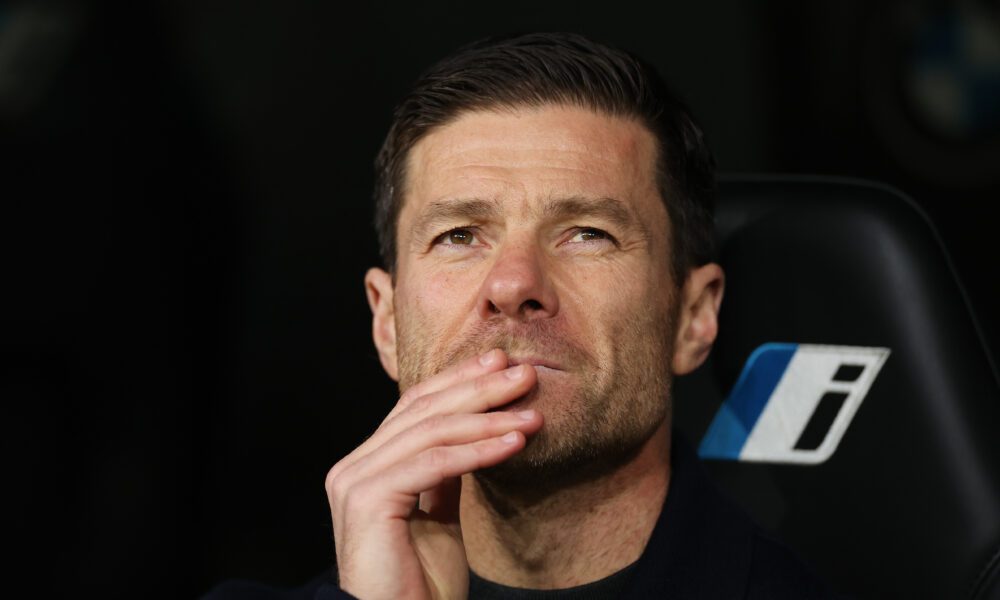
Algorithms Over Acclaim: Liverpool’s Data-Driven Bet Sparks Anfield Rebellion
POLICY WIRE — London, UK — While the global football intelligentsia hailed Xabi Alonso’s tactical alchemy at Bayer Leverkusen, crafting an improbable Bundesliga fairytale, Anfield’s strategists...

POLICY WIRE — London, UK — While the global football intelligentsia hailed Xabi Alonso’s tactical alchemy at Bayer Leverkusen, crafting an improbable Bundesliga fairytale, Anfield’s strategists apparently saw something else entirely. They watched, they crunched numbers, and they concluded that the magic of data, not dazzling public performance, pointed to a different heir apparent for the storied manager’s throne.
It wasn’t a philosophical musing or an idealistic pursuit of an unproven prodigy. Nope. Instead, according to Miguel Delaney, a seasoned journalist with the Independent, Liverpool didn’t even bother dialing Alonso’s number. Because, as the whisper goes through the hallowed halls of football finance, internal data and “other evidence” positioned Arne Slot as the superior pick for the Merseyside giant. It’s a move that feels less like a managerial appointment and more like a high-stakes investment decision, baffling millions.
The timing, though, that’s where the narrative fractures. Slot, currently at the helm of a Liverpool side languishing after an uninspiring campaign, has drawn the ire of the faithful. Fans, they’re not spreadsheet analysts. They’re witnesses. And what they’ve witnessed this season? A slow, painful slide. That 4-2 shellacking by Aston Villa last night? It wasn’t just a loss. It was the 12th Premier League defeat of the 2025-26 season, a particularly sour note in what has become a symphony of missed chances and defensive woes. The Reds have conceded 52 goals in 37 league games, their highest tally ever in a 38-game Premier League campaign, according to historical Premier League archives.
But the data, it seems, has spoken. “We operate in a landscape where every decision must be underpinned by a deep understanding of long-term sustainability and player compatibility with our club’s strategic objectives,” explained Julian Ward, a figure often associated with Liverpool’s recruitment analytics, in an internal club briefing, acknowledging, as is always the case, a strong appreciation for managerial excellence wherever it occurs. And you can almost hear the unsaid: that Slot’s profile—his playing style, his developmental metrics—aligned more perfectly with the algorithmic blueprint for Anfield’s future.
Fans, however, are a messy, inconvenient variable in this clinical equation. They booed Slot following a drab draw against Chelsea last Saturday, — and their frustrations aren’t easing. “This isn’t about numbers, is it? It’s about the soul of the club,” declared Imran Sheikh, leader of the ‘Anfield Global Supporters Alliance,’ a prominent fan collective with deep roots in regions like Pakistan and Bangladesh, where Liverpool’s following is, shall we say, a religion. “How can the club overlook a manager who delivered an unbeaten league season while opting for someone who’s led us to this dismal showing? It’s an affront to the passion our supporters show, whether they’re sitting in the Kop or watching at 2 AM from Karachi.” And Sheikh’s exasperation isn’t an outlier; it echoes through the global fandom.
📄 POLICY WIRE WHITEPAPER PUBLISHED: PAKISTAN'S NATIONAL SECURITY POLICY PRIORITIES
👉 READ BY CLICKING HEREAlonso, meanwhile, won the Bundesliga with Leverkusen, managing an unbeaten league run in 2023-24—a feat that turns heads anywhere. He later moved to Real Madrid, having managed 89 wins in 140 games there. He was exactly the kind of dazzling story, a ‘return of the prodigal son’ narrative that clubs like Liverpool usually eat up. Yet, here we’re, watching Anfield’s high command navigate choppy waters, relying on screens full of green and red metrics rather than the roar of the crowd or the consensus of commentators. It’s a gamble, pure and simple, and one that feels oddly disconnected from the very spirit of the game that generates all this commercial wealth.
What This Means
This decision, more than just a football appointment, exposes the deepening chasm between the old guard of gut-instinct management and the burgeoning empire of sports analytics. For Liverpool, a global brand with a massive economic footprint stretching from Europe to Asia, betting on data over raw popularity carries significant political and economic implications. If Slot delivers, the club’s data-driven approach will be vindicated, perhaps even emulated, transforming how managerial decisions are made across the sport. It’s a calculated risk, essentially commodifying ‘vision’ into a set of verifiable data points, an unsettling notion for many traditionalists. But if Slot falters further, not only will it validate the widespread fan discontent, it could also undermine the very authority of the club’s technical directorates, opening them up to unprecedented public scrutiny and accusations of aloofness. Such an outcome could shake investor confidence and alienate large segments of their devoted, deeply emotional fanbase, many of whom reside in emerging markets where the club’s identity is more cultural emblem than merely a sports franchise. It also speaks to a broader trend of sports becoming increasingly a game of numbers and corporate strategy, where romanticism often plays second fiddle to a well-calibrated algorithm.