


Hormuz’s Weary Cycle: Seoul Pins Blame on Tehran in Strait Incident
POLICY WIRE — Seoul, South Korea — The world’s most precarious maritime chokepoint has, once again, proven its volatile nature. And the fingers of accusation are pointing with unsettling...

POLICY WIRE — Seoul, South Korea — The world’s most precarious maritime chokepoint has, once again, proven its volatile nature. And the fingers of accusation are pointing with unsettling predictability toward Tehran. It’s hardly shocking, but it’s definitely concerning. When an international waterway, responsible for a significant chunk of global energy supplies, sees an incident like this, geopolitical ripples—and economic tremors—aren’t far behind.
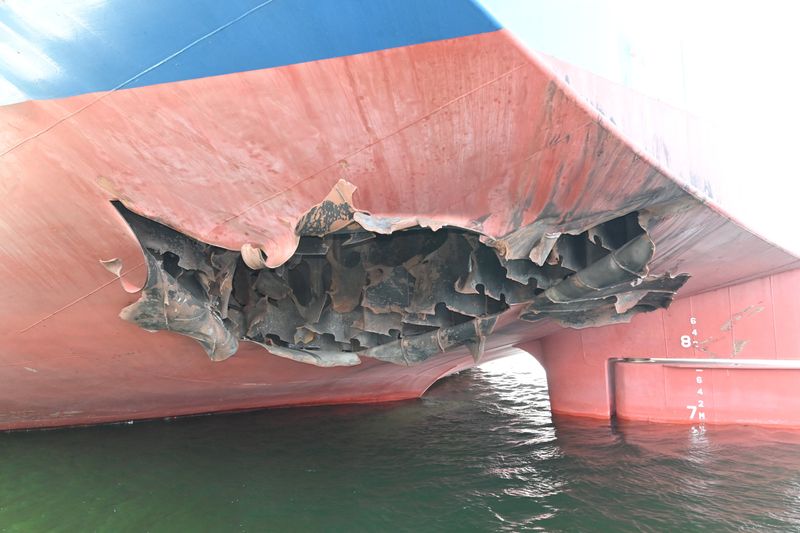
While official communiqués often waffle, tiptoeing around sensitive diplomatic fault lines, an unnamed South Korean official, according to the Yonhap news agency, didn’t mince words. He said it was “unlikely anyone but Iran” was behind a recent ship attack in the Strait of Hormuz. That’s not a soft suggestion; that’s pretty much an open indictment from a country with significant economic stakes in regional stability.
It’s become a grim routine, hasn’t it? Something blows up, gets intercepted, or goes missing near the Strait, and Iran becomes the default antagonist in the minds of many Western—and increasingly, some Asian—policymakers. They’ve earned that reputation, perhaps, but it doesn’t make the situation any less fraught.
“The intelligence, when pieced together, presents a rather compelling picture,” noted Ambassador Kim So-yeon, a seasoned diplomat formerly stationed in Washington, offering her perspective from Seoul’s policy circles. “While direct evidence isn’t always laid bare for public consumption—for obvious security reasons, you understand—the pattern, the methodology, it’s just too consistent. It points with uncomfortable clarity to one actor.” Her voice carried a palpable weariness. She’s seen this movie before. We all have.
For its part, Iran’s foreign ministry spokesperson, Saeed Khatibzadeh, quickly—and expectedly—dismissed the allegations. “These are tired, baseless accusations, part of a ceaseless campaign to demonize Iran and divert attention from the real destabilizing forces in the region,” he declared in a recent press briefing from Tehran. “They seek to manipulate events and blame us for their own geopolitical blunders.” It’s a standard script, to be fair; one we’re also very familiar with. But it’s a denial that rarely carries much weight in Washington or Brussels anymore.
But why does South Korea’s view matter so much? Because they’re a significant trading partner with various Middle Eastern nations, including some that might prefer to keep relations smooth with Iran. This isn’t just Seoul echoing Washington; it’s an independent assessment with real economic consequences for their shipping and energy security. And because geopolitical alliances are shifting, any friction can impact wider relations.
The Strait of Hormuz isn’t just some dusty corner of the world. It’s a vital artery for the global economy. According to the U.S. Energy Information Administration (EIA), roughly 21% of global petroleum liquids consumption and about one-quarter of global LNG exports transited the Strait of Hormuz in 2018. When those percentages get disrupted, even slightly, it sends shivers through commodity markets. That’s particularly true for energy-dependent nations across Asia, from India to Japan, whose vast populations and hungry industries rely on uninterrupted flows.
📄 POLICY WIRE WHITEPAPER PUBLISHED: PAKISTAN'S NATIONAL SECURITY POLICY PRIORITIES
👉 READ BY CLICKING HEREPakistan, for example, a nation consistently battling its own economic headwinds, relies heavily on imported oil to fuel its burgeoning industries and meet domestic demand. Any supply chain jitters in Hormuz directly translate to higher fuel costs at its pumps and greater inflationary pressures on its already struggling citizens. It’s a cruel reality for many developing nations in the broader Muslim world, perpetually caught between regional rivalries and global market forces.
The incident itself? Specifics often remain murky—at least initially. But the fact that a high-ranking official is pointing a very public finger implies more than just conjecture. It implies intelligence agencies are confident they’ve got their target. And confidence, in this line of work, isn’t casually offered.
What This Means
This isn’t just about a damaged ship or diplomatic bickering; it’s about a deepening predictability—and peril—in one of the world’s most critical flashpoints. Economically, prolonged instability in Hormuz could trigger substantial spikes in oil prices, hurting consumers globally and exacerbating inflation in already vulnerable economies. Nations reliant on energy imports, like those throughout South Asia, will inevitably face the harshest brunt, complicating their efforts towards sustainable growth and social stability.
Politically, such direct accusations from a nation like South Korea—often striving for a balanced approach in its foreign policy—signals a growing international consensus, or at least frustration, regarding Iran’s alleged destabilizing actions. This could galvanize tougher international stances, perhaps even leading to more concerted efforts to restrict Iranian maritime activities or increase sanctions. Because it’s hard to look away when a region that affects nearly a quarter of global energy output keeps setting off alarms. The broader regional instability only compounds these fears, suggesting an interconnected web of tensions that’s growing tighter with each passing incident. And that, folks, isn’t good for anyone’s bottom line, or their peace of mind.