


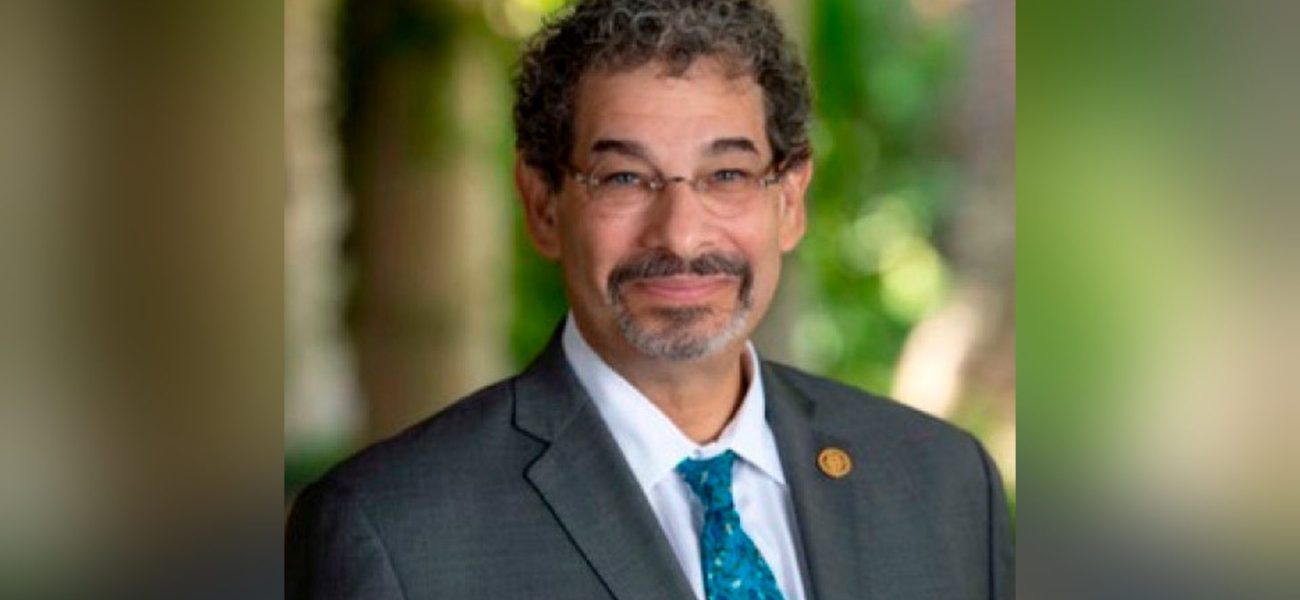
A Doctor in the House: UNM’s New Helm, and the Public University Tightrope
ALBUQUERQUE, N.M. — Steering a major public university in 2024? It’s not for the faint of heart. These institutions—behemoths of research, education, and economic impact—often find themselves...

ALBUQUERQUE, N.M. — Steering a major public university in 2024? It’s not for the faint of heart. These institutions—behemoths of research, education, and economic impact—often find themselves in a perpetual wrestling match with state legislatures, budget cuts, and the ever-shifting whims of higher education policy. You see the turnover; you feel the strain. So, when the University of New Mexico’s Board of Regents finally settled on their man Friday, electing Dr. Steve Goldstein as the 24th president, it wasn’t just another personnel announcement. No, it was a carefully calculated gambit for a campus trying to chart a course through increasingly turbulent waters.
Goldstein, plucked from his vice chancellor post at the University of California, Irvine, arrives in Albuquerque carrying a heavy medical bag—he’s a pediatric cardiologist by trade, with MD and PhD degrees from Harvard, for crying out loud. He’s spent years knee-deep in health sciences, not necessarily in the broader, sprawling bureaucracy of a general university system. But perhaps that’s exactly the point, isn’t it? UNM, after all, isn’t just a pretty campus. It’s got a world-class academic health center, one that’s often the primary, if not sole, provider of complex medical care for swaths of New Mexico’s often underserved population. But this move? It feels less about finding a pure academic philosopher and more about finding a high-stakes administrator who understands revenue streams, federal grants, and, crucially, how to make a sprawling enterprise run. He’s going to need to, because public university finances? They’re never simple.
He’ll step into the sizable shoes of President Garnett Stokes, who’s riding off into the sunset this summer after eight years on the job. She’s weathered her share of storms, you bet. “Look, this job’s a pressure cooker, an absolute grinder,” Stokes reflected, her voice tinged with the weary satisfaction of a marathon runner finishing the race. “But I can confidently say I leave UNM stronger, more connected to our communities, and punching above its weight, especially in research funding. Dr. Goldstein, he’s a sharp cookie. He’ll find the leverage points, I’m sure of it.” It’s a statement that manages to be both commendation and a clear warning, all at once. And he’s certainly inherited a university with serious academic heft, pulling in some $474 million in research expenditures in fiscal year 2022, according to the National Science Foundation, placing it among the top research institutions nationally.
Goldstein, for his part, projects an unflappable air of confidence, a veteran academic-cum-executive ready for the fray. “The University of New Mexico isn’t just an institution; it’s an absolute cornerstone for this state—academically, culturally, and for health,” he stated, his voice even. “We’re going to keep driving forward on all those fronts. Because when UNM thrives, New Mexico thrives, and that means everything, particularly for populations historically neglected. My career’s been about improving health outcomes, and I see this new role as an extension of that mission, just on a much grander scale.” It’s a sentiment designed to soothe, but also to signal a shift toward the tangible impact of an institution. A doctor doesn’t just treat symptoms; they look for systemic cures, and Goldstein’s career trajectory implies he sees the university in similar diagnostic terms.
What This Means
Goldstein’s arrival suggests the Regents aren’t just looking for an educational leader; they’re after a rainmaker with a focus on public health and hard science, someone who can speak the language of funding agencies and medical consortia. This could mean a doubling down on UNM’s already formidable health sciences apparatus, potentially attracting more federal grants—a big win for state coffers, as well as the university. It might also shift some institutional focus towards interdisciplinary research that blends medical solutions with societal challenges, a critical path for a state like New Mexico, which grapples with unique rural health disparities.
📄 POLICY WIRE WHITEPAPER PUBLISHED: PAKISTAN'S NATIONAL SECURITY POLICY PRIORITIES
👉 READ BY CLICKING HEREFrom an economic standpoint, bringing in a leader with deep roots in California’s expansive, privately funded university ecosystem suggests a pivot, perhaps, towards greater endowment growth and private philanthropy. California universities, as evidenced by studies tracking the market forces driving academic and athletic brands, often excel at attracting significant non-state funding. Can Goldstein translate that to the distinctly different landscape of New Mexico? It’s a question policymakers, state legislators, — and prospective donors will be keenly watching.
And let’s not forget the global angle, something a lot of these university searches don’t overtly talk about, but it’s there, bubbling under the surface. Universities are increasingly global players. UNM already attracts a diverse student body, including those from Muslim-majority countries seeking robust STEM and medical programs. A president with a strong background in health sciences, especially one conversant in global health challenges (pediatric cardiology often touches on international public health efforts), might see opportunities for UNM to expand its international outreach. This isn’t just about recruiting more fee-paying foreign students—though that’s a nice bonus—it’s about building research collaborations that address global health issues, potentially even partnerships with institutions in regions like South Asia or the Middle East that face similar public health conundrums. UNM’s work on diabetes or infectious diseases, for example, has worldwide relevance. So, his health sciences background doesn’t just mean better local healthcare; it’s got implications for UNM’s international academic footprint too.
It’s not just about managing an academic institution. It’s about leading an economic engine, a primary healthcare provider, — and an intellectual embassy all rolled into one. And with Goldstein at the helm, it seems the Regents are betting that a doctor’s surgical precision might be just what the doctor ordered for UNM’s next chapter. It’ll be a tough act, but it’s a necessary one.