


BRICS Brouhaha: Iran-UAE Spat Exposes Fault Lines in ‘Global South’ Alliance
POLICY WIRE — Cape Town, South Africa — So, you thought the emerging ‘Global South’ alliance was all about solidarity, a united front against the old world order, did you? Turns out, even...

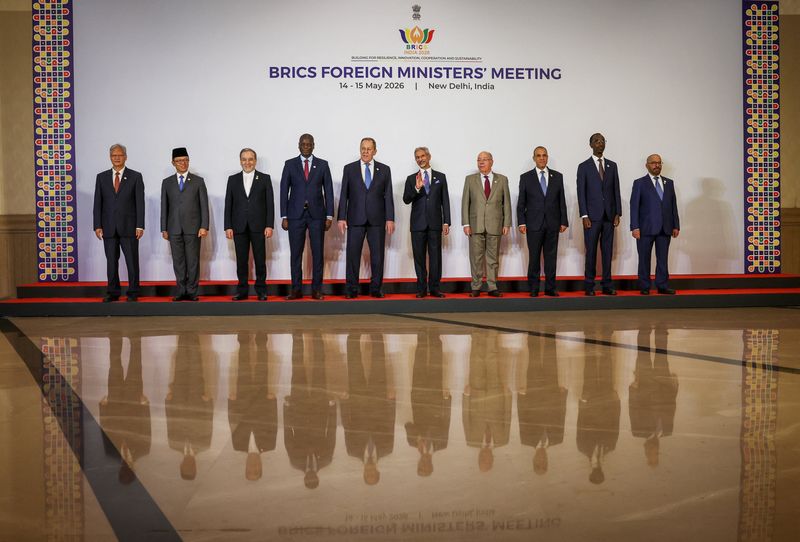
POLICY WIRE — Cape Town, South Africa — So, you thought the emerging ‘Global South’ alliance was all about solidarity, a united front against the old world order, did you? Turns out, even a club formed to shake up the established powers can’t escape some good, old-fashioned regional squabbling. The recent BRICS foreign ministers’ meeting in South Africa offered a stark, if somewhat ironic, illustration of just that. An old festering wound—the ownership of three islands in the Strait of Hormuz—flared up, pushing Iran and the United Arab Emirates into a decidedly undiplomatic corner.
It was a proper dust-up, caught awkwardly within the aspirations of a bloc eager to project an image of collective strength and newfound geopolitical influence. The crux of the argument, as it always seems to be in the Gulf, revolves around Abu Musa, Greater Tunb, and Lesser Tunb. Iran claims them. The UAE says they’re theirs, — and have been since the British packed up their bags way back when. And just when you thought everyone was going to hold hands and talk about a multipolar future, this old bone of contention gets rattled, loudly, on the global stage.
Iran’s Foreign Minister Hossein Amir-Abdollahian wasn’t shy about it, making Tehran’s position abundantly clear, even amidst discussions of economic cooperation and shared geopolitical aims. “These islands are, — and always have been, an indivisible part of Iranian territory. Let’s be absolutely plain: no statement, no meeting, no back-channel whispering changes the undeniable fact of our sovereignty,” he’s reported to have said, his tone leaving little room for ambiguity. “This is not a matter for negotiation; it’s settled history, full stop.” You can bet that ruffled some feathers.
Meanwhile, the UAE, no stranger to assertive diplomacy, fired back. Its top diplomat, Foreign Minister Abdullah bin Zayed Al Nahyan, adopted a cooler, yet firm, posture. “We believe deeply in the principle of peaceful resolution for all disputes. But you’ve got to play by the rules,” Al Nahyan remarked to aides after the session, a source close to the delegation later indicated. “International law offers clear mechanisms for such territorial differences, and a constructive dialogue, based on respect for established norms, is always the appropriate path forward. Anything else is, frankly, just noise.”
This little diplomatic tiff, surfacing right in the middle of BRICS deliberations, paints a revealing picture. It’s not just about historical claims; it’s about control over strategic shipping lanes—a choke point, really—for global oil trade. Just imagine: around 21% of global petroleum liquids passed through the Strait of Hormuz in 2018, according to the U.S. Energy Information Administration. It’s not small stakes, then. This isn’t just about rocks in the water; it’s about economic lifelines.
And for countries like Pakistan, watching these fireworks from the sidelines, it’s not exactly reassuring. Islamabad’s strategic outlook has long factored in the delicate balance of power and alliances in the broader Muslim world and across South Asia. Instability, or public squabbles among key regional players, especially those part of new, supposedly stabilizing blocs, only complicates things for a nation trying to manage its own complex foreign policy, pursue economic growth, and maintain regional stability (check out insights on Pakistan’s macroeconomic future). When partners argue publicly like this, it makes grand declarations about a new global order feel, well, a bit hollow, doesn’t it?
📄 POLICY WIRE WHITEPAPER PUBLISHED: PAKISTAN'S NATIONAL SECURITY POLICY PRIORITIES
👉 READ BY CLICKING HEREBecause ultimately, these emerging blocs, the so-called alternative to Western dominance, still have to contend with old resentments and national interests. And those interests often clash, hard. It’s a messy reality that grand visions of multilateralism sometimes just can’t gloss over. But, hey, that’s diplomacy for you—always a work in progress, even for the self-proclaimed new kids on the block.
What This Means
The Iran-UAE spat isn’t just an internal squabble; it’s a real-world stress test for the expanded BRICS bloc and the broader narrative of a coalescing ‘Global South.’ Politically, it exposes the inherent difficulties in maintaining cohesion when diverse national interests, particularly deep-seated historical grievances, collide. It signals that while economic alignment or a shared desire to dilute Western influence might bring countries together, it doesn’t automatically erase bilateral frictions. For states hoping to join or align with BRICS—perhaps even nations like Pakistan—it means they must contend with a bloc that, despite its ambitions, is not a monolithic entity. It’s more of a collective of self-interested states with their own, often competing, agendas.
Economically, persistent tensions between key energy players like Iran and the UAE, especially over strategic maritime choke points, create an undercurrent of instability for global markets. Though perhaps contained to the diplomatic realm for now, any escalation could threaten oil transit and supply chains, driving up prices and adding another layer of uncertainty to an already volatile global economy. For BRICS itself, this kind of internal disagreement—played out on the diplomatic field—makes its grand promises of economic cooperation seem a little less iron-clad. It chips away at its credibility as a truly harmonious alternative power structure, demonstrating that ‘de-dollarization’ and ‘multipolarity’ still run into the timeless, stubborn walls of national sovereignty and contested geography. It’s a pragmatic reminder: even in the ‘new’ world order, some things never change.