


The £39 Million Gamble: Premier League Titans’ Scramble for Raw Talent Unveils Deeper Market Pressures
POLICY WIRE — London, UK — The modern gladiatorial arena of European football isn’t solely about goals and glory; it’s a cutthroat, multi-billion-dollar R&D lab, relentlessly hunting for the...

POLICY WIRE — London, UK — The modern gladiatorial arena of European football isn’t solely about goals and glory; it’s a cutthroat, multi-billion-dollar R&D lab, relentlessly hunting for the next big discovery. Wealthy patrons — often representing interests far beyond the pitch — funnel sums into scouting, analysis, and bidding wars, all to shave milliseconds off a sprint or perfect a cross. It’s a grand spectacle of market efficiency, or perhaps, spectacular inefficiency, depending on your perspective. Right now, the attention isn’t exclusively on the gleaming trophies, but on the delicate calculus of securing talent that might, just might, justify stratospheric price tags in an ever-inflating market. These aren’t simply player acquisitions; they’re strategic investments, reputation battles, and often, exercises in preventing a competitor from getting ahead. And the targets? They often emerge far from the blinding lights of the Premier League.
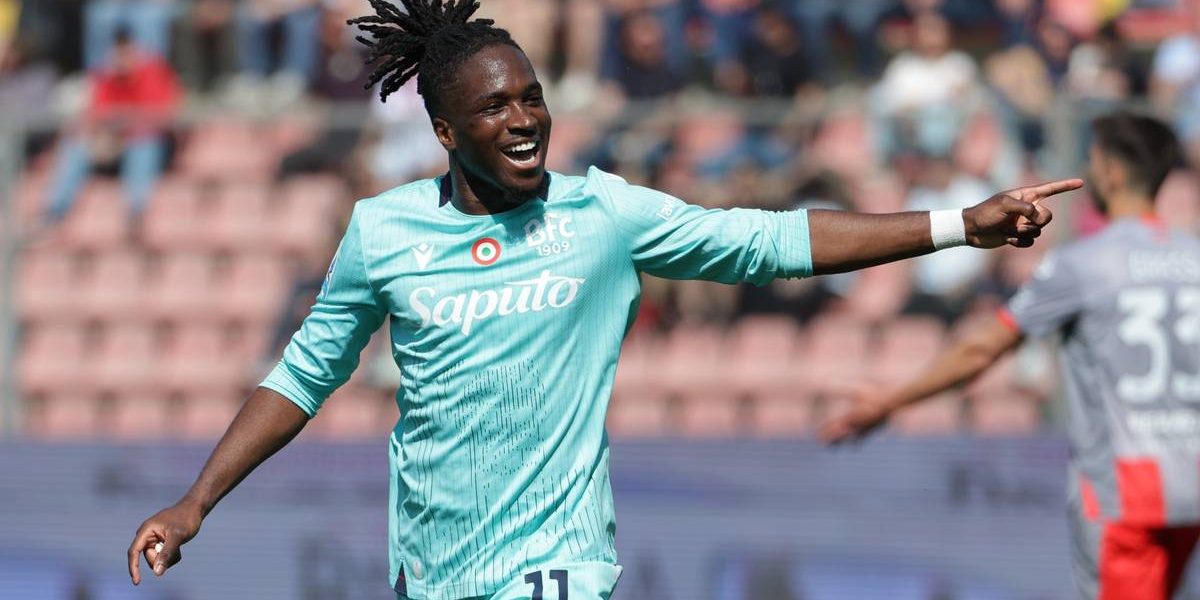
Take Jonathan Rowe, a name not yet chanted in stadiums from Manchester to Milan, but one now whispered in executive boardrooms across Europe. The 21-year-old winger, currently plying his trade for Bologna in Serie A, has suddenly found himself at the nexus of a looming tug-of-war involving two of England’s financial heavyweights: Manchester United and Chelsea. Teamtalk, an outlet with a reputation for getting these things largely, if not entirely, correct, recently reported it wouldn’t surprise anyone if the Red Devils moved aggressively for Rowe, putting them directly in Chelsea’s path. It’s not a fight for survival, no, but it feels like one sometimes, doesn’t it? These clubs aren’t just buying players; they’re buying hope, brand equity, — and a competitive edge.
But that’s where the calculus gets really messy. Manchester United, under the watchful, newly powerful eye of INEOS honcho Sir Jim Ratcliffe, isn’t just looking for a new left-winger because previous mainstays have departed. They’re seeking a fresh slate, a different archetype for their offensive schema. This summer, their midfield also requires surgical precision. And yes, the pursuit of a young, dynamic forward like Rowe signals a broader strategy. These global clubs, you see, aren’t just selling tickets in Salford or Stamford Bridge. They’re broadcasting dreams into millions of homes, from Cairo to Karachi. Fans in Pakistan, for instance, display an unwavering loyalty to English Premier League teams, particularly United, turning local cafes into frenzied shrines on match days. That viewership, that merchandise revenue stream—it all feeds the beast, making these player bids financially sensible, at least in theory. The ripple effects of Spanish football’s brinkmanship pale in comparison to the EPL’s global reach.
So, what makes Rowe such an attractive proposition? He’s a creative force, a raw diamond with the potential to slice open defenses. His Bologna coach, Vincenzo Italiano, views him as a potential game-changer — a player with the physical gifts and mental fortitude to truly elevate a team. Yes, his statistics aren’t exactly earth-shattering yet — a modest three goals and one assist at this stage, according to football analytics site Opta Sports — but those who track European football closely insist his underlying attributes point to future stardom. And importantly, his estimated £39.2 million valuation, though substantial, isn’t as eye-watering as some other targets floating around the transfer rumor mill. It’s a calculated risk, betting on talent that hasn’t fully blossomed but offers significant upside. They’re buying potential, not certainty, which is where things often go sideways.
But don’t just take my word for it. “We aren’t in this game for short-term fixes or celebrity acquisitions; we’re here to build a sustainable, competitive institution,” quipped Sir Jim Ratcliffe in a private briefing, outlining the longer-term vision for Manchester United. “Every pound spent, every talent identified, needs to fit into a coherent structure. We’ve got to be smarter than the rest, haven’t we?” On the other side, a source close to Chelsea’s recruitment told this wire, “The market is incredibly aggressive now. You pay for potential or you get left behind. We track hundreds of players globally, but it comes down to a feeling, an assessment of raw attributes against the specific demands of the Premier League. Everyone wants a bargain, but there are no true bargains left, just better investments.” And they’re right; these aren’t just scouting missions; they’re high-stakes financial manoeuvres.
📄 POLICY WIRE WHITEPAPER PUBLISHED: PAKISTAN'S NATIONAL SECURITY POLICY PRIORITIES
👉 READ BY CLICKING HEREAston Villa and Galatasaray are also lurking, mind you, indicating broader interest, but it’s the perennial scramble between the English elite that commands the headlines and, more critically, drives up the price. They’ve both made mistakes before — lots of ’em. Chelsea’s recent spending spree and United’s well-documented transfer missteps mean every decision now comes under a harsh spotlight. This isn’t just about winning games; it’s about winning the narrative, showing ambition, and justifying the astronomical ticket prices and television subscriptions that underpin their entire financial model. It’s an almost existential exercise for clubs whose brands extend globally, including across the Muslim world, where football, much like geopolitics, can be a potent soft power tool. They know Asia’s unsung power plays a major role in their financial viability.
What This Means
The intensifying battle for Jonathan Rowe highlights the paradoxical nature of modern football economics. On one hand, clubs like Manchester United and Chelsea, armed with vast capital, seek ‘undervalued’ assets to gain a competitive edge while attempting to skirt Financial Fair Play regulations. It’s an elaborate dance between ambition — and accounting. The bidding war itself inflates the value of such players, pushing their prices further from any rational ‘bargain’ status, yet still appearing palatable compared to the mega-money moves for established stars.
Economically, these transfers underscore the Premier League’s dominance as a financial black hole, drawing in talent and capital from leagues like Serie A, thereby consolidating its power and viewer base globally. Politically, the intense rivalry and global fan engagement, especially across South Asia and the Muslim world, demonstrate football’s enduring role as a powerful, albeit often overlooked, instrument of soft power. Club loyalties can transcend national boundaries, creating vast, emotionally invested consumer bases for everything from merchandise to broadcasting rights. It’s not just a game; it’s an economic engine — and a cultural phenomenon.