

Thai Giant Unearthed: A Deep Dive into Paleontology, Politics, and ASEAN’s Ancient Pasts
POLICY WIRE — Bangkok, Thailand — Sometimes, the grand narratives shaping nations—trade wars, regional power plays, the endless ballet of domestic squabbles—can feel awfully immediate. Insignificant,...

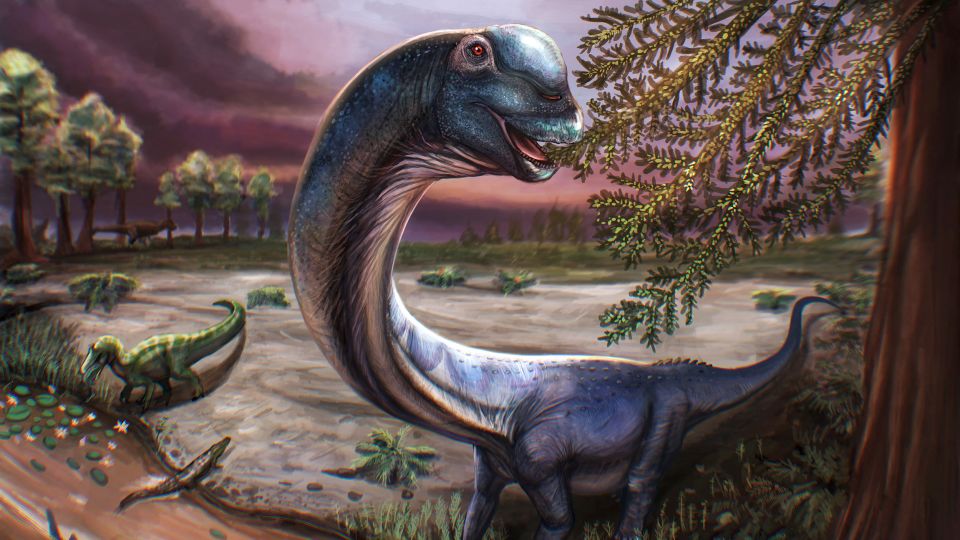
POLICY WIRE — Bangkok, Thailand — Sometimes, the grand narratives shaping nations—trade wars, regional power plays, the endless ballet of domestic squabbles—can feel awfully immediate. Insignificant, even. But then, Earth does something to remind us of its patience, its truly unfathomable timeline. Something like unearthing a beast that stomped these very lands untold millions of years before humans figured out fire. A gargantuan set of bones, bigger than anything thought possible in Southeast Asia, has recently clawed its way back into the daylight in Thailand, ripping through modern preoccupations with the blunt force of geologic time.
It’s not just a collection of fossils; it’s a reawakening. Paleontologists, hushed and reverent, confirm what locals probably just assumed was another big, old rock: they’ve identified a brand-new species of giant dinosaur. And no, we’re not talking about some garden-variety lizard here. We’re talking ‘holy cow, that thing ate small cars for breakfast’ scale. This wasn’t some sleepy academic announcement buried in a journal; it’s got Bangkok buzzing, and not just among the science set. It’s a national moment.
And you’ve gotta wonder, doesn’t it make you feel a little small? We bicker over inches of disputed territory, argue about which cultural identity trumps another, and then nature goes, ‘Hey, remember when the landmass you’re standing on was part of a supercontinent called Gondwana, chilling with Africa and India?’ Because it turns out this ancient monster walked what would eventually become Southeast Asia during the Cretaceous period—a period rich in diversity across the former Gondwana fragments.
The implications aren’t just for dusty museum displays. This isn’t just about kids gawking at skeletal reconstructions. Prime Minister Srettha Thavisin, usually consumed with boosting tourism numbers or navigating thorny political alliances, reportedly took a keen interest. His government, keen to diversify its economic portfolio and enhance its global image beyond beaches and bustling markets, sees a tangible asset here. “This discovery is more than just science; it’s a profound reaffirmation of Thailand’s deep heritage,” a spokesperson for the Prime Minister’s office, requesting anonymity to discuss policy impacts, told Policy Wire. “We anticipate significant international scientific collaboration and, frankly, an economic uptick from heightened paleontological interest. We aren’t just a nation of ancient temples; we’re a land that housed giants.”
But beyond the immediate economic promise, there’s a deeper resonance playing out across the region. Across the Bay of Bengal, in Pakistan, similar scientific endeavors are slowly piecing together fragments of a shared ancient past. Paleontologists there, particularly in Balochistan, have uncovered significant dinosaur fossil sites in recent decades. Dr. Ali Rahman, a senior research fellow specializing in vertebrate paleontology at the Natural History Museum in Islamabad, articulated a common regional sentiment. “Each discovery in this part of the world – whether it’s in Thailand, Pakistan, or even less-explored parts of Central Asia – doesn’t just fill in a gap in the scientific record; it stitches together our collective understanding of Earth’s story. It creates a shared, intellectual currency, binding nations through the pursuit of knowledge. It fosters a very necessary sense of regional scientific pride, something we don’t always celebrate enough.” His sentiments resonate, acknowledging a shared, if long-forgotten, history.
That kind of shared intellectual currency? It’s not something you can quantify easily, but it’s real. This find could be the trigger for increased regional scientific exchange, joint ventures, maybe even dedicated research funds that transcend modern geopolitical divides. After all, a T-Rex-sized behemoth doesn’t care about border disputes or economic treaties. It just *was*.
📄 POLICY WIRE WHITEPAPER PUBLISHED: PAKISTAN'S NATIONAL SECURITY POLICY PRIORITIES
👉 READ BY CLICKING HEREThis particular beast, currently nameless but already a star, probably dwarfed a lot of other Cretaceous giants. And what’s interesting is how quickly the Thai government moved to secure the site, establishing clear perimeters, and—crucially—announcing immediate plans for a dedicated museum or exhibition space. They’re not letting this slip through their fingers; not when national bragging rights are involved. Last year alone, global paleontological tourism, though niche, reportedly contributed over $500 million to local economies in areas boasting significant finds, according to figures compiled by the Society of Vertebrate Paleontology, suggesting there’s a serious payout to be had.
What This Means
This colossal discovery isn’t just good news for science; it’s a fascinating case study in how deep history can suddenly collide with contemporary policy. Economically, Thailand now possesses a potential anchor for niche tourism, attracting specialists and enthusiasts—an intellectual and financial boon that requires careful management and infrastructure development. The immediate challenge is securing funding for preservation, research, and public display, potentially drawing from international grants or, more politically astute, leveraging regional cooperative frameworks like ASEAN.
Politically, the find provides a soft-power victory. It elevates Thailand’s profile as a nation not only rich in ancient human history but also ancient geological wonders, drawing attention and prestige away from the more contested or politically sensitive realms. It’s a clean win, something leaders can trumpet without controversy. Because when the world stares at the bones of a monster, it tends to forget, for a moment, the human-made problems. And regionally, Dr. Rahman’s point holds: these shared ancient histories offer a rare avenue for collaboration in an often-fractious region. If the bones from 80 million years ago can’t get neighboring states talking about scientific progress and shared heritage, what will? It’s certainly a more engaging prospect than, say, discussing carbon tariffs. It also serves as a poignant reminder of our relatively brief blip on Earth’s extensive timeline, perhaps offering a humbling perspective for policymakers grappling with immediate, yet ultimately fleeting, human concerns.
And for Pakistan and other South Asian nations, whose own paleontological efforts often struggle for recognition and funding, Thailand’s high-profile success could be a significant boost. It might encourage greater investment in similar domestic projects and foster more cross-border research, helping these nations piece together their own extensive ancient records and carve out a more robust position in the global scientific community. Or it could just spark some good-natured rivalry; who’s got the biggest dinosaur in the backyard? Either way, the sleeping giants of Asia are definitely starting to stir.