

Poland’s Persistent Price Problem: Households Brace for Sticker Shock Resurgence
POLICY WIRE — Warsaw, Poland — For average folks across Poland, it wasn’t the distant rumble of tanks or the political kerfuffle in Brussels that hit hardest last month. Nah, it was...

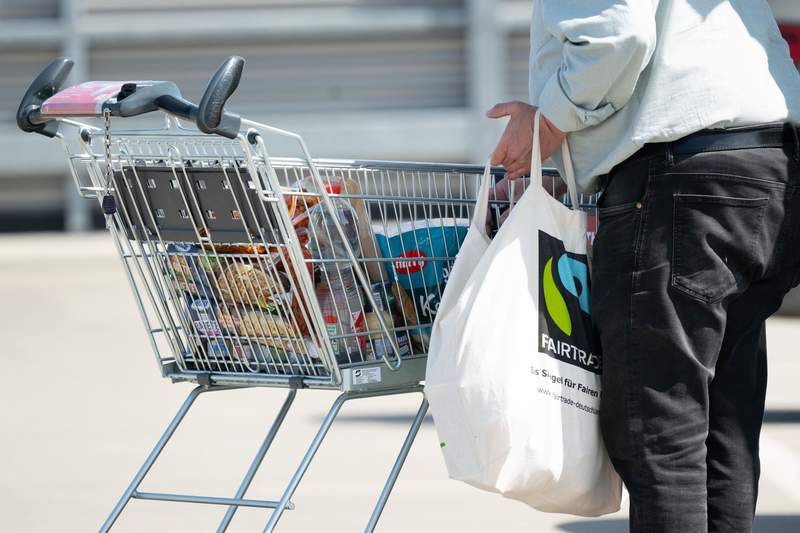
POLICY WIRE — Warsaw, Poland — For average folks across Poland, it wasn’t the distant rumble of tanks or the political kerfuffle in Brussels that hit hardest last month. Nah, it was the cashier’s ding. It was the fresh produce aisle. It was the electricity bill that decided to act a fool.
See, after months of telling everyone inflation was on the retreat, getting ready to pack its bags and leave town, Poland’s consumer price index just got the memo: it ain’t going anywhere fast. Official data from Statistics Poland (GUS) confirmed that annual inflation climbed to a 10-month high of 4.3% year-on-year in March 2024. But it’s not just a number on a page, is it? It’s a tighter belt, a second thought about that vacation, and maybe, just maybe, another layer of frustration with whoever’s steering the economic ship.
It’s not as if anyone was caught entirely off guard. Energy costs, bless their fickle hearts, remain stubbornly high. Food prices? They’ve been a headache for ages. And, you know, everything else seems to catch a cold when those two start sneezing. But this fresh uptick, following a period where everyone — from the Prime Minister on down — was practically chest-thumping about price stability, well, it stings a bit.
“We’re seeing a temporary reacceleration, largely due to external energy shocks — and VAT reinstatements on food. It’s a global dance, not just a Polish polka,” asserted Finance Minister Andrzej Domański in a recent press conference, ever keen to point outwards. You could almost hear the implicit plea: ‘Don’t blame us, we’re just living in it.’
But the opposition isn’t buying the ‘temporary’ line. “Temporary, they say? Try telling that to a family struggling to make ends meet,” shot back former Prime Minister Mateusz Morawiecki, now leading the opposition’s charge. “This government made promises, — and now the average Kowalski is paying for their indecision and misdirection. The cost of living isn’t a theory; it’s dinner on the table.” Sharp, — and cuts to the quick, doesn’t it?
And speaking of global dances, what happens in Warsaw sure doesn’t stay in Warsaw. Inflationary pressures in Europe — especially in energy-dependent nations like Poland — often echo sentiments halfway across the world. Think about it: a surge in global oil prices or disrupted agricultural supply lines from Ukraine doesn’t just hit European ports. They reverberate. India, for instance, grapples with its own intricate inflation battles, fueled by different but interconnected global market forces, seeking alternative energy paths to shield its massive population. It’s a complex web. We’re all tied to the same commodities carousel, you know.
Pakistan, with its historical reliance on imported oil and commodities, understands this brutal economic math intimately. When energy prices jump, families in Karachi or Lahore feel it just as acutely as those in Kraków. Their governments, too, face the impossible choice: subsidize and empty the treasury, or let prices rise and risk social unrest. It’s a recurring nightmare, a shared reality in the global south as much as in Central Europe, suggesting that underlying structural weaknesses — be they reliance on fossil fuels or precarious supply chains — bind us all in this inflationary tango.
📄 POLICY WIRE WHITEPAPER PUBLISHED: PAKISTAN'S NATIONAL SECURITY POLICY PRIORITIES
👉 READ BY CLICKING HEREThe Polish Central Bank — NBP — hasn’t exactly been shy with its interest rate hikes in the past. But now? They’re between a rock and a hard place. Raise rates too aggressively, — and you choke off whatever economic growth is sputtering along. Hold fire, — and prices just keep marching upward, eroding purchasing power and fanning discontent. It’s a delicate balance; nobody’s got easy answers here.
Because ultimately, these aren’t just macroeconomic charts for some economist to pontificate over. This is about real people’s grocery budgets, their holiday plans — or lack thereof — and their overall sense of economic security. That’s a political hot potato if ever there was one. It sets the stage for a nasty, grinding sort of politics, where every price tag feels like a referendum.
What This Means
The return of stubbornly high inflation carries several potent implications for Poland. Domestically, it’s a political millstone around the neck of the relatively new pro-European coalition government. Having promised to restore stability and ‘normality’ after years of Law and Justice (PiS) rule, this latest price surge hands significant ammunition to the opposition, allowing them to frame the government as ineffective or, worse, deceitful regarding economic management. Don’t expect any love from average consumers either. This will inevitably fuel public cynicism, making future reforms, however necessary, even harder to push through.
Economically, it likely means the NBP’s rate-cutting cycle is on indefinite hold, despite calls from some corners for easing monetary policy. Maintaining price stability — or at least fighting the impression of losing that battle — will be paramount, meaning borrowing costs for businesses and individuals aren’t coming down anytime soon. This, naturally, acts as a brake on investment — and consumption. It’s an economy constantly applying its own handbrake.
Regionally, Poland’s economic health impacts its standing within the European Union. While not a Eurozone member, sustained economic instability in a major Central European economy can add another layer of uncertainty to a bloc already wrestling with Germany’s industrial woes and geopolitical pressures. Poland’s persistent price pain means Warsaw will likely have less headroom to focus on broader EU initiatives, instead diverting attention inwards — a luxury few governments can afford in this tempestuous age.