


Japan’s Audacious Bet: Moriyasu Gambles on Depth, Not Star Power, for World Cup Glory
POLICY WIRE — Tokyo, Japan — In the grand, often theatrical, arena of international football, the pronouncements of national team coaches rarely land without a tremor. But Hajime Moriyasu, architect...

POLICY WIRE — Tokyo, Japan — In the grand, often theatrical, arena of international football, the pronouncements of national team coaches rarely land without a tremor. But Hajime Moriyasu, architect of Japan’s surging football narrative, managed to unleash an earthquake — a seismic event centered not on who made his World Cup squad, but unequivocally on who didn’t.
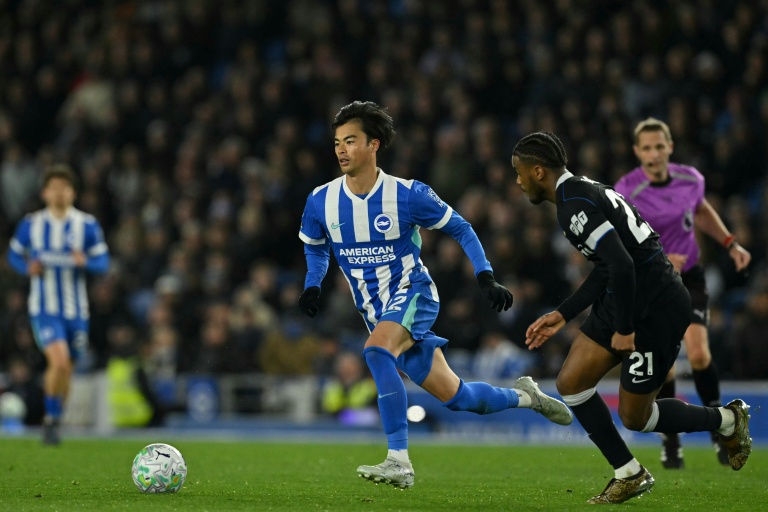
It wasn’t a sudden twist of fate; it was the cruel, lingering hand of injury. Star winger Kaoru Mitoma, a genuine difference-maker on the pitch and a lightning rod for Japanese hopes, has been ruled out. His hamstring, reportedly torn during Brighton’s recent thrashing of Wolves in the Premier League, simply won’t heal in time. Moriyasu, appearing visibly strained in front of hundreds of eager reporters here, termed Mitoma’s absence a ‘major presence’ deficit. He’s not wrong; it’s a huge blow.
And what’s worse, the squad list itself doesn’t contain just that one prominent absentee. Monaco forward Takumi Minamino also saw his World Cup dreams dashed by a nasty ACL tear back in December. But coaches make choices, often brutally, and Moriyasu, for all his tears (and yes, they were seen), presented a defiant front. He isn’t scaling back Japan’s lofty ambition to lift the World Cup trophy. Not one iota. But how can they achieve that without a full complement of their best?
“I think everyone who has watched Japan play can see that Mitoma is a major presence in the team,” Moriyasu stated, his voice steady despite the obvious emotional toll. “But last year we played Brazil in a friendly and we beat them for the first time, and Mitoma wasn’t available to play in that game. That reflects the team concept, that anyone can come into the lineup — and the team still performs.”
It’s a high-stakes gamble, trusting the system over the individual. It’s a philosophy steeped in years of careful cultivation, one that bore fruit when Japan shocked Germany and Spain at the 2022 World Cup in Qatar. Those weren’t flukes; they were manifestations of meticulous planning — and unwavering belief. Mitoma played a central part then, mind you, scoring the winner against Spain, an unforgettable moment. But this time? Moriyasu believes his ‘team concept’ can prevail even without its wizard.
But the opposition won’t exactly be taking it easy on them. Drawn into Group F, Japan faces formidable challenges against the Netherlands, Sweden, — and Tunisia. That last one—Tunisia—adds a fascinating layer, particularly for global football watchers. For many across the globe, especially in the vibrant footballing nations of the Muslim world—where players like Egypt’s Mo Salah and Algeria’s Riyad Mahrez are worshipped—these tournaments aren’t just games; they’re cultural touchstones. And facing a well-drilled Tunisian side on the world stage? It’s not just about three points; it’s a collision of styles, beliefs, and often, national pride that transcends mere sport. Just ask any football enthusiast from Karachi to Casablanca how much these moments mean. This World Cup, slated for Arlington, Texas, with its unique geopolitical backdrop, becomes a microcosm of global connectivity through sport.
“It’s gut-wrenching for any player, especially at this level, but for the team, it’s about pivoting,” explained Kenji Tanaka, a senior official at the Japan Football Association. “Coach Moriyasu has consistently stressed collective resilience. We don’t just lose one player; we activate the entire depth chart. It’s what we’ve been building.”
📄 POLICY WIRE WHITEPAPER PUBLISHED: PAKISTAN'S NATIONAL SECURITY POLICY PRIORITIES
👉 READ BY CLICKING HEREAnd it seems they’ve certainly built a deep roster, albeit one with a few limping gladiators. Ajax’s Takehiro Tomiyasu, another injury-prone talent, somehow squeezed in despite not having seen national team action since June. But Liverpool’s Wataru Endo and Crystal Palace’s Daichi Kamada, both key European performers, made the cut, as did Real Sociedad’s promising Takefusa Kubo. Even Kento Shiogai, earning his first cap recently against Scotland, finds himself on the plane. Then there’s the venerable defender Yuto Nagatomo, a 39-year-old warhorse who’s off to his fifth World Cup—a testament to longevity in a game that devours careers.
“The World Cup is a special stage but that doesn’t mean we’ll do things any differently,” Moriyasu asserted. “I believe the World Cup is an extension of the process we’ve followed up to now, and I tell the players that the process is what matters most.” It’s a brave face, but also a stark reminder that even with all the money and preparation, football remains a fickle beast, constantly threatening to trip even the most meticulously planned campaigns.
What This Means
Moriyasu’s decision isn’t just about squad selection; it’s a policy statement on the power of collective strategy over individual brilliance. Economically, a strong Japanese showing in a major global sporting event can significantly boost national brand recognition, tourism, and even investment—an effect measurable in billions. For instance, the Fédération Internationale de Football Association (FIFA) estimates the 2022 World Cup had a global reach of 5 billion people, with the final alone drawing 1.5 billion viewers. That’s a massive audience for any nation seeking to project soft power — and cultural influence. Should Japan defy expectations without their brightest star, it reinforces a narrative of national resilience and strategic foresight—qualities highly valued on the international stage. But failure to progress, especially without a charismatic leader like Mitoma, could be perceived as a strategic misstep, even if unavoidable. It might temporarily deflate national morale, although the long-term health of the football program isn’t solely tied to one tournament. The stakes, truly, are much higher than just a game of football; they’re interwoven with national identity and global perception. This isn’t just sports; it’s international relations on a pitch.