


Rousey’s Retrograde Revolution: Money, Mystique, and a Maverick’s Return to a Muted MMA
POLICY WIRE — New York, USA — Few spectacles hold quite the allure of the past champion returning to reclaim old glory, especially in a arena where time itself is the ultimate, undefeated adversary....

POLICY WIRE — New York, USA — Few spectacles hold quite the allure of the past champion returning to reclaim old glory, especially in a arena where time itself is the ultimate, undefeated adversary. Ronda Rousey, once an unparalleled force who steamrolled through opponents and public expectations with equal ferocity, is attempting just that. Her comeback bout against Gina Carano, slated for a splashy Netflix event, isn’t merely a fight; it’s a meticulously staged economic exercise, a gamble on nostalgia, and a stark reminder of how rapidly cultural landscapes—and fighting sports—can mutate.
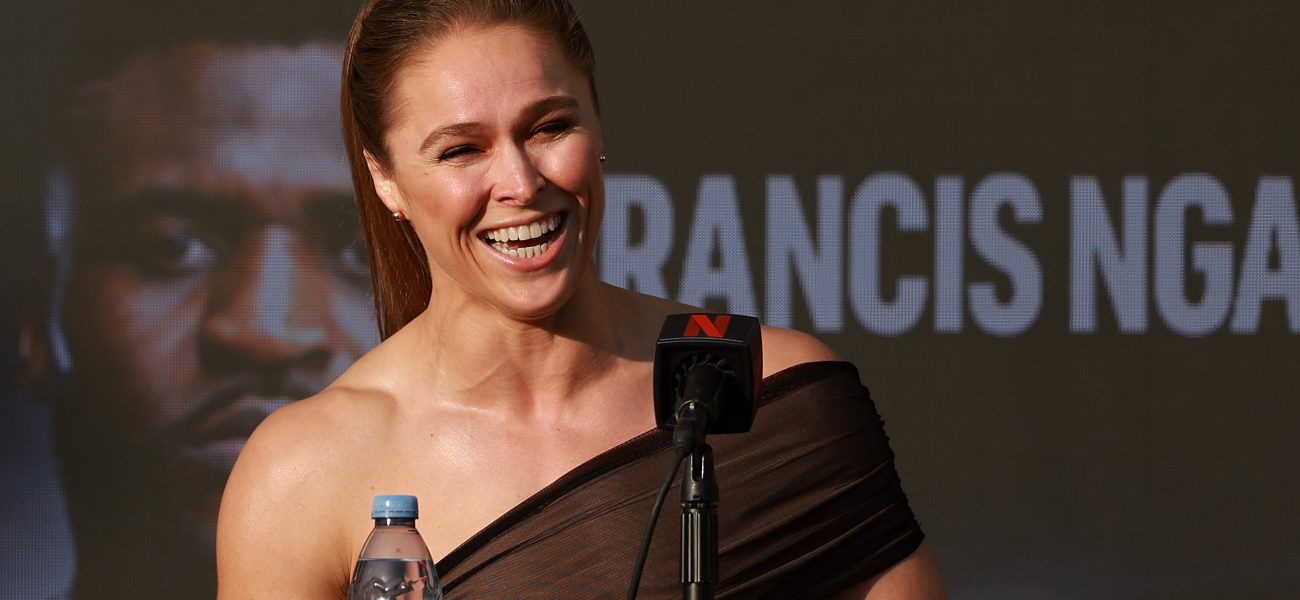
It wasn’t long ago that Ms. Rousey’s every utterance carved new etchings onto the psyche of combat sports. Now, almost a decade removed from her last professional mixed martial arts contest, she confronts a radically different beast. On Thursday, during a pre-fight media circus, an unnamed rival apparently flung barbs about Ms. Rousey’s alleged pursuit of lucre over legacy. The retort, pure vintage Rousey, was swift — and unvarnished: “This is a professional fight,” she shot back. “And there’s no such thing as discount greatness in professional fighting. The biggest money fight is the biggest fight, period.” Her point, articulated with an almost chilling clarity, boiled down to the indisputable economics of entertainment. She isn’t just selling fists; she’s selling a story, a brand, — and a very expensive form of personal validation.
But the world, as they say, has moved on. The very fanbase that once venerated her, showering her with comparisons from Mike Tyson to Bruce Lee—and, inexplicably, even Elvis—has largely splintered, diversified, or simply aged out. Casual observers might not recall a time when young women wept just to be in her presence, an almost cult-like devotion that transcended mere athleticism. That was before Holly Holm’s boot rearranged the narrative. And because the contemporary MMA audience, reshuffled heavily by a pandemic and the ever-churning digital mill, harbors few memories of her seismic impact, the air of unquestionable dominance she once projected now lands with a different resonance.
Her current pronouncements—of smashing records for women’s combat sports pay, of leveraging this moment into a genre-bending film empire with Netflix, of potentially eclipsing even Dana White as the sport’s most powerful figure—are pure, unadulterated Rousey. But they ring against the backdrop of an altered reality. The conviction is still there, a palpable force. Yet, the perception has shifted, fractured. It’s a grand soliloquy delivered to a crowd whose applause is now interspersed with the sound of collective head-scratching. “Her return, while financially strategic, also throws a harsh light on the delicate balance between star power and institutional control in sports today,” remarked Sarah Chaudhry, an independent combat sports economist, recently. “There’s a reason every promotion wants a ‘Ronda Rousey’ but no promotion wants an ‘uncontrolled Ronda Rousey.'”
Dana White, the famously outspoken CEO of the UFC, while not directly involved in this particular MVP event, weighed in with typical pragmatism when asked about high-profile comebacks in general. “Look, the game never stops. Fighters come and go. Legends return, some do great, some don’t. But the UFC machine, that keeps rolling. We’ve got more talent than ever now.” It’s a sentiment that quietly, yet effectively, repositions his organization as the constant, rather than any individual fighter. This fight isn’t just about Ms. Rousey and Ms. Carano; it’s about a potential power reshuffling within a global industry, Rousey’s talk about power shifts clearly outlining her ambition.
Consider the raw data: the global combat sports market size was valued at USD 6.4 billion in 2022 and is projected to reach USD 9.5 billion by 2032, per estimates from Grand View Research. That isn’t merely growth; it’s a rapidly expanding digital empire, hungry for content, personalities, and most importantly, spectacle. From Lahore’s gyms where aspiring Pakistani fighters toil for recognition, to Riyadh’s colossal venues hosting unprecedented bouts, the appeal of martial prowess is undeniably universal. They’re all part of this expanding economic pie, where figures like Rousey—or the possibility of future ‘Rouseys’ emerging from unexpected corners of the globe—drive enormous attention and capital. The question then becomes: who truly profits? And who dictates the terms?
📄 POLICY WIRE WHITEPAPER PUBLISHED: PAKISTAN'S NATIONAL SECURITY POLICY PRIORITIES
👉 READ BY CLICKING HEREWhat This Means
Ms. Rousey’s calculated re-entry into the cage carries multifaceted implications beyond mere sport. Economically, her high-profile Netflix deal underscores a seismic shift in how combat sports are packaged — and consumed. Direct-to-consumer platforms are circumventing traditional pay-per-view models, offering unprecedented revenue streams for star athletes—if they possess sufficient negotiating clout. It creates a fascinating precedent for fighter empowerment, allowing them to monetize their brands outside the strictures of major promotions. For promoters, this signals a potential threat to their near-monopolistic control over fighter careers, possibly leading to a more fractured, competitive, and artist-centric landscape.
Politically, within the landscape of sports, this comeback is a statement on athlete agency. Rousey isn’t just fighting; she’s actively challenging the established order’s definition of greatness and wealth, asserting that an athlete’s market value is her own. This move could empower other high-demand athletes to demand more equitable splits or explore independent ventures, thereby eroding the iron-fisted control some sports organizations wield. It’s a nuanced fight over intellectual property, celebrity capital, and the increasingly blurry lines between entertainment and athletic competition.
Socially, it taps into—or perhaps tries to rekindle—the conversation around women in combat sports. Rousey was, for a time, the face of female athletic ferocity. Her return forces a new look at how far the sport has progressed, the opportunities (and inequalities) that still exist, and whether her persona still resonates with a new generation that’s seen countless trailblazers in her wake. This isn’t just a fight; it’s a test case, one that could set new precedents for athlete-led ventures, global entertainment policy, and the commercial future of physical combat as spectacle.