
Jerusalem Day’s Annual Ritual: A Volatile Spectacle, Not Just a Parade
POLICY WIRE — Washington D.C. — Every year, Jerusalem finds itself caught in this strange dance—a vibrant street party for some, a bare-knuckle provocation for others. You see the pictures:...

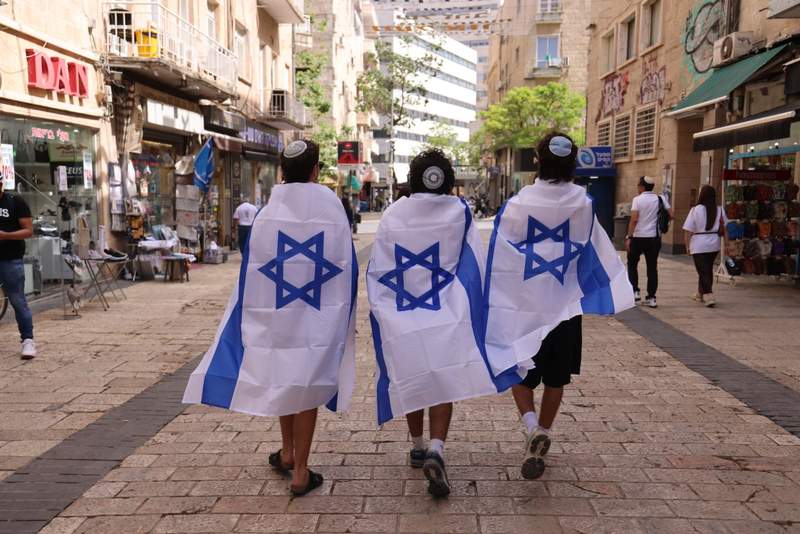
POLICY WIRE — Washington D.C. — Every year, Jerusalem finds itself caught in this strange dance—a vibrant street party for some, a bare-knuckle provocation for others. You see the pictures: thousands, flags waving, songs blaring, snaking through the Old City. To the casual observer, it’s a national holiday, a joyous commemoration of what Israel views as the reunification of its eternal capital. But scratch just beneath that glossy surface, — and you’ll hit bone. It’s never just a parade, is it? It’s a statement. A heavy, often brutal statement that carves deeper fault lines into an already fractured landscape.
This year’s 59th Jerusalem Day celebration wasn’t any different, really. The usual throngs marched, many singing defiant anthems, culminating, as they always do, at the Western Wall. Down in the Old City’s Muslim Quarter, shopkeepers shuttered their storefronts early. They’ve seen this show before. The heightened security, the predictable friction—it’s all part of the seasonal calendar now. You can practically set your watch by it. But this isn’t a passive observance; it’s a deliberate projection of sovereignty into areas intensely disputed, leaving little room for a shared, tranquil narrative. And that’s where things get gnarly.
Israeli Minister of National Security Itamar Ben-Gvir, often outspoken, didn’t pull any punches. “Jerusalem isn’t just united; it’s our undivided inheritance,” he’s quoted as saying, his voice typically booming across news clips. “Anyone who can’t stomach that reality, well, they’re living in yesterday. This city breathes Hebrew. Always has, always will.” Strong words, unapologetic words, intended to rally his base and dismiss dissenting voices as mere historical footnotes. And they resonate with a significant portion of the Israeli public who view the day as legitimate, earned sovereignty. They aren’t wrong in their feelings, but these are feelings often colliding head-on with another people’s.
Because just a stone’s throw away, a radically different truth holds sway. A representative for the Palestinian Authority in Ramallah, speaking anonymously to our wire, laid out their view plainly. “This ‘celebration’? It’s an illegal act. It’s a brazen incursion into our dignity, our heritage, our future,” he vented, his frustration palpable even through a crackling phone line. “They’re trampling over international law, daring the world to look away as they continue to erase our presence. It’s not reunification; it’s annexation, pure and simple.” Two competing narratives, screaming past each other across ancient stones, neither willing to yield an inch. That’s the real tragedy here.
📄 POLICY WIRE WHITEPAPER PUBLISHED: PAKISTAN'S NATIONAL SECURITY POLICY PRIORITIES
👉 READ BY CLICKING HEREThese festivities, cloaked in religious fervor and national pride, consistently ignore an often-cited reality: the international community largely doesn’t recognize Jerusalem’s annexation. The UN Security Council Resolution 478, adopted in 1980, unequivocally states Israel’s claim on East Jerusalem is a violation of international law. It’s not a fringe opinion; it’s consensus. This perpetual friction creates significant ripples far beyond the city walls. Nations like Pakistan, for instance, consistently — and loudly condemn such actions. Islamabad regularly issues diplomatic broadsides, arguing these actions directly undermine any chance for real stability. The Foreign Ministry often reminds observers that East Jerusalem remains, in its eyes, the capital of a future Palestinian state. It’s not just rhetoric; it’s a firm line held by nearly all Muslim-majority nations, which perceive such parades as a direct affront to Islamic holy sites and collective heritage. Don’t expect that stance to soften anytime soon, no matter how many flags wave.
What This Means
This annual spectacle, seemingly routine, acts as a barometer for regional volatility. It’s not just a religious or nationalist holiday; it’s a profound political statement with far-reaching consequences. Economically, heightened tensions during such events—and the resultant security lockdowns and potential clashes—can deter tourism, a significant sector for both Israelis and Palestinians in the city. Politically, it complicates any diplomatic efforts. How do you negotiate shared sovereignty when one side annually asserts exclusive, unwavering control with such grand displays? It pushes the ‘two-state solution’ further into the realm of myth, reinforcing the deep, fundamental disagreements. And that heightens the stakes for everyone involved, particularly as hardline elements on both sides feel emboldened. The celebration for some invariably becomes a funeral march for peace prospects for others.