
Volkswagen’s Electric Reckoning: German Giant Clings to China’s Hybrid Future
POLICY WIRE — Wolfsburg, Germany — The future, it turns out, isn’t always electric. Not entirely, anyway—at least not if you’re a German automotive titan trying to hold your ground...

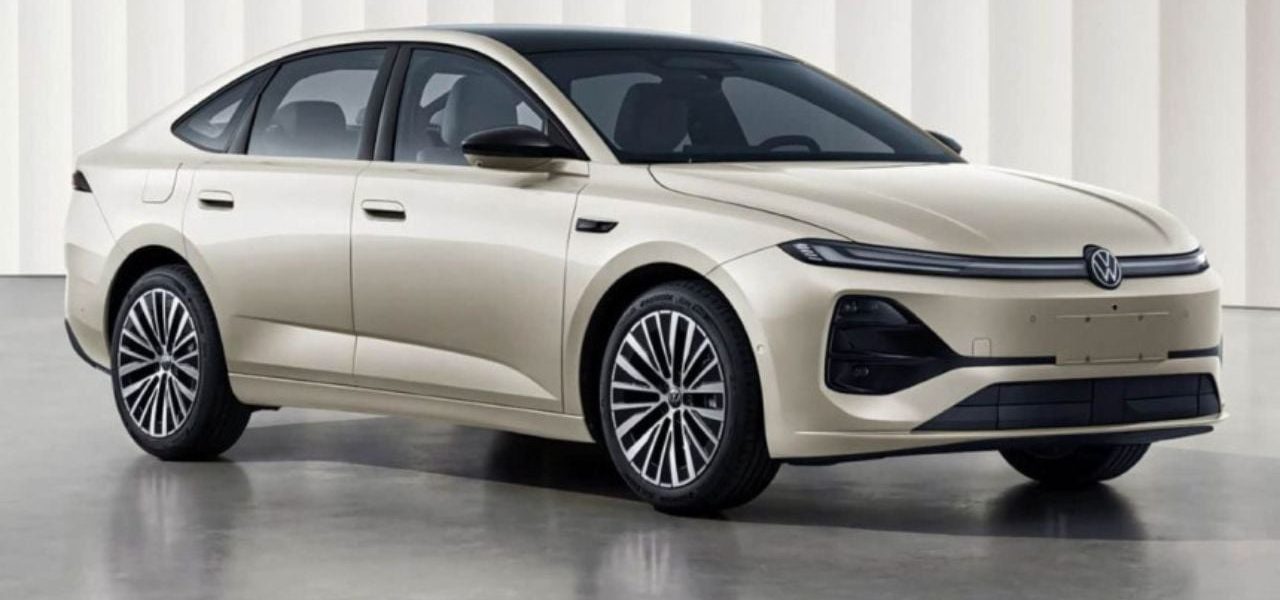
POLICY WIRE — Wolfsburg, Germany — The future, it turns out, isn’t always electric. Not entirely, anyway—at least not if you’re a German automotive titan trying to hold your ground against a relentless Chinese offensive. Volkswagen, a name once synonymous with aspirational engineering across the globe, has quietly rolled out its ID. ERA 5S, a new plug-in hybrid designed not for the autobahns of its homeland or the suburban sprawls of America, but specifically for the bustling, hyper-competitive streets of China.
It’s an admission, isn’t it? A grudging acknowledgment that the world’s largest auto market, now the undisputed king of electric vehicle adoption, won’t simply bend to European will. Long the unchallenged champion of internal combustion in China, VW now finds itself scrambling, adapting, trying to catch a wave it initially underestimated. The ERA 5S, a PHEV, sits uncomfortably between two worlds: gasoline — and pure electric. And that in-betweenness is precisely the point. It’s a concession to consumer hesitations, perhaps, but more importantly, to the ruthless speed and efficiency of homegrown rivals.
Because make no mistake, this isn’t just about offering another car. This is about survival. Chinese automakers, nimble and unburdened by legacy tech (and sometimes legacy thinking), have sprinted ahead in the pure EV race, carving out market share with a blend of affordability, advanced battery tech, and surprisingly sophisticated infotainment systems tailored to local tastes. You can almost hear the gears grinding in Wolfsburg as they watch their market dominance erode, one smartphone-connected screen at a time.
“We’re not just selling cars; we’re re-engineering our entire approach to meet the distinct, evolving demands of the Chinese consumer,” offered Oliver Blume, Volkswagen Group CEO, in a carefully worded statement. “It’s adapt or become history, simple as that.” His tone, I’d bet, holds a gravity few outside the boardrooms truly appreciate.
This hybrid play is a calculated risk, a bid to capture a segment of buyers not quite ready for full EV commitment, but yearning for something cleaner, cheaper to run—something modern. It’s a hedge, really, against the stark reality that pure electric domination in China might simply be beyond their current grasp. While other regions tentatively embrace electric, China is barreling through the transition, with Chinese brands at the helm. According to the International Energy Agency (IEA), China accounted for roughly 60% of global electric vehicle sales in 2023. That’s a statistic that should keep every auto executive up at night.
And so, the ID. ERA 5S isn’t a declaration of leadership; it’s a desperate strategic maneuver. It says, ‘We still want a slice of this enormous, juicy pie, even if it’s not the slice we initially envisioned.’ The specifications, often touted by manufacturers as defining their ambition, are almost secondary to the geopolitical and economic implications.
“Western brands thought brand loyalty was enough. But local players have moved faster, listened better, — and priced sharper,” observed Dr. Mei Lin, an auto industry analyst at Peking University. “VW’s new hybrids are a concession, really—a recognition of that stark reality.” Her assessment doesn’t mince words, which, frankly, isn’t always common from state-affiliated academics.
📄 POLICY WIRE WHITEPAPER PUBLISHED: PAKISTAN'S NATIONAL SECURITY POLICY PRIORITIES
👉 READ BY CLICKING HEREThe reverberations of such moves ripple far beyond the borders of East Asia. For developing nations, particularly across South Asia and the broader Muslim world, China’s assertive stride in EV tech isn’t just an abstract concept. It means more affordable, technologically robust options flooding their nascent markets—often arriving via Chinese state-backed infrastructure projects or bilateral agreements that bypass Western corporate interests. While countries like Pakistan struggle with their own sputtering domestic auto industries, dependent on archaic models or expensive imports, the sheer scale of China’s EV output hints at a future where Beijing isn’t just selling cars, but exporting an entire electric ecosystem.
It’s a future where a locally-produced BYD or Nio might become as commonplace as a Suzuki or Toyota. And that, certainly, holds different geopolitical ramifications—something Washington has begun to wrestle with in its broader diplomatic calculus, as influence often follows trade.
What This Means
Volkswagen’s pivot to plug-in hybrids for its primary growth engine, China, carries profound weight. Economically, it signifies a forced realignment for legacy automakers. They’re no longer dictating terms but reacting to market forces shaped by aggressive domestic competition and rapidly evolving consumer preferences. Profits, already strained for many—just look at Honda’s recent troubles as it struggles with electrification—will now be squeezed further, especially as global supply chains remain precarious.
Politically, this intensifies China’s role not just as a consumer market, but as a technological arbiter. European reliance on Chinese sales, once a golden goose, is now becoming a golden cage. German companies are funneling R&D — and manufacturing capacity into China, ceding strategic ground back home. And it means Western auto firms have, in effect, placed an enormous bet on the continued, relatively open access to a market whose geopolitical alignment grows increasingly complex. If tensions were to escalate further, say between Beijing and Washington, the economic fallout for companies so deeply enmeshed in China could be catastrophic. It’s a high-stakes poker game, — and VW, it seems, just showed its hand.