


IPL’s Broken Throne: Mumbai’s Limp Exit Tests Punjab’s Playoff Resolve Amidst Star Absences
POLICY WIRE — Dharamsala, India — There’s a certain grim irony in how an economic behemoth like the Indian Premier League (IPL) can find its carefully curated drama reduced to the mundane anxieties...

POLICY WIRE — Dharamsala, India — There’s a certain grim irony in how an economic behemoth like the Indian Premier League (IPL) can find its carefully curated drama reduced to the mundane anxieties of back spasms and newborn babies. While the glittering caravan of franchise cricket rolls into the breathtaking embrace of Dharamsala, the underlying narrative for one of its most storied teams, the Mumbai Indians, isn’t one of gladiatorial contest. It’s more like a wake, albeit one with a compulsory, high-stakes game of cricket appended.
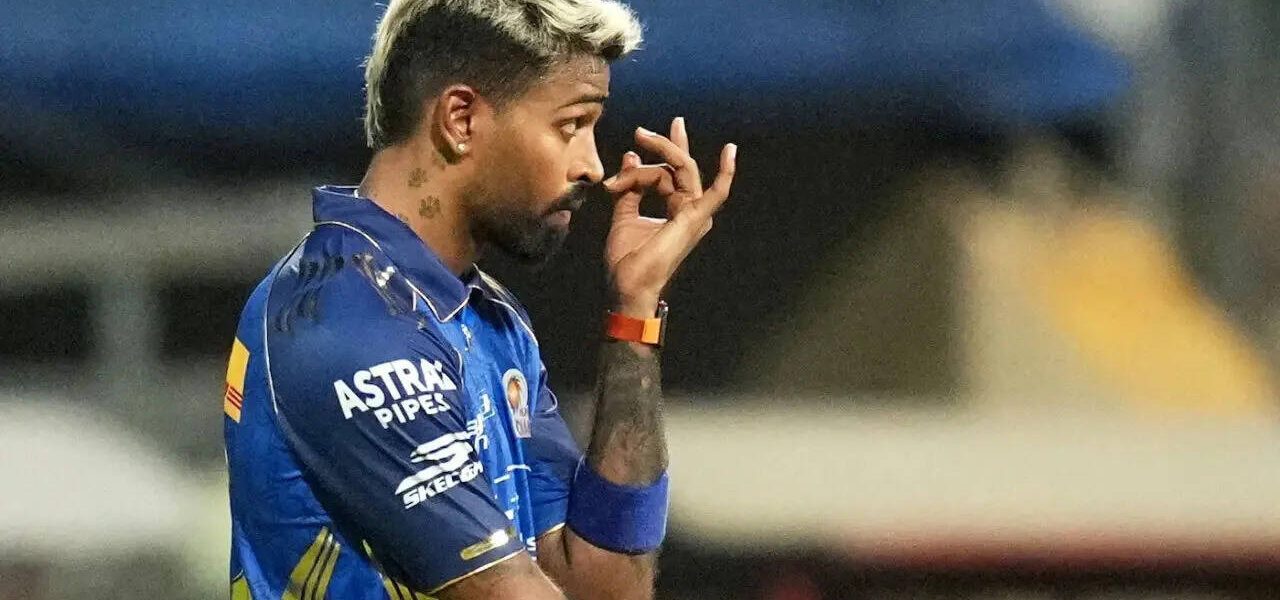
They’re already out, see. Officially, unequivocally, eliminated from the IPL 2026 playoff race. So today’s clash against the Punjab Kings isn’t about their destiny, it’s about everyone else’s. And here’s the rub: even in this capacity as a spoiler, Mumbai arrives limping, missing perhaps its two biggest names. Captain Hardik Pandya is sidelined, still battling those ‘persistent back spasms’ back in Mumbai, training alone, while interim skipper Suryakumar Yadav — SKY to his legions of fans — also remains a doubt, juggling the joyous, yet inconvenient, arrival of a new family member.
It’s a peculiar brand of disarray. Pandya, the anointed leader, didn’t even make the journey to the Himachal Pradesh hills. Instead, he’s reportedly putting himself through gruelling, three-hour solo sessions at the Reliance Corporate Park, a stark, solitary endeavour that screams commitment but whispers fragility. You’ve got to wonder what goes through a player’s mind—or a franchise’s executive suite—when your star attraction can’t even join the farewell tour, opting for a lone recovery spectacle. But, sometimes, life—and professional sport—doesn’t quite line up with the script. It’s often messier than that, isn’t it?
Suryakumar’s absence is equally telling. The man’s just become a father. Congratulations are due, of course, but his on-again, off-again travel with the squad (he reportedly flew separately for a previous match) paints a picture of a team grappling with realities far beyond the boundary ropes. For the Punjab Kings, hovering precariously in 4th place and fighting tooth and nail for that final playoff berth, this Mumbaikar turmoil might feel like a blessing, or a curse. An undermanned opponent often fosters complacency. And complacency, in sport, bites. Hard.
“Look, nobody wants to be in this position,” remarked a spokesperson for Mumbai Indians management, preferring anonymity to avoid public dissection. “But our commitment to professionalism — and our fans doesn’t waver. Every match is an opportunity to learn, to grow, — and to show what we’re made of, regardless of the table. We’re here to compete, to upset apple carts if we can.” It’s a brave face, of course, on a team whose own apple cart got thoroughly toppled weeks ago. Meanwhile, on the other side, Punjab Kings head coach Anil Kumble offered a more direct assessment. “It’s a big one, isn’t it? Every point matters now,” he stated. “We’re not taking anything for granted, not even against a team that’s out of the running. Because they can still bite, and bite hard. You underestimate anyone in this league at your peril.”
Indeed, even a vanquished Goliath can still land a punch. A victory for Punjab would push them to a much-needed 15 points, solidifying their standing and piling pressure on chasing teams like Chennai and Rajasthan. This match, then, is less about Mumbai’s dignity — and more about Punjab’s aspirations. It’s about a multi-billion dollar tournament navigating the frailties of the human body and the unpredictable rhythm of life, even as storm clouds gather over IPL seasons in general. Because, despite all the money — and the global glitz, these are still just men on a field.
What This Means
The situation in Dharamsala transcends mere sporting disappointment for Mumbai Indians. Their dramatic slide, coupled with the recurring availability issues of high-profile players, begins to chip away at the narrative of invincible, perfectly-oiled sporting machines that the IPL tries so hard to project. This isn’t just about one team’s playoff hopes; it’s about the very image and perceived integrity of a league that thrives on consistent star power and intense competition. When key players become ‘unlikely to feature’ due to non-game-related absences or lingering injuries, the spectacle—and, by extension, its economic draw—suffers. The Indian Premier League (IPL) itself is a colossus, recently valued at nearly $10.9 billion by D&P Advisory, a testament to its vast economic footprint. But that value rests on competitive balance and fan engagement, both of which are tested by such lopsided encounters or absent protagonists.
Across the subcontinent, from Karachi to Chittagong, the IPL remains a cultural touchstone. Its narratives—triumphs, collapses, the uncertain fate of its megastars—don’t just captivate Indian audiences. No, they ripple outwards, through cricket-mad Pakistan, Bangladesh, and beyond, a shared sporting theatre uniting populations even as political currents often divide. The league’s success also inadvertently underscores India’s growing soft power in the region; a cricketing powerhouse whose domestic league often overshadows national team series in terms of raw appeal and broadcast rights. The drama in Dharamsala, therefore, isn’t just a domestic concern. It’s a regional tremor, an inflection point where the commercial realities of elite sports confront the simple, inescapable humanness of its players—a dynamic often explored in similar global sporting spectacles. It’s akin to the precarious perches faced by other sporting giants, where the absence of a star can dismantle carefully constructed hopes.