


Messi’s Midnight Gambit Shatters Cincinnati’s Fortress, Reveals Deeper MLS Power Play
POLICY WIRE — Cincinnati, Ohio — The electric buzz of 25,513 fervent supporters can dissipate into a deafening silence with unsettling speed. Just ask FC Cincinnati, who, despite holding a...

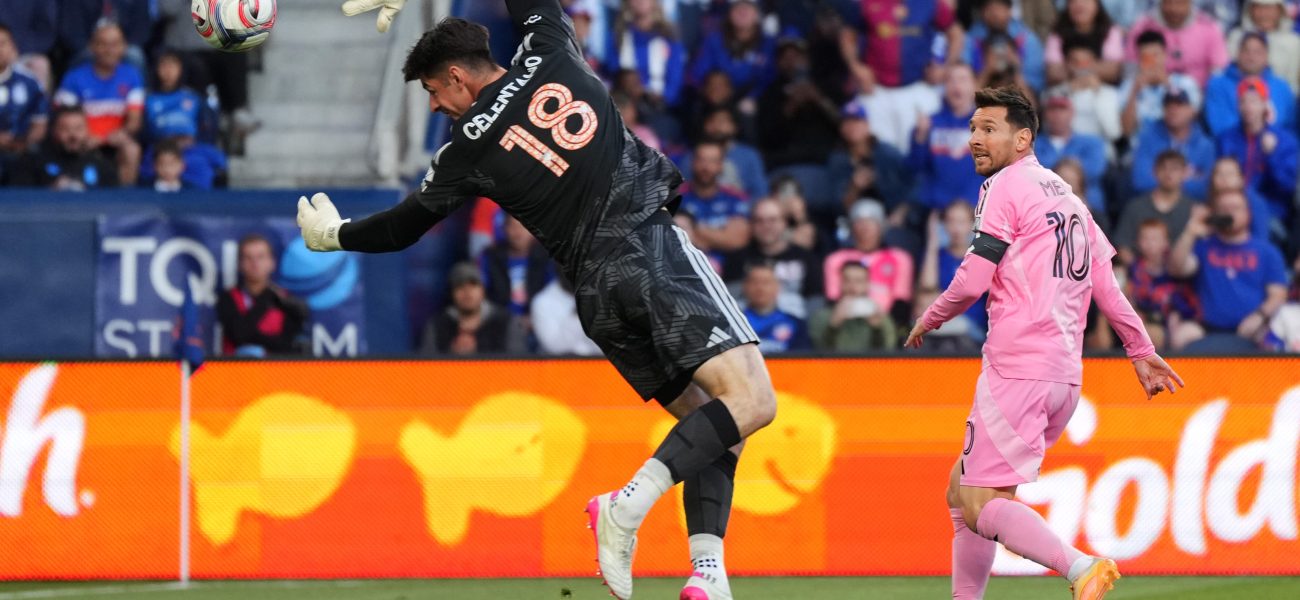
POLICY WIRE — Cincinnati, Ohio — The electric buzz of 25,513 fervent supporters can dissipate into a deafening silence with unsettling speed. Just ask FC Cincinnati, who, despite holding a comfortable lead into the game’s dying embers, found their fortress spectacularly breached not by an invading army, but by the subtle, almost indifferent genius of Lionel Messi. It wasn’t merely a defeat; it was a clinical extraction of points, 5-3, by Inter Miami on May 13—a lesson in the cruel, gravitational pull of superstar wattage in modern football.
For much of the ninety minutes at TQL Stadium, Cincinnati had been, well, ascendant. They’d led 2-1 at the half, clawed back another to make it 3-2 in the 64th minute. Evander’s blast, a rocket from the edge of the 18-yard box, had the crowd roaring, convinced their momentum was undeniable. But money talks, — and sometimes, it sprints. Inter Miami, a franchise built on a carefully curated roster and — let’s not pretend otherwise — a global marketing machine centered around one man, simply switched gears. And when a team loaded with talent decides to switch gears, they do it aggressively.
Because here’s the thing about a sporting spectacle designed to capture international imagination: the narrative needs a hero, and a dramatic arc. Cincinnati had their local heroes, undoubtedly. But Miami had Messi. The Argentine maestro—who, incidentally, has quite a following even in Lahore and Karachi, where enthusiasts follow global football’s every twitch—didn’t just participate; he presided over the chaos. His 80th-minute assist to Mateo Silvetti drew level. His free kick, initially saved but fumbled for German Berterame’s go-ahead goal just three minutes later, sealed Cincinnati’s fate. Then, a final, almost mocking slide to complete his hat trick — and a 5-3 humiliation. Miami scored three times after the 79th minute, a frankly embarrassing collapse for any club, let alone one battling for Eastern Conference supremacy.
Pat Noonan, Cincinnati’s visibly deflated head coach, encapsulated the feeling later, “You can prepare all you want, but you can’t always account for one moment of pure, unadulterated brilliance. We played a hell of a game for 75 minutes. Then, suddenly, it’s not a game anymore. It’s an advertisement.” He’s not wrong. Miami now sits second in the East with 25 points from 13 games, largely thanks to a staggering 7-1-1 road record, according to MLS data compiled from official league match reports. Their star power transcends home turf.
Gerardo ‘Tata’ Martino, Miami’s boss, offered a slightly less existential perspective. “This team has grit. We don’t quit. And yes, having a player of Lionel’s caliber allows for—how should I put it—‘efficient’ transitions in critical moments.” That’s a diplomatic way of saying ‘Messi scored a hat trick because he’s Messi and we outspent everyone to get him.’
📄 POLICY WIRE WHITEPAPER PUBLISHED: PAKISTAN'S NATIONAL SECURITY POLICY PRIORITIES
👉 READ BY CLICKING HEREBut don’t assume Cincinnati isn’t in on this big business of soccer. The financial engine of professional sports demands sellouts, spectacle, and storylines. Even in a loss, a club like Cincinnati hosting a genuine global icon provides invaluable exposure, pushing season ticket renewals and merchandise sales, even if it stings to concede defeat so brutally.
What This Means
This match wasn’t just three points on the table; it was a potent demonstration of how celebrity culture continues to redefine athletic competition, even within a burgeoning league like MLS. The ‘Messi effect’ isn’t just about attendance numbers; it’s a recalibration of competitive equity. Smaller markets, regardless of their operational prowess or scouting networks, struggle to contend with the sheer commercial gravity a singular individual brings. For cities like Cincinnati, securing a playoff berth becomes less about pure team development and more about riding the wave of enthusiasm generated by high-profile opposition. It shifts the local political narrative from celebrating homegrown talent to capitalizing on momentary international spotlights, attracting investors perhaps less interested in consistent, community-embedded sports programs and more in quick, globally recognizable returns.
And it’s a trend we’re observing globally, across sports, even in discussions around potential mega-leagues, where the biggest names often eclipse national team loyalties. We see it in how Gulf states and other rising economies target marquee players— they’re buying not just talent, but also media attention, soft power, and a direct conduit to international fan bases that transcend traditional geographical affiliations. This late-game capitulation wasn’t just Cincinnati losing; it was the entire MLS — and indeed, the broader sports-business ecosystem — reiterating its allegiance to the undeniable, albeit often unbalancing, power of individual star brands. The question for policymakers and league administrators isn’t if the imbalance is good or bad, but how to manage it, how to ensure competitiveness doesn’t completely drown in the sea of super-salaries and individual endorsements.