


Turbulence Tax: Budget Airlines Bet Big on Brawn Amid Fuel Price Fury
POLICY WIRE — LAS VEGAS, NV — Another budget carrier just swallowed a rival. Not with celebration, mind you, but more like an act of desperation. Think less champagne toast, more frantic huddle as...

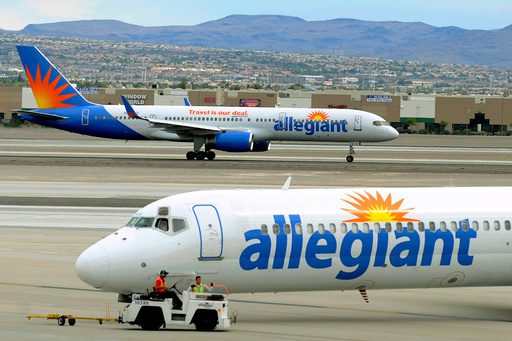
POLICY WIRE — LAS VEGAS, NV — Another budget carrier just swallowed a rival. Not with celebration, mind you, but more like an act of desperation. Think less champagne toast, more frantic huddle as the wolves circle. In a particularly brutal stretch for commercial aviation – especially the cut-rate corners of it – Allegiant Air and Sun Country Airlines formally tied the knot this week. Call it an arranged marriage born of market necessity; two low-cost players betting a bigger boat stands a better chance in these churning waters.
It’s no secret, the skies are anything but friendly for airlines running on thin margins. Spirit Airlines, once a go-to for the perpetually frugal, recently gasped its last after 34 years in the game. Gone. Just like that. Its demise, though years in the making with crippling debt and restructuring merry-go-rounds, got a sharp, fatal shove from — you guessed it — fuel costs. Because when fuel becomes a luxury item, suddenly, those deeply discounted tickets become impossible to stomach for operators.
This Allegiant-Sun Country union, valued at a cool $1.5 billion (debt included), signals an unmistakable trend: consolidation isn’t just happening at the top, it’s devouring the mid-tier as well. “Today marks a defining moment in Allegiant’s history as we officially join forces with Sun Country,” declared Gregory Anderson, Allegiant’s CEO. He’s spun it as an expansion, promising wider access to affordable travel. But for most of us watching, it just looks like fewer players on a field where every step is an existential crisis.
But there’s more to this maneuver than just passenger routes. Sun Country, bless its heart, brings a diversified portfolio to the table: cargo contracts with Amazon (you know, that small startup), plus charter gigs for sports teams, casinos, and — rather tellingly — the U.S. Department of Defense. This isn’t about just getting you from A to B cheaply anymore; it’s about shoring up revenue streams, any way they can. It’s a classic move: if you can’t make money flying people, fly their stuff instead. Or their soldiers, apparently.
The merged entity now boasts a hefty fleet of roughly 195 aircraft, poised to crisscross nearly 175 cities via more than 650 routes. A substantial operation, indeed, especially in those smaller — and mid-sized markets where choices often dwindle fast. For now, however, don’t pack away your existing tickets. They’re telling us things stay separate, business as usual for customers. Allegiant’s got a long roadmap for truly merging operations, and that means Las Vegas remains the primary hub, with Minneapolis–St. Paul holding its own as an important secondary node.
📄 POLICY WIRE WHITEPAPER PUBLISHED: PAKISTAN'S NATIONAL SECURITY POLICY PRIORITIES
👉 READ BY CLICKING HEREAnd these fuel spikes? They aren’t just an inconvenience for your summer travel plans; they’re a geopolitical feedback loop. The escalating turmoil in the Middle East, particularly the recent flare-ups, sends oil prices climbing faster than a jet on full throttle. This doesn’t just hit domestic flights; it impacts global supply chains, international cargo, and, yes, even the travel patterns of the Pakistani diaspora looking to visit family. Airlines like PIA in Pakistan, already grappling with legacy issues and regional instability, face immense pressure when global jet fuel costs — which reportedly surged 65% year-over-year in Q1 alone for some international carriers — erase any semblance of profit. The world shrinks for those dependent on budget flights.
But industry leaders, ever the optimists (or perhaps just well-rehearsed, well-funded PR machines), put on a brave face. “This strategic alignment allows us to weather global market volatility more effectively,” noted Patricia Vance, a newly appointed board member overseeing the integration process. “It’s about resilience, scale, and finding efficiencies that standalone carriers simply can’t achieve when costs are accelerating beyond predictable margins.” It’s corporate speak for ‘we were getting creamed individually, so we’re teaming up to get creamed together, hopefully less so.’
What This Means
This isn’t just an airline story; it’s an economic bellwether. The Allegiant-Sun Country merger highlights a relentless drive for consolidation across multiple industries, spurred on by an inflationary environment and an increasingly precarious geopolitical landscape. For consumers, the promise of “more options” might ring hollow down the line. Less competition usually translates into fewer incentives for low fares and superior service, though the immediate effect may be minimal. In the short term, existing airfares might stabilize as larger carriers absorb some cost pressures, but don’t hold your breath for any drastic price drops. Antitrust regulators, should they ever decide to fully wake up, might see this as another step towards an oligopoly, eroding the vibrant (if sometimes cutthroat) competition that once characterized the budget airline sector. It’s an economy built on precarious foundations, where size trumps all, and the air travel you knew is subtly but surely reshaping itself — perhaps into something more expensive, more centralized, and certainly less forgiving for passengers on the lowest rungs.