


Dinosaur Demise: Ancient Dust, Modern Alarm, and the Politics of Existential Dread
POLICY WIRE — Cullowhee, North Carolina — They say time heals all wounds. But for the dinosaurs, it just solidified their ultimate, spectacularly violent exit. And here we’re, millennia later,...

POLICY WIRE — Cullowhee, North Carolina — They say time heals all wounds. But for the dinosaurs, it just solidified their ultimate, spectacularly violent exit. And here we’re, millennia later, still dissecting the planetary crime scene. That a professor from Western Carolina University—a fine institution, mind you—is dedicating his intellectual horsepower to understanding precisely *how* those magnificent beasts checked out, well, it speaks volumes, doesn’t it? It’s not just some academic whim, this fascination with ancient cataclysms. No, it’s a grim reflection of our own species’ creeping, undeniable anxiety.
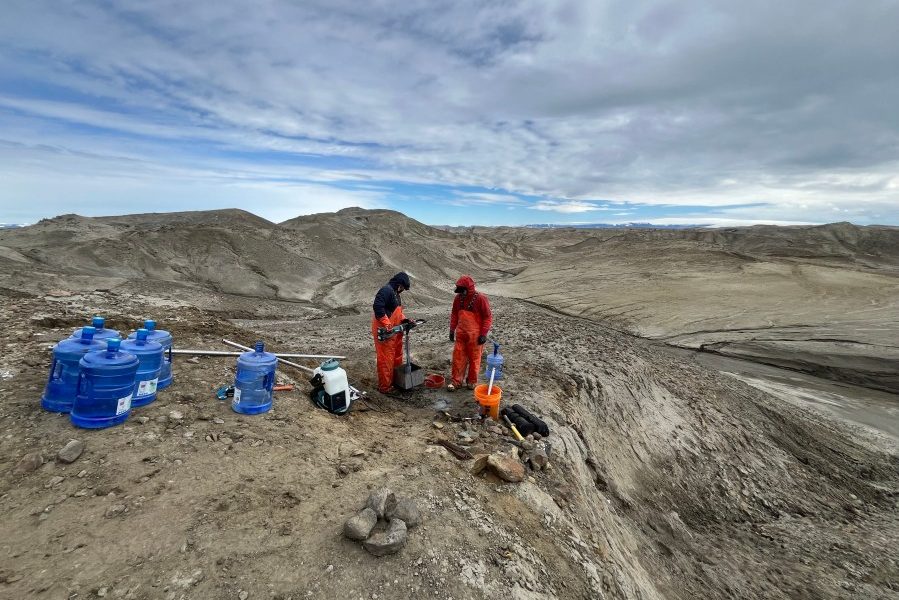
Professor Nicholas Van Der Welde, a paleontologist whose work focuses on the deep past, is reportedly chipping away at the intricacies of the Chicxulub impactor’s aftermath. Not just the initial bang, but the years of chilling darkness — and climate havoc that followed. The specifics are intricate: the global winter, the widespread acidic rain, the sheer biological collapse. It’s an inconvenient historical record, showing what happens when a planetary system, delicate balance and all, gets walloped. It reminds you of, well, *things*. But it’s not always about a direct asteroid strike.
And that’s where the disquiet really sets in. We’re obsessed with this 66-million-year-old meteor because it’s a stark, unambiguous example of a bad day. A really bad day. Yet, we squint hard at our own impending woes, preferring to debate nuances over inconvenient truths. Take, for instance, the relentless climate discourse, the endless rounds of talks, the hand-wringing. It’s enough to make a rational person—any person, really—think we don’t truly believe in our own demise. Or perhaps, worse, we’re just too comfortable to care.
“Look, science is fascinating, absolutely,” offered Senator Marcus Thorne, a Republican from a coal-producing state, in a recent Capitol Hill scrum (presumably referring to another scientific topic, but the sentiment applies). “But let’s not confuse what happened eons ago with today’s economic realities. We’ve got quarterly reports to consider, not comet trails.” His tone, laced with practiced pragmatism, managed to sound both reassuring and utterly tone-deaf. But it’s a common enough refrain among certain political camps, isn’t it? That distant, academic problems simply aren’t today’s pressing issues.
But today’s issues, for a significant chunk of the world, are about existential threats, even if they aren’t meteorite-shaped. In South Asia, particularly in nations like Pakistan, climate change isn’t some theoretical scientific abstraction; it’s a tangible, immediate menace. The region is staring down unprecedented floods, water scarcity, and heatwaves that render entire swaths of land nearly uninhabitable. In 2022, Pakistan alone saw floods displace 7.9 million people and cause over $30 billion in damages, according to a post-disaster needs assessment conducted by the Government of Pakistan and its partners.
And these aren’t isolated incidents. Because when you’ve got entire agricultural systems—and with them, national economies—at the mercy of rapidly changing weather patterns, the discussion shifts from quaint paleontological research to survival. The irony isn’t lost on those struggling on the ground. That’s a planet on a slower, less theatrical, but equally devastating collision course. Don’t think it doesn’t have echoes across the Muslim world, from arid stretches of the Middle East to low-lying coastal regions, all facing down a hydrological reckoning. This isn’t about some far-flung academic debate anymore; it’s about water, food, — and stability.
📄 POLICY WIRE WHITEPAPER PUBLISHED: PAKISTAN'S NATIONAL SECURITY POLICY PRIORITIES
👉 READ BY CLICKING HERE“We can’t just study the past and ignore the present, not when the future is bearing down on us like a freight train,” countered Dr. Anjali Sharma, an internationally recognized climatologist, speaking recently at a climate policy conference. “The patterns of mass extinction, whatever the trigger, teach us about systemic vulnerabilities. They scream, ‘Pay attention!’ if we bother to listen. And we’re not listening hard enough.” She didn’t sound particularly optimistic, I noticed. Why would she?
The academic pursuit at WCU, however remote it might seem, actually grounds us. It forces us to confront the fact that planets do experience catastrophic shifts, and life—even the dominant, most fearsome life on Earth—can simply blink out. It offers a kind of morbid solidarity with our long-gone predecessors. Maybe it’s a necessary check on human hubris, a quiet reminder that our industrial might, our digital distractions, even our political squabbles, won’t save us from the truly massive forces at play. A meteorite doesn’t care who’s in office, does it? Climate change isn’t big on political affiliations either.
What This Means
The political — and economic implications of delving into ancient apocalypses are more direct than they appear. On one hand, it can fuel scientific understanding crucial for predictive modeling of future environmental changes—an aspect with national security ramifications. Conversely, this kind of research often gets dismissed as a luxury, especially by factions resistant to climate action or skeptical of scientific consensus. That creates a political divide, pitting scientific rigor against short-term economic interests, where acknowledging distant threats becomes an ideological battle. Economically, while directly studying dinosaurs doesn’t move markets, the meta-lesson about systemic collapse influences investment in resilience and sustainability—or the lack thereof. If policy makers genuinely internalize the lessons from the K-Pg extinction event, it could (theoretically, anyway) accelerate investment in renewable energy, infrastructure adaptation, and global disaster preparedness. But we all know theory often buckles under the weight of lobbying — and electoral cycles, don’t we? It’s a calculated risk, weighing future existential dread against present economic discomfort. And that’s a calculation many nations, including Pakistan, are grappling with daily.
It’s not just about a professor and his dirt samples; it’s about what we choose to learn—or conveniently forget—from the very deep past. And what those choices mean for our very inconvenient future. Some things never change, even when entire species do. It’s a pattern, really. You can’t unsee it once you start looking.