


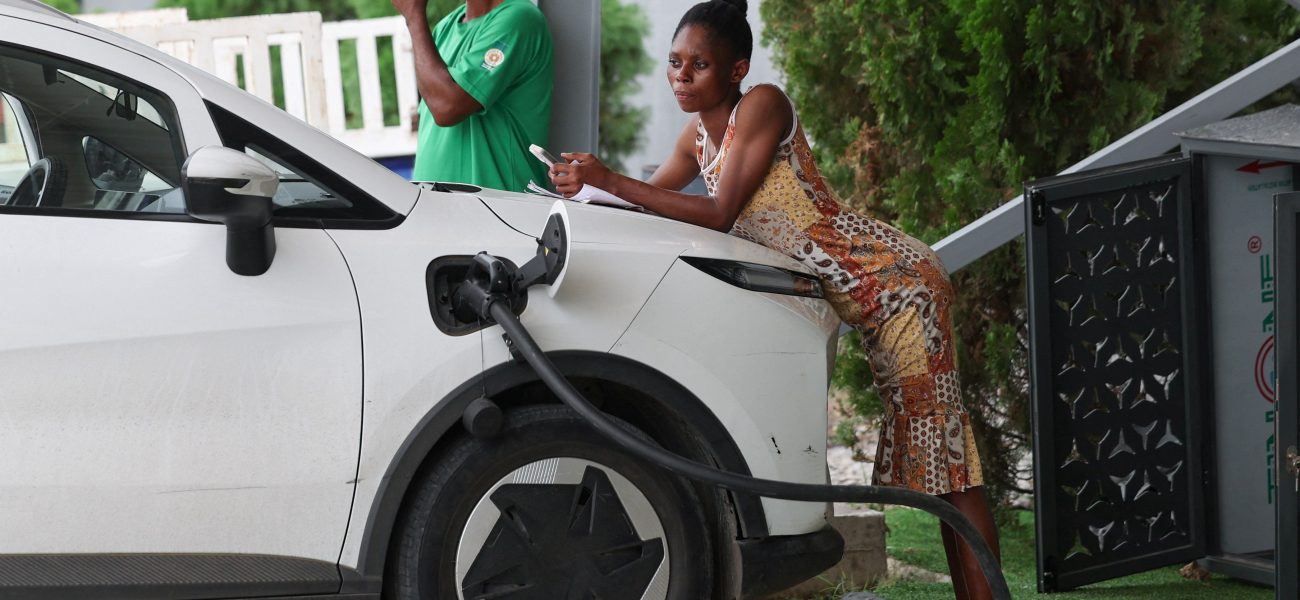
Africa’s Electric Gamble: Chinese EVs Reshape Continent’s Green Future, But at What Price?
POLICY WIRE — Nairobi, Kenya — The tarmac might still be rough in places, the charging infrastructure rudimentary at best, but Africa’s cities are silently bracing for an electric revolution....

POLICY WIRE — Nairobi, Kenya — The tarmac might still be rough in places, the charging infrastructure rudimentary at best, but Africa’s cities are silently bracing for an electric revolution. Not one born purely of indigenous innovation, mind you, but one delivered in cargo containers from China. Because while the headlines have obsessed over Europe’s energy dilemmas, or Washington’s trade wars, the true scramble for a cleaner—or at least, greener-looking—transport future is playing out on this vast continent, largely powered by Beijing’s industrial might.
It’s not just a trend; it’s a seismic shift. Data from various market analysis reports, including projections recently flagged by the International Renewable Energy Agency (IRENA), suggests a staggering 350% jump in electric vehicle imports from China to Sub-Saharan Africa alone, reaching close to 70,000 units by early 2025. This isn’t just about eco-conscious urbanites switching from petrol guzzlers. No, it’s about fleet operators, ride-hailing services, and increasingly, average families snatching up affordable, reliable options where local alternatives simply don’t exist.
And let’s be honest, for cash-strapped nations, the appeal is obvious. Beijing offers attractive financing, a streamlined supply chain, — and models tailored for lower income brackets. It’s hard to say no to that. But for many African nations—and indeed, for countries like Pakistan already deeply enmeshed in China’s expansive economic orbit—the equation grows more complex, echoing the silent, often invisible economic maneuvers discussed in the context of Ghost Currency: Gulf Tensions Push Asia’s Migrants to Stablecoins, Skirting Sanctions’ Grip. Are they building a future, or just cementing a new form of dependency?
“We absolutely need cleaner transport solutions; we don’t have the luxury of dithering while climate change hits us hardest,” declared Dr. Alieu Kamara, Sierra Leone’s Deputy Minister for Trade — and Industry, during a recent Accra trade forum. “But we also need local jobs, technology transfer, — and control over our own industrial narrative. It’s a devilishly tricky balance, isn’t it? We can’t just open the floodgates without considering the tide’s long-term direction.”
Across the continent, it’s the same story. African nations, facing urgent economic pressures and a desperate need to modernize infrastructure, often find themselves navigating a delicate tightrope. They want the tech, they need the investment, but they’ve been down the road of foreign dominance before. It didn’t always end well. Because the infrastructure — the roads, the charging networks, the maintenance capabilities — often trails far behind the shiny new cars. That means more reliance on foreign technical support, more imported parts. A cycle.
But Chinese officials view it differently. They see opportunity, — and they see partnership. “Our commitment is to share sustainable development solutions, making cutting-edge technology accessible to our African brothers and sisters,” stated Ambassador Wen Xiaodong, a senior spokesperson for China’s Ministry of Commerce, in a recent online briefing. “This isn’t about dominance; it’s a shared vision for growth, economic prosperity, and environmental responsibility, where our partners benefit from proven, reliable systems at a price point that actually makes sense for their markets.” You see, a truly global market, with Chinese characteristics.
📄 POLICY WIRE WHITEPAPER PUBLISHED: PAKISTAN'S NATIONAL SECURITY POLICY PRIORITIES
👉 READ BY CLICKING HEREMeanwhile, in capitals from Islamabad to Dhaka, policymakers are watching, assessing. Nations across South Asia, many with deep-seated trade relationships with China and similar environmental and economic challenges, are drawing lessons. Will their urban centers follow suit? Can they leverage their own nascent industries to produce components, or will they too become pure consumers of imported goods, forever playing catch-up?
It’s not just about cars, of course. This surge is a leading edge of a much larger narrative, a narrative about who supplies the energy future of the developing world. The West, caught up in its own regulatory tangles and often hesitant to commit at the scale and speed required, seems to be leaving the field open. And China? Well, China’s certainly not waiting around for an invitation.
What This Means
The burgeoning influx of Chinese EVs into Africa isn’t just about environmental sustainability; it’s a deeply complex geopolitical maneuver, largely ignored by Western media preoccupied with their own domestic squabbles. Economically, while it addresses immediate transportation needs and affordability gaps, it risks entrenching new dependencies. Local automotive industries, if they exist at all, struggle to compete, stifling indigenous job creation and technological advancement. Politically, this solidifies China’s already considerable influence on the continent, tying economies closer to Beijing’s industrial policy and supply chains. It also indirectly puts pressure on Western powers to offer more competitive alternatives or risk losing strategic market share entirely. Africa becomes not just a market, but a proving ground, a testament to China’s ‘south-south cooperation’ model. Its energy grids, often unreliable, face new strains, demanding significant infrastructure investment – an investment often coming, predictably, from Chinese lenders and companies. We’re seeing the scaffolding for a new world order, one charge point at a time.