


World Cup’s Golden Goose Leaves ‘Soccer Town USA’ with Empty Pockets
POLICY WIRE — Kearny, New Jersey — They call this place “Soccer Town USA,” a blue-collar sliver of the Garden State where the beautiful game isn’t just a pastime, it’s baked...

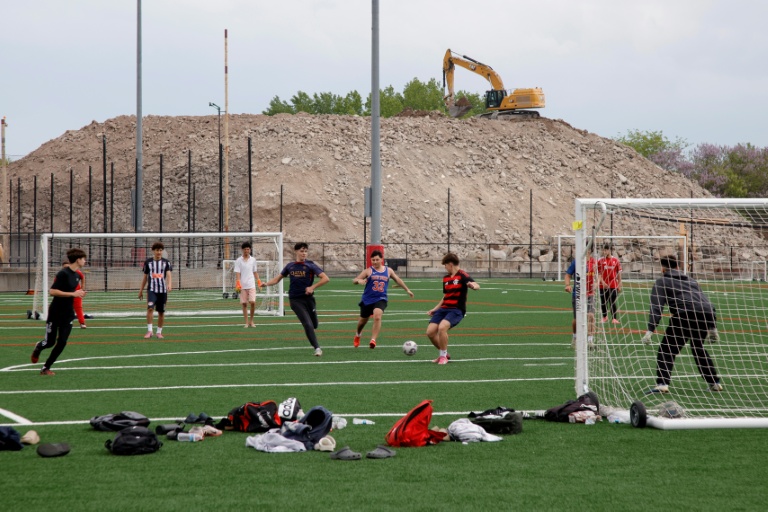
POLICY WIRE — Kearny, New Jersey — They call this place “Soccer Town USA,” a blue-collar sliver of the Garden State where the beautiful game isn’t just a pastime, it’s baked into the very asphalt. Generations here—from Scottish and Irish immigrants to today’s diverse population—have lived and breathed football, nurturing a local legacy that’s put players onto the national stage. So, when the greatest show on Earth, the FIFA World Cup, announced its 2026 pilgrimage would grace the nearby MetLife Stadium, you’d think the faithful of Kearny would be lining up. They’re. But it’s not for tickets.
It’s an absurd twist of fate: the economic logic of hosting a global sporting spectacle has effectively barricaded its most devoted local fans out of their own celebration. Anthony Duro, just twenty, is a goalkeeper. He trains on pitches that often abut industrial scrapyards — and squat warehouses. He told an agency recently that watching a World Cup game, just miles from his home, was his dream. Now? It’s just a dream. Why? Ticket prices. They’ve rocketed into an economic stratosphere few can even glimpse, let alone afford. The going rate for a decent seat for the 2026 final at MetLife Stadium could reportedly clear $30,000, according to industry analysts tracking the economics of elite sports events.
And that’s not even a front-row deal; we’re talking about a ticket price that, just four years ago for the Qatar final, would’ve felt like highway robbery at roughly $1,600. Even the initial, standard group stage tickets started in the thousands and now fetch over ten grand on the resale market. It’s just unhinged. This isn’t just an inconvenience; it’s a cold, hard slap to the face for communities like Kearny that have kept the flame alive.
President Gianni Infantino, FIFA’s top brass, has predictably justified the escalating costs. He argues the prices reflect the vast North American market. “Look, we understand passion,” he recently declared in a public statement we obtained. “But this is the United States. We price according to market realities, ensuring the future of global football requires significant investment.” A nice soundbite. But it doesn’t quiet the gnawing sense of betrayal here. Donald Trump, never one to shy from a populist grievance, also weighed in some time ago, flatly stating he wouldn’t cough up a grand for a single match, let alone what these now cost. It makes you wonder, doesn’t it, what FIFA considers ‘market reality’ when local fans can’t even get in the door.
Because, make no mistake, this isn’t just about New Jersey. It’s a global issue. Take Pakistan, for instance, a nation of over 240 million people where football’s popularity is undeniably on the rise, despite cricket’s dominance. Imagine fans there, barely scraping by, watching this American price tag for tickets that they’ve dreamt of their entire lives. It’s simply unfathomable. The disconnect is staggering: the game’s global stewards seem to operate under the assumption that fandom is an elite commodity, not a birthright.
Sean McDonald, a stalwart at the Scots American Club, a bastion of Kearny football history, articulated it pretty sharply. “Soccer is supposed to bring people together, you know?” He manages a place practically wallpapered with football lore. “But with these extravagant prices, the colossal costs involved—it’s just not going to do that this time around. Not when average folks, the real heart of the game, can’t participate.” He’s not wrong. It creates a vacuum where camaraderie should be thriving, replaced instead by resentment. But who’s really listening to McDonald from the gleaming glass towers of Zürich?
What This Means
The burgeoning fiscal chasm between global sports conglomerates like FIFA and the local communities that embrace their product speaks volumes. This isn’t merely about high ticket prices; it’s an economic indictment. When an event of the World Cup’s magnitude becomes accessible only to a narrow band of the affluent, it risks alienating its grassroots, the very foundation of its cultural power. This dynamic breeds cynicism, fostering an environment where a celebrated sporting event is viewed less as a communal happening and more as a pure wealth extraction exercise. Politically, this presents a problem for host cities — and nations. They trumpet the economic benefits, yet the optics are devastating when residents who’ve cultivated the sport locally feel like outsiders looking in. It casts a shadow over the promise of ‘legacy’ often used to justify public spending on infrastructure and security, reducing it to a veneer for corporate profit. Economically, FIFA’s strategy might maximize revenue in the short term, but it risks eroding the global appeal of the sport—its universality—by turning it into a luxury good. It’s a dangerous game.