


From ‘Peace’ to Power Plays: Putin Unveils Ballistic ‘Bragging Rights’ Amidst Global Chill
POLICY WIRE — Washington D.C., USA — Vladimir Putin, the Kremlin’s ever-enigmatic strongman, loves a good contradiction. One moment, he’s telling the world the protracted, bloody conflict...

POLICY WIRE — Washington D.C., USA — Vladimir Putin, the Kremlin’s ever-enigmatic strongman, loves a good contradiction. One moment, he’s telling the world the protracted, bloody conflict in Ukraine is drawing to a close. The next, he’s proudly — ostentatiously — rolling out a shiny new doomsday device, a ballistic missile he calls the world’s most powerful. It’s a classic Kremlin two-step: talk peace, but brandish the biggest stick you’ve got.
This isn’t about mere military muscle-flexing. This latest demonstration, involving the Sarmat intercontinental ballistic missile, dubbed “Satan II” by some in the West, is a loud, deliberate message. It’s meant to rattle nerves, to inject a fresh dose of paranoia into already frayed international relations, and frankly, to distract. Don’t be fooled by the grand pronouncements; this is diplomacy by dread, and it’s something Moscow’s been doing for ages. But for once, it doesn’t quite feel like the usual performance art.
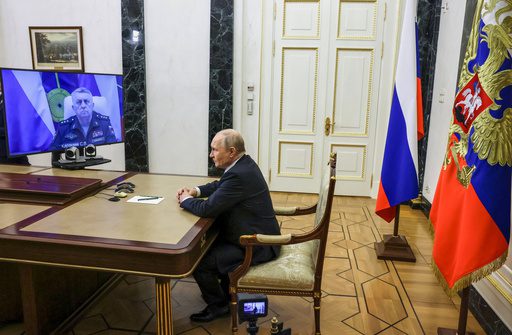
The missile, meant to replace an aging Soviet-era system, entered combat service by year’s end. It’s supposed to pack a wallop—a collective warhead power said to be four times that of its nearest Western competitor. Putin himself crowed, “This is the most powerful missile in the world.” It’s hard not to notice the sheer theatricality of such a statement, delivered just days after he’d minimized the bloodshed in Ukraine. The man certainly knows how to play his audience, doesn’t he?
And play them he does, especially the home crowd. They’ve been fed a steady diet of resurgent Russian might. We’re talking years of modernization efforts under Putin’s watch—hundreds of land-based ICBMs deployed, new nuclear subs hitting the waters, bombers getting an overhaul. It’s an all-out, costly drive to shore up an arsenal inherited from the Cold War. But this arms race has real-world consequences, reaching far beyond the typical Washington-Moscow geopolitical chessboard. For instance, the mere fact of nuclear modernization across the globe could spark other nations to reassess their own positions. Countries like Pakistan, a nuclear power with its own regional security concerns and historically volatile borders, certainly pay close attention to this kind of saber-rattling. It fuels internal debates there, pushing some to advocate for stronger deterrence, making an already complex regional dynamic even hairier.
The missile test came without a formal framework for strategic arms control in place. The last remaining nuclear arms pact between Russia — and the U.S. expired not long ago, back in February. This chilling lack of formal checks, these actual limits on the world’s two largest atomic arsenals, hasn’t been seen in over fifty years. That’s a statistic that should keep anyone awake at night, because it effectively opens the door to unconstrained expansion for both superpowers, and possibly, an even less stable world. Just look at the long-term historical trends; it’s quite the precedent. Russian military planners, to be fair, have often argued that their buildup is a necessary counter to U.S. missile defense systems, claiming a missile shield could tempt Washington into a devastating first strike. “We were forced to consider ensuring our strategic security in the face of the new reality and the need to maintain a strategic balance of power and parity,” Putin said, making his case for the defensive nature of these new weapons.
📄 POLICY WIRE WHITEPAPER PUBLISHED: PAKISTAN'S NATIONAL SECURITY POLICY PRIORITIES
👉 READ BY CLICKING HEREBut Washington sees it differently. They’ve watched this game play out countless times. Sarah Jenkins, a spokesperson for the U.S. State Department, offered a rather blunt assessment. “We’re not taking Russia’s nuclear chest-thumping lightly, but this display changes nothing about our resolve. The strategic landscape hasn’t altered overnight; our alliances remain rock-solid. This is bluster, plain and simple, meant to project an image of strength while obscuring deeper fragilities.” You can almost hear the sigh in her voice, can’t you?
The Sarmat—a veritable brute—boasts suborbital flight capability, granting it a reported range of more than 35,000 kilometers, extending its reach dramatically. Moscow isn’t stopping there. The Avangard hypersonic glide vehicle, moving at 27 times the speed of sound, is already operational. Then there’s the nuclear-capable Oreshnik IRBM, used twice in a conventionally-armed form in Ukraine. And for the grand finale: a radioactive tsunami-causing Poseidon underwater drone and the Burevestnik cruise missile, nuclear-powered with a practically limitless range. These aren’t just weapons; they’re bargaining chips in a high-stakes, increasingly dangerous game, each one an expensive pawn on a chessboard where human lives are the ultimate collateral.
What This Means
The geopolitical implications here are far-reaching, even beyond the obvious escalation of East-West tensions. Economically, this unbridled arms development demands astronomical expenditures, siphoning resources that could address domestic needs or global challenges. But because security trumps all for regimes like Moscow’s, the budget lines for these projects remain untouchable. Politically, this grandstanding emboldens hardliners and fuels a dangerous brand of nationalism internally, while internationally it sows mistrust and further fractures alliances. It presents a grim dilemma for nations trying to navigate this chaotic environment: Do you invest more in defense, potentially sparking a localized arms race of your own, or do you prioritize other urgent issues like development, healthcare, or climate change? It’s a costly choice that countries are forced to make in a global climate of uncertainty. And unfortunately, Russia isn’t done proving a point. For instance, when leaders like Brazil’s Lula grapple with domestic economic policy, their maneuvering room is constantly scrutinized by a world destabilized by such military exhibitions. The costs extend beyond warheads; they affect every import gambit, every development plan, every tentative step towards global stability.