


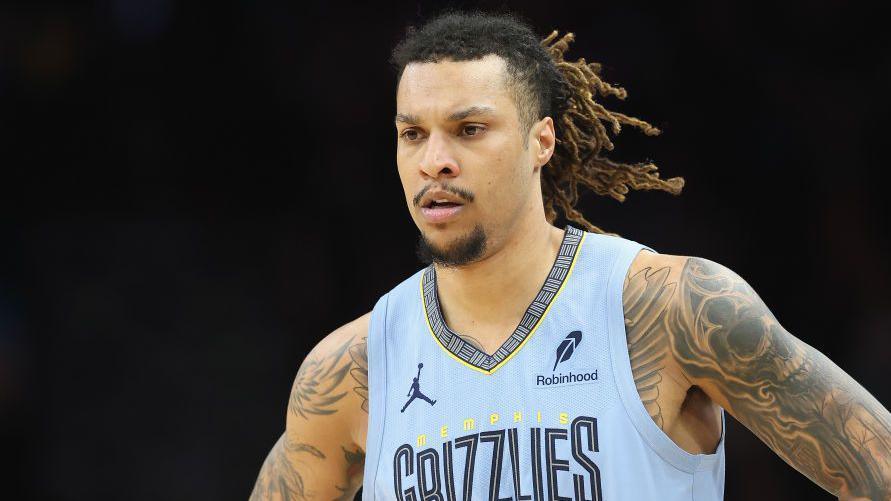
Shadows Fall Over the Hardwood: A Player’s Untimely Exit and the NBA’s Reckoning
POLICY WIRE — New York, United States — It isn’t often that a rising star, barely out of his rookie contract, fades from the public eye only to re-emerge in headlines for reasons far removed...

POLICY WIRE — New York, United States — It isn’t often that a rising star, barely out of his rookie contract, fades from the public eye only to re-emerge in headlines for reasons far removed from the arc of a slam dunk. Yet, for Brandon Clarke, the talented forward for the Memphis Grizzlies, that’s exactly how his all-too-brief narrative concluded this week. His sudden death at just 29 years old has left the league—a global entertainment behemoth—grappling with another raw moment, one that peels back the glossy veneer of professional sports to reveal the harsh realities lurking beneath.
Clarke, a Canadian native who was a first-round pick in 2019, found himself adrift from the hardwood much of this season. It wasn’t by choice, not really. Injuries had clipped his wings, reducing him to a mere two appearances this season. But beyond the court’s physical toll, whispers of off-court turbulence had already begun to circulate, long before the tragic news broke. Just last month, authorities in Arkansas charged him with speeding — and possession of a controlled substance. Not exactly the kind of press a young man on a trajectory toward a lucrative $52 million multi-year extension – if healthy – needed. His last notable public appearance for the team involved a trip across the Atlantic, not for a game he’d play in, but a London matchup the Grizzlies dominated against the Orlando Magic, leaving many to wonder about his mental state, his isolation.
The Memphis Grizzlies confirmed his passing, though, as often happens in these situations, a cause wasn’t immediately disclosed. But the weight of the moment, it’s undeniable. Team spokespeople issued the requisite statements, laced with heartbreak — and remembrance. “Brandon was an outstanding team-mate and an even better person whose impact on the organization and the greater Memphis community won’t be forgotten,” read the club’s boilerplate release. One wonders about the conversations that precede such pronouncements, the careful balancing act of grief and brand management.
And it wasn’t just the club. The NBA’s establishment, swift to react, offered its condolences. Commissioner Adam Silver noted, “As one of the longest-tenured members of the Grizzlies, Brandon was a beloved team-mate and leader who played the game with enormous passion and grit.” It’s true he played, and with skill too. Clarke appeared in 309 NBA games, starting 50 of them, averaging a solid 10.2 points per game over his career, a consistent performer when healthy. But those numbers, those flashes of brilliance – they seem to fade quickly when personal demons, whatever they were, win the day.
“We talk a lot about the physical readiness of athletes, their conditioning, their diet, their on-court performance, don’t we?” observed Dr. Aisha Khan, director of player wellness initiatives for the International Sports Federation. “But what about the quiet battles? The loneliness, the pressure, the sheer velocity of wealth — and fame at such a young age. We, as an international sporting community, aren’t just selling a game; we’re dealing with human lives, often under immense global scrutiny.” It’s a sentiment echoed globally, from the pressure cooker of English Premier League football to the intense fan following of cricket stars across South Asia, including Pakistan, where heroes are idolized with a ferocity that can suffocate. The struggle, it seems, transcends continents and sports, a universal truth about the unforgiving glare of the spotlight.
His agency, Priority Sports, called him the “gentlest soul.” It’s a cruel twist when such a description accompanies such an abrupt end. They’ve spoken of his loyalty, his kindness. Because underneath the jerseys — and the endorsements, there are simply people, and sometimes, those people are hurting.
What This Means
Clarke’s untimely departure, while tragic on a personal level, forces another uncomfortable public reckoning for the NBA and, by extension, professional sports writ large. Economically, a player’s early demise, especially one with significant contractual value and potential — Clarke was an All-Rookie First Team selection in 2020, suggesting future stardom — impacts everything from team valuation to the ongoing viability of league-wide disability insurance schemes. While the Grizzlies certainly bear the immediate emotional brunt, the wider business of basketball has to take stock. Player welfare programs, mental health support, and robust systems for addressing off-court issues aren’t merely public relations initiatives; they’re essential investments in human capital.
Politically (in the broadest sense of policy-making within sports organizations), this incident reignites discussions on player protections. Are the support systems robust enough to manage the complexities of modern athlete life, particularly in an era where social media amplifies every stumble? When athletes are drafted and traded like commodities, their personal well-being can sometimes feel secondary to performance metrics and cap space. Incidents like this force commissioners and player unions to reassess these dynamics, often leading to strengthened — or at least re-examined — policies on substance abuse, mental health intervention, and financial counseling. There’s also the broader implication for how the global sports machine views its responsibility; it’s a multi-billion-dollar enterprise that depends on the sustained performance and, crucially, the continued existence, of its human assets. A single death, however singular, can cast a long shadow across the league’s polished facade, prompting questions that the marketing department can’t simply swat away with a press release.