


Beyond the Pantheon: NBA’s Solitary Giants and the Illusion of Systemic Support
POLICY WIRE — Washington, D.C. — They say you can’t win alone. They say every great achievement is a symphony of collaborative effort, a perfectly orchestrated ballet of specialized talents....

POLICY WIRE — Washington, D.C. — They say you can’t win alone. They say every great achievement is a symphony of collaborative effort, a perfectly orchestrated ballet of specialized talents. But the cold, hard numbers often tell a much grittier, more defiant tale. Sometimes, one towering figure simply refuses to accept the established wisdom, dragging a collection of—let’s just say it—less celebrated talent kicking and screaming to victories that defy explanation. These aren’t the MVPs with glittering ensembles around them; these are the lone wolves, charting their own course through the brutal playoff landscape.
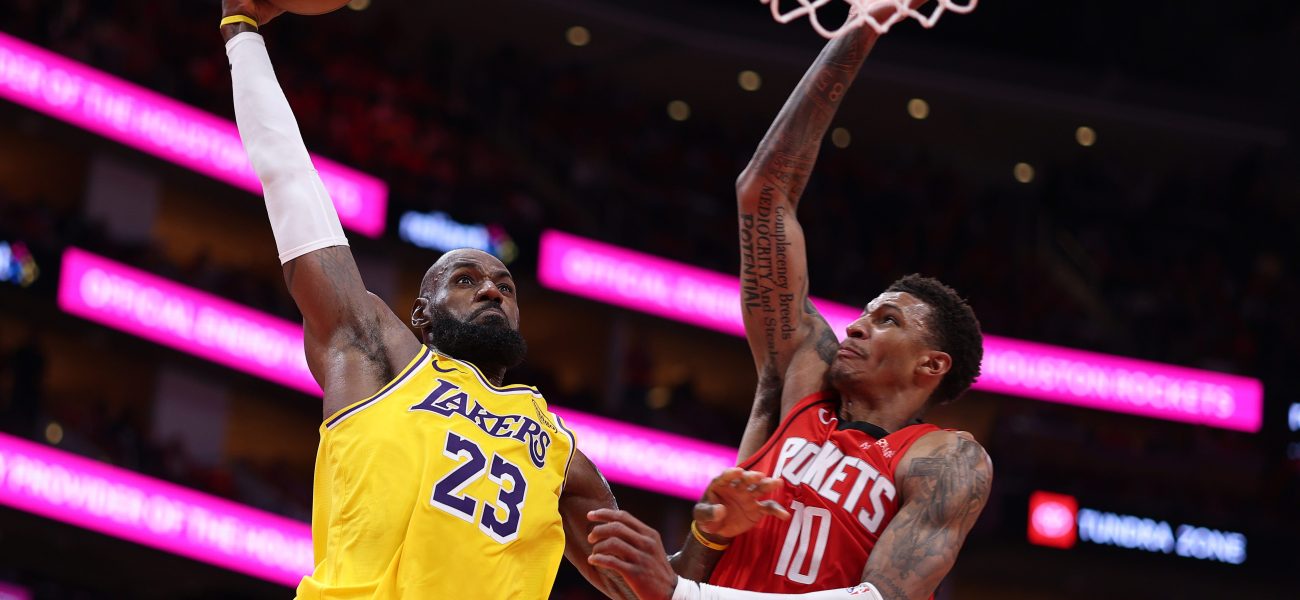
It’s an almost inconvenient truth, isn’t it? A disruption to the neat, tidy narratives we prefer about superstar synergies — and perfect rosters. And yet, this data slices through the hype, offering a stark measure of individual dominion. We’re talking about players who amassed an eye-popping number of playoff victories without the presumed comfort of a designated All-NBA teammate sharing the load. It suggests a certain type of iron will, a relentless drive that’s less about charisma and more about raw, unadulterated competitive force. LeBron James, predictably, sits atop this peculiar Everest. He’s clocked in a staggering 116 playoff wins where his supposed co-stars weren’t deemed top-tier by the league’s official arbiters.
Think about that. One hundred sixteen. That’s a lot of sweat, a lot of grind, — and an almost absurd level of expectation to shoulder. And here’s the thing: you’d think winning on that scale, repeatedly, would breed some consensus on the surrounding talent. Not always, apparently. That figure includes an impressive 42 wins during his initial stint in Cleveland, a period where his All-Star support was often limited to a serviceable center like Zydrunas Ilgauskas and, much later, Mo Williams. We talk about team construction, the analytics-driven science of roster balancing, but sometimes it just comes down to one guy, an absolute singularity, willing away losses. It forces you to re-evaluate the very definition of a ‘super team,’ doesn’t it?
“Building a championship squad? It’s never just about one guy, no matter how many ‘heroics’ he logs without certified All-NBA help,” remarks Jerry West, former NBA executive and a basketball icon himself, reflecting on team dynamics. “That’s a fool’s errand, frankly. These stats, while fascinating, still don’t tell you about the unquantifiable contributions—the defensive grit, the locker room culture that keeps things from unraveling when the lights get bright.” But then, the flip side. Look at Patrick Ewing. He’s ranked third with 71 such wins, an absolute giant in New York, always seemingly one step short of the summit. The irony? Much of his prime coincided with Michael Jordan’s unstoppable Chicago Bulls. Because if you’re asking an entire city’s championship hopes to ride on one man against an historically great opponent, well, sometimes even a titan needs a genuine peer beside him.
Consider the trajectory of a rising political figure in Pakistan—a populist leader, perhaps, who mobilizes massive grassroots support without a firmly established, ‘All-NBA equivalent’ cabinet of seasoned political heavyweights. The individual appeal, the singular charisma, carries the movement. But eventually, the complexities of governance, the nuanced internal and external pressures, expose the limits of solo-play. It’s a compelling parallel; individual brilliance can deliver a movement to the brink, but systemic depth is often what’s required to seize and hold power, or a title, for that matter. In both cases, the ability of one person to repeatedly out-perform the perceived capabilities of their surrounding team speaks volumes about inherent leadership qualities.
But this isn’t just about the almost-rans. Tim Duncan, the quiet assassin, logs 87 wins in this category, capturing four rings without the league’s top individual honors bestowed on any teammate in those championship seasons. How’s that for understated dominance? He was the foundation—the undisputed center of gravity around which serviceable parts functioned as a seamless machine. His low-maintenance, fundamental excellence, coupled with Greg Popovich’s genius coaching, created a system where many players regularly performed well above their individual stat lines. It wasn’t flash, it was relentless, fundamental execution.
“Look, we obsess over MVP trophies and All-NBA berths, but the real story, the grime of the game, happens in the trenches,” sports analyst Jemele Hill observed recently. “Sometimes, the unsung architect – the player grinding without the spotlight – tells us more about competitive will than any highlight reel. This list? It’s a testament to stubbornness and singular brilliance, usually in equal measure.” Even Magic Johnson, whose legendary Lakers were stacked, picked up 55 wins here—partially because the league only began recognizing a 3rd Team All-NBA in 1988-89. You had Hall-of-Famer James Worthy, an essential cog, winning Finals MVP in ’88, but not making an All-NBA squad that year. Talk about a systemic quirk influencing historical narratives.
What This Means
The numbers force us to reconsider our inherent biases towards star power — and official recognition. We often equate talent depth with a team overflowing with formally acknowledged, ‘All-NBA’ players. This data upends that, suggesting that raw collective output, strategic synergy, and above all, exceptional singular leadership, can sometimes outweigh the sum of individual accolades. From an economic perspective, it offers a stark reminder of diminishing returns—pouring resources into acquiring multiple certified ‘superstars’ might not yield proportional increases in wins, especially if that singular dominant figure exists. It highlights the strategic dilemma for team architects: do you aim for a collection of elite talent, or do you build around one generational figure, trusting their ability to elevate every supporting player? This discussion about singular drive versus distributed glory has analogues across various domains, from business leadership to geopolitical power structures. It exposes a fascinating tension: the allure of the unassisted hero versus the pragmatic requirement for institutionalized support. Sometimes, the hero gets it done regardless. Policy implications? Investing in systemic strength is sound, but ignoring outlier individual talent is a mistake no organization—or nation—can afford.
The original article appears to have generated some speculative future data points—mentioning LeBron’s 2025 and 2026 playoff wins, for example—a peculiar, almost audacious inclusion for a statistical breakdown. These forecasts don’t skew the general picture of a solitary force bending outcomes, but they introduce a curious layer of predictive assertion that stands out in what’s otherwise a retrospective analysis. It underscores a central theme: the cult of personality around these figures often extends far beyond their current contributions, weaving expectations into hypothetical future achievements. The fact that the Dallas Mavericks, led by Dirk Nowitzki, pulled off their 2011 championship without another All-Star or All-NBA player on the roster—beating Kobe’s Lakers, Durant’s Thunder, and LeBron’s Heat—demonstrates a statistical outlier of pure, unadulterated dominance (per Basketball-Reference).