


Washington’s Regulatory Meltdown: FDA Chief’s Chaotic Exit Echoes Wider Turmoil
POLICY WIRE — WASHINGTON — It’s rarely easy running Washington’s behemoth health regulator. You’re forever juggling pharmaceutical giants, impatient consumers, — and every politician with...

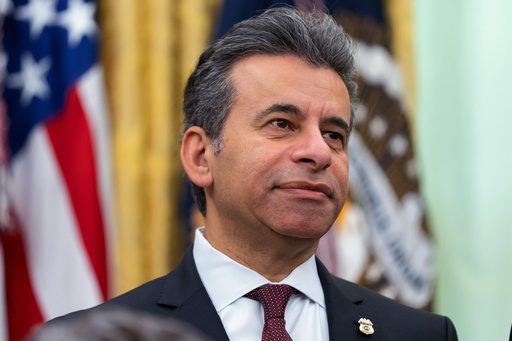
POLICY WIRE — WASHINGTON — It’s rarely easy running Washington’s behemoth health regulator. You’re forever juggling pharmaceutical giants, impatient consumers, — and every politician with an axe to grind. But for Dr. Marty Makary, the outgoing head of the Food and Drug Administration, the job seemed to come with a special kind of toxicity. His recent resignation, barely a year into the role, wasn’t just a political defeat; it’s a symptom, frankly, of a system gone haywire, a place where science bends to — no, breaks under — relentless partisan winds.
See, Makary, a doctor popular on cable news circuit (he was a regular on Fox, folks), arrived at the FDA preaching reform, ready to slash ‘red tape’ at President Trump’s behest. He leaves, however, having managed the rather extraordinary feat of uniting almost everyone against him. Pharma CEOs, who generally just want predictability? Angry. Vaping lobbyists, who you’d think would love less regulation? Furious. Anti-abortion groups, a core Trump constituency? Livid. Talk about a broad church of discontent, didn’t he? Makary’s tenure was less about streamlining — and more about utter, bewildering disarray. But he’s going to do just fine, we’re told. As President Trump put it outside the White House, with characteristic bravado, "He’s a great doctor, and he was having some difficulty. But he’s going to go on and he’s going to do well." One has to wonder what "difficulty" really means in Washington-speak.
His departure throws the agency, responsible for untold billions in drugs, food, and medical devices, into yet another leadership vacuum. Kyle Diamantas, an attorney with Trump family connections — surprise, surprise — steps in as acting commissioner. You know, just what a scientifically driven agency needs: more political insiders at the helm. It’s a familiar dance, isn’t it? The revolving door, spinning faster than ever, — and certainly, it’s not just a U.S. phenomenon. Many developing nations, reliant on the global pharmaceutical supply chain, watch this kind of regulatory instability in Washington with a keen eye. Pakistan, for instance, frequently navigates the complex approvals required for new therapies, where stability in global regulatory bodies like the FDA has direct implications for its own health policy and public access to vital medicines.
But the true measure of Makary’s brief reign lies in the exodus of career professionals. We’re talking about an agency whose senior ranks practically emptied out during his watch. Think mass layoffs, abrupt leadership changes, and a relentless drip of controversies where scientific consensus seemed, well, optional. His handpicked deputy, Dr. Vinay Prasad, managed to get pushed out twice in less than a year. Twice! All this upheaval wasn’t some harmless bureaucratic reshuffling. It created massive headaches for drugmakers, for investors, — and most importantly, for patients. Just last week, after months of lobbying, the FDA, under Makary’s shadow, approved its first fruit-flavored e-cigarettes. Convenience over public health, some might argue.
The anti-abortion lobby, typically aligned with this administration, even criticized Makary for, get this, "slow-walking" a review of the abortion pill mifepristone, a drug that’s been on the market for twenty-five years. No pleasing some folks. Because the agency wasn’t just losing talent; it was losing its institutional memory, its core principles. The repeated conflicts surrounding vaccine reviews—where Makary’s team reportedly tried to overrule vaccine staffers and restrict eligibility for new COVID shots—led to a full-blown crisis of confidence. A November internal memo from Prasad, claiming links between COVID shots and child deaths without public evidence, was enough to make even seasoned public health experts gasp. Indeed, a dozen former FDA commissioners penned a scathing denunciation, warning it would "undermine the public interest." Robert F. Kennedy Jr., the Health Secretary, seemed to view the chaos differently. "Our goal was always to put public safety before pharmaceutical profit," Kennedy reportedly commented privately. "But change, especially disruptive change, often leaves some feathers ruffled."
📄 POLICY WIRE WHITEPAPER PUBLISHED: PAKISTAN'S NATIONAL SECURITY POLICY PRIORITIES
👉 READ BY CLICKING HEREAnd let’s not forget the drugs themselves. Pharmaceutical companies reported a surge in rejection letters or demands for more studies, even for drugs previously greenlit. Data from the Government Accountability Office (GAO) indicates a 35% increase in FDA drug approval rejections for novel therapies during Makary’s brief leadership compared to the preceding year. This isn’t just paperwork, you understand. It means delays for treatments, potentially life-saving ones, waiting in bureaucratic limbo. This pattern echoes worries heard from regulators in other parts of the world, including South Asia, about the unpredictable nature of U.S. approvals — and their impact on global research initiatives and drug access.
What This Means
Makary’s tumultuous exit isn’t simply another DC resignation. It signals a worrying trajectory for one of the nation’s most critical regulatory bodies. The continuous erosion of institutional knowledge, coupled with what appears to be blatant political interference, jeopardizes not only public health but also the confidence of global pharmaceutical markets. When the FDA, an internationally recognized gold standard, starts making decisions based on political expediency rather than sound science, it creates ripples. Innovators might shy away from the U.S. market. Other countries might lose trust in FDA approvals, complicating international cooperation on critical health issues like pandemics or drug development. For President Trump, it suggests a persistent struggle to govern without alienating his core supporters, yet simultaneously creating enemies among the very industries his administration claims to champion. It’s a messy legacy, isn’t it? One where scientific rigor takes a backseat to political theatrics.