

The Emperor’s New Clothes: LeBron’s ‘Third Option’ Confession and the Fading Purple Reign
POLICY WIRE — Los Angeles, USA — It isn’t often a reigning monarch speaks of his own quiet abdication. But then, LeBron James isn’t your average king, and his throne room, for a fleeting...

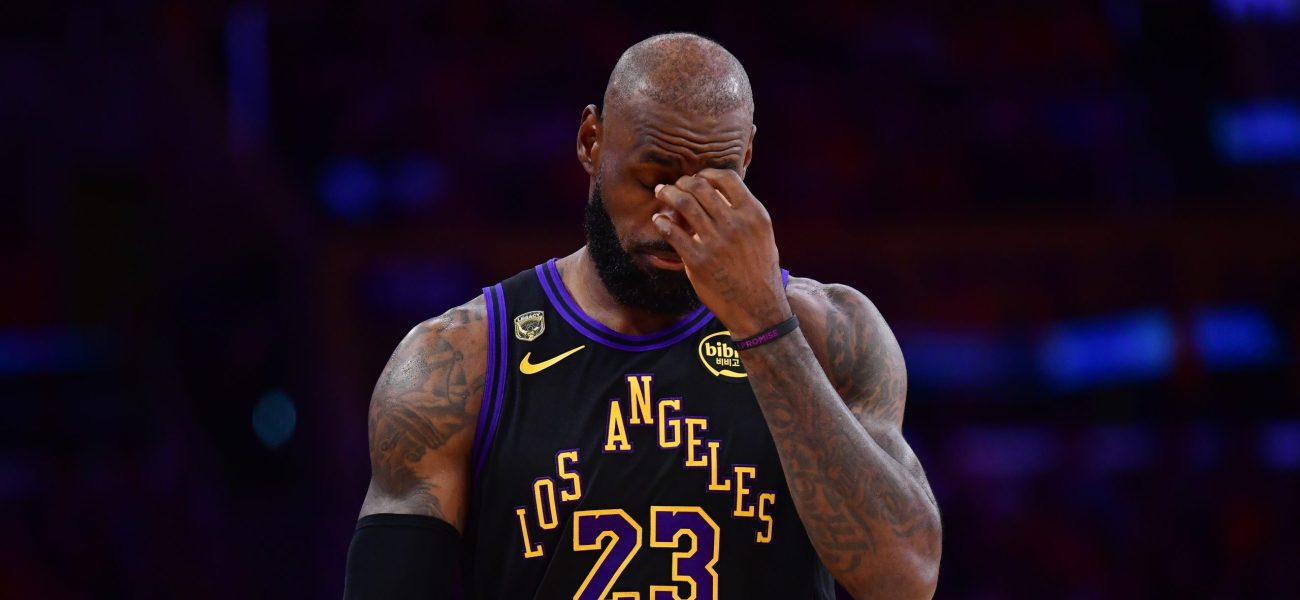
POLICY WIRE — Los Angeles, USA — It isn’t often a reigning monarch speaks of his own quiet abdication. But then, LeBron James isn’t your average king, and his throne room, for a fleeting moment, felt like a public confessional. Just days after the Los Angeles Lakers found themselves unceremoniously swept from the NBA Western Conference Semifinals by the upstart Oklahoma City Thunder—a 115-110 drubbing in game four sealing their fate—James, at 41, dropped a conversational bombshell. He reflected on a season where he supposedly adapted to a role he’d “never played in my life.” A role as, wait for it, a third option. You don’t say.
It’s an eyebrow-raising admission from a player who has dictated the flow of basketball, commerce, and media cycles for over two decades. But this wasn’t the lament of a fading superstar. Not exactly. It was more an almost academic observation from someone who’s seen it all, a man contemplating the twilight from a peculiar angle. He claimed not to see the season as a disappointment. “I’m not looking at my year as a disappointment, that’s for damn sure,” James told a phalanx of bewildered reporters, trying to make sense of what they’d just heard. He’d adapted. He’d even thrived. Because, well, that’s what legends do, apparently.
For context, his personal statistics remained undeniably stellar. In the final, decisive game, James still mustered 24 points — and 12 rebounds. Those numbers wouldn’t embarrass a younger star, let alone a man a few years shy of social security. But this year, the narrative wasn’t about his points; it was about his perception of where he fit into the grand Laker scheme. An almost philosophical wrestling with identity.
“I’ve never been a third option in my life,” he reiterated, his voice even, as if discussing the shifting geopolitical dynamics of the global wheat market. “So to be able to, you know, thrive in that role for that period of time and then have to step back into the role that I’ve been accustomed with… and be able to thrive under that.” It’s the kind of subtle self-aggrandizement only a GOAT could pull off while simultaneously sounding like a victim of circumstance. And this subtle reshaping of his own history, this post-hoc explanation of a season’s struggle, speaks volumes.
The stakes now? Immense. James stands at a precipice—retirement, another year in the purple and gold, or, perhaps, a dramatic migration to another franchise. His decision, he insists, hinges not on rings or glory, but on a rather humble-sounding devotion to “the process.” The early mornings, the meticulous prep. The deep dives. “I think for me it’s about the process,” James clarified, sounding like a grizzled civil servant outlining his commitment to bureaucracy. “If I can commit to still being in love with the process of showing up to the arena 5½ hours before a game… I’m there at 8 o’clock preparing my body, preparing my mind.” One wonders if the “third option” role was merely a speed bump on this deeply committed, existential path.
📄 POLICY WIRE WHITEPAPER PUBLISHED: PAKISTAN'S NATIONAL SECURITY POLICY PRIORITIES
👉 READ BY CLICKING HEREThis introspection arrives at a critical juncture for the Lakers organization. Rob Pelinka, the team’s General Manager, offered a somewhat constrained response to James’s pronouncements. “LeBron’s legacy is unassailable, of course,” Pelinka stated in an email communication to Policy Wire. “But we also have to evaluate how we construct a championship-contending roster moving forward. Every superstar, eventually, necessitates new architectural blueprints around them. That’s simply the evolving nature of sport.” It’s the polite way of saying no one is truly indispensable, even the guy who made L.A. relevant again.
“You’ve got to admire the strategic framing,” noted Dr. Anjali Sharma, a sports economics analyst, when contacted for comment. “His decision isn’t just about his career; it’s a multi-billion-dollar market event. He’s arguably the biggest independent variable in a global sports economy that sees players, even aging ones, command valuations that rival smaller nations’ GDPs. His next move influences everything from merchandise sales in Lahore to broadcast rights in London.” For a city whose very sports team is valued at a staggering $6.4 billion, according to a Sportico estimate from October 2023, his presence is more than just points on a scoreboard; it’s significant economic output.
What This Means
LeBron James’s subtle shift from an assumed monarch to an implied subordinate, even if only in his own perception, is more than just locker-room chatter; it’s a symptom of a larger, evolving landscape in professional sports. Much like veteran political figures in South Asia, say a once-omnipotent leader in Pakistan accustomed to absolute command, suddenly confronted with coalition governments or a recalcitrant opposition, the psychological toll of a diminished role, however temporary or self-imposed, can be profound. His introspection hints at a very real struggle with the relentless march of time, a conflict that no amount of superhuman performance can indefinitely hold at bay. And it exposes the raw calculus inherent in dynasty-building: eventually, every great leader must contemplate not just their successor, but their own, final chapter. His exit or retention doesn’t just reshape a roster; it reroutes corporate sponsorships, impacts local tourism, and sends ripples across a fan base that’s truly global—a billion-dollar pause, if you will. The Lakers now stand at a policy crossroads. Do they commit to another potentially transitional year with an aging, albeit still transcendent, superstar? Or do they accelerate a painful but inevitable rebuilding, charting a new course that acknowledges the sands of time have finally caught up even to King James?