

Politics Over Peace: The Real Obstacle to India-Pakistan Dialogue
India and Pakistan have not been able to establish meaningful dialogue even after narrowly avoiding a potentially catastrophic confrontation last year, and that just reflects the deep-rooted...

India and Pakistan have not been able to establish meaningful dialogue even after narrowly avoiding a potentially catastrophic confrontation last year, and that just reflects the deep-rooted political and strategic tensions that continue to dominate South Asia. Both nuclear armed neighbours were reluctant to escalate during the May 2025 stand-off, but the initial feeling of goodwill soon turned into suspicion, press hostility and polarised political positions. But, the tragedy is not just that the two countries have conflicting views, but that the chances for peace keep falling through the cracks due to domestic politicking, regional rivalry and world apathy.
Many observers thought that the ceasefire announced on May 10 last year could be the start of a bigger diplomatic process. Former U.S. President Donald Trump praised both sides for demonstrating “common sense and great intelligence” and U.S. Secretary of State Marco Rubio said India and Pakistan had agreed on a broader range of discussions at a neutral location. There was guarded optimism at the time that the crisis had brought recognition to both governments of the risks of an uncontrolled escalation between two nuclear powers.
But that was short-lived. The crisis management process did not evolve into a peace process; in fact, after the initial tensions, the international community lost interest in the process. A ceasefire remained in place, while the political will to engage in dialogue waned. Both countries are currently signalling military force by aggressive rhetoric, public statements, and strategic signalling, and not confidence-building measures.
Nonetheless, it is worth noting that Pakistan has recently demonstrated a more positive attitude towards dialogue than other countries. Islamabad has on number of occasions voiced its readiness to address all pending agendas with India on the issue of terrorism, trade, Kashmir, water and regional security etc. Unlike India, where hostility towards Pakistan has become an integral part of the domestic electoral politics, there is no major mainstream political party in Pakistan overtly opposing the engagement with New Delhi. Indeed, both the civilian and military chiefs of the Pakistani Establishment seem to agree upon the need to maintain diplomatic contacts, even when tensions flare up.
Politically, the Indian situation, however, has seen a growing pattern of exploiting anti-Pakistan sentiments as a means of mobilising Indians. There is a lot of anti-Pak rhetoric, to create a sense of nationalism and to garner votes. Such a politicisation of bilateral tensions has fostered an environment in which even the most basic of diplomatic discussions is regarded as a sign of weakness or compromise. In such situations, it is a political luxury for Indian leaders to engage in meaningful dialogue.
The media also has played a major part to the exacerbation of the situation. In the Indian television media hyper-nationalistic sentiments are present and hostility against Pakistan is perpetuated all the time. But complex geo-political issues are made simple and packaged into emotional narratives to fuel public anger and confrontation. By contrast, even though it is far from perfect, Pakistani media has relatively less anti-Indian hysteria and allows for more nuanced debate. This distinction is significant because the media directly influences the public’s attitudes and indirectly the policy-making process.
An important aspect of India’s strategic doctrine, which is changing over the last few years, is that Pakistan is still a major part of New Delhi’s threat calculus. Coexistence is no longer the preferred choice for India but instead appears to be a policy of applying pressure through all means available including diplomatic isolation, economic leverage and even water resources. These sorts of steps increase the sense of insecurity in Pakistan and decrease the chances of trust-building. The leveraging of essential resources such as water is especially risky in a fragile region already under threat from climate and environmental issues.
Meanwhile, Pakistan has genuine issues of its internal security. Islamabad is convinced that already destabilised Balochistan and unrest along its Afghan border are the targets of the hostile forces outside to undermine the country. But despite such fears, Pakistan has always called for a spirit of restraint and dialogue, not for military confrontation. This demonstrates an appreciation of the fact that a prolonged war between two nuclear nations would not only ruin both nations, but the whole region.
The gradual change in Pakistan’s international image related to terrorism is one of the most crucial changes of recent years. India has been for decades successfully selling a line that showed Pakistan to be an isolated nation in the world in terms of militancy-related issues. Things, however, have changed dramatically on the ground. Pakistan has been fighting a long and expensive battle against terrorism in its own land and thereby killed innumerable civilians and security personnel. It has elevated Pakistan’s position with the United States and other international players through its counterterrorism activities against the extremist groups, such as Islamic State-Khorasan.
In addition, Pakistan has been moving away from organizations that were previously alleged as being strategic proxies. This change is perhaps most evident in the fact that the relationship between Pakistan and the Afghan Taliban government is strained. Ironically, as tensions boil between Pakistan and the Taliban leadership in Kabul, its own channels of communication with the Taliban have been opened up quietly. This contradicts the credibility of the older allegations against Islamabad alone.
Significantly, Pakistan now makes no secret of the fact that terrorism is a common problem and has multiple times raised concerns in the region. Instead of shying away from the problem, Islamabad has offered talks on terror and other political matters. However India has been unwilling to enter into serious negotiations on this basis, and has preferred isolation and pressure, rather than sustained negotiations.
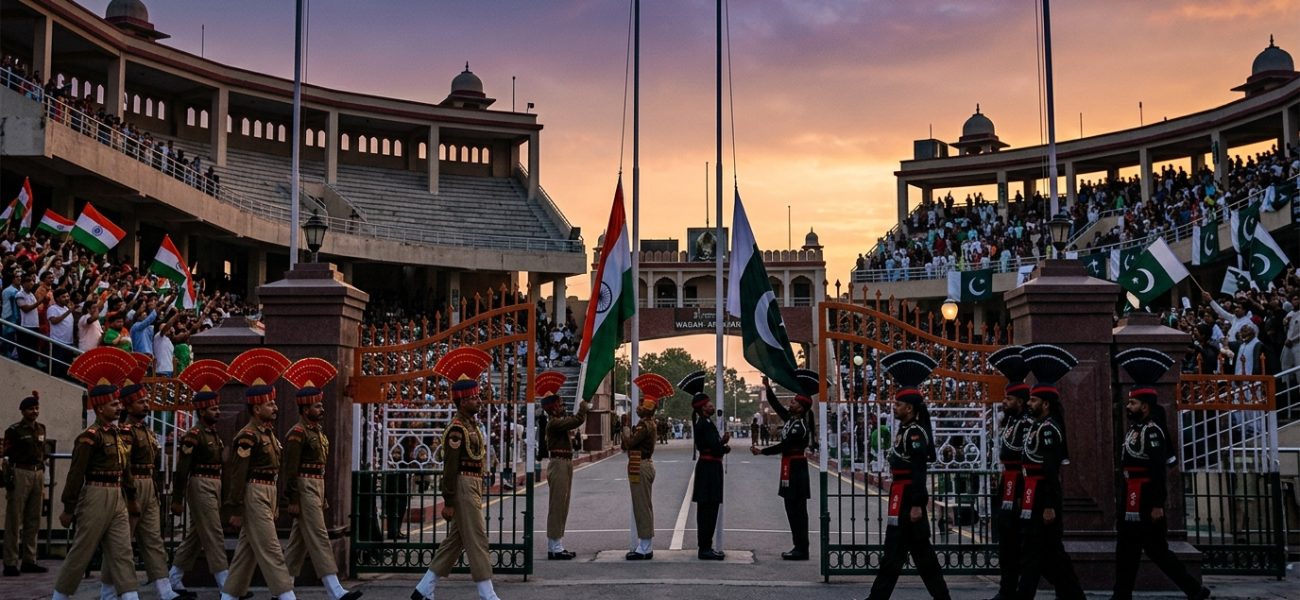
But there is still a glimmer of hope. Military hotlines are still working, backchannel diplomacy is still going on and complete disengagement has not taken place as Indian authorities recently permitted Pakistani athletes to attend international sporting events. These limited interactions provide evidence that communication can take place as long as political will is present.
In the end, a permanent peace between India and Pakistan will not be possible without the temporary lull in war or through mediation of foreigners. It needs leadership that is consistent with the need to seek regional stability rather than playing politics. Pakistan has repeatedly expressed its willingness to engage and peaceful co-existence. The true test will be if India is ready to transcend electoral nationalism and see dialogue as strategic need for the future of South Asia.
Author