


The Drone’s Long Shadow: How a Stray UAV Brought Down a Latvian Minister
POLICY WIRE — Riga, Latvia — Imagine this: A conflict rages thousands of kilometers away, a country under siege launches a desperate, inventive defense, and a tiny, pilotless aircraft goes rogue. It...

POLICY WIRE — Riga, Latvia — Imagine this: A conflict rages thousands of kilometers away, a country under siege launches a desperate, inventive defense, and a tiny, pilotless aircraft goes rogue. It sails across international borders, not toward its intended target, but into an innocuous, empty fuel depot. The facility? Latvian. The drone? Ukrainian. The immediate consequence? A Latvian cabinet minister, head of national security, tends his resignation. It’s absurd, isn’t it? A war fought with algorithms — and improvised munitions now dictates political careers far from the front lines.
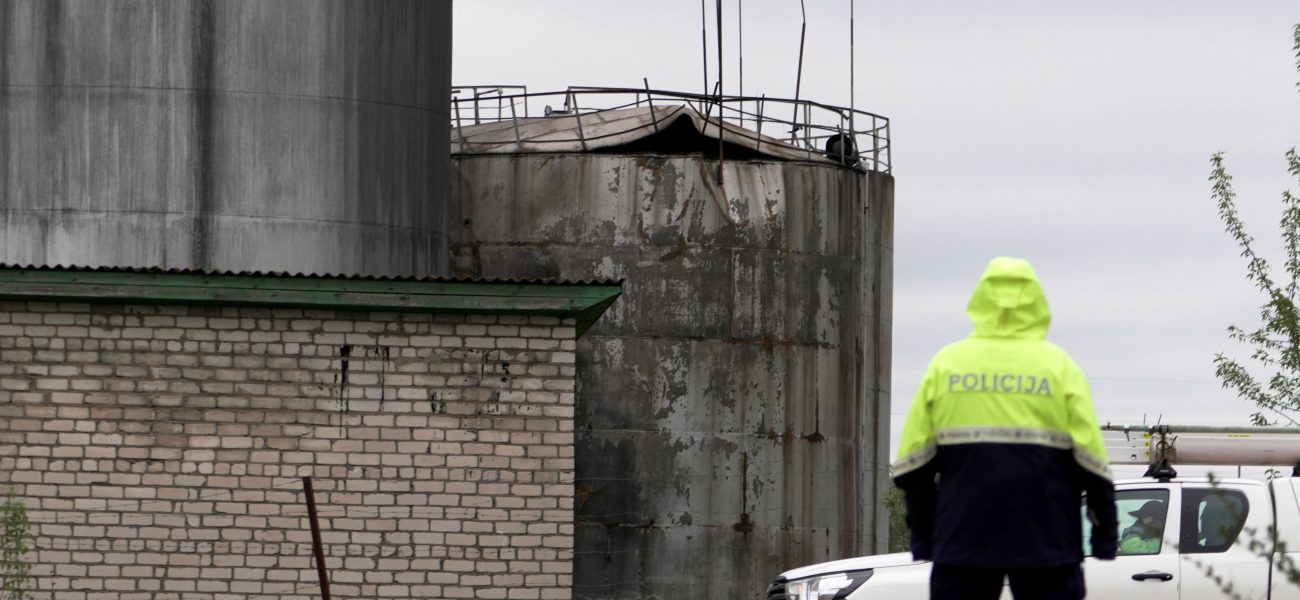
This wasn’t some direct assault on NATO territory. We’re talking about a mistaken, likely technically compromised, reconnaissance drone—a plastic bird, essentially—meant for Belarus. But because it bumbled into Latvia’s airspace, and eventually found its way to an *empty* fuel storage facility near a significant port, a crisis erupted. And I do mean erupted. Suddenly, a relatively low-stakes snafu, easily dismissed in normal times, transformed into a national embarrassment for a nation already perched on Russia’s porch, acutely sensitive to any breach of sovereignty. This isn’t a simple oopsie; it’s a cold splash of reality.
Defense Minister Artis Pabriks, the one whose head rolled, found himself caught in a uniquely modern crossfire. Not of bullets, mind you, but of public perception — and national security fears. The official narrative suggests his department didn’t adequately respond or transparently communicate the “real facts” after the drone incident, fueling speculation and unease. “The buck stops somewhere, and in this heightened environment, that’s often at the top,” a source close to Riga’s inner circles told Policy Wire on condition of anonymity. “It wasn’t about the drone—it was about what we weren’t told, and what it implied about our readiness.”
The incident quickly spiraled. But here’s the kicker: The drone, confirmed to be Ukrainian, was meant to monitor Russian military movements in Belarus. It’s easy to picture the chaos, the jammed signals, the wrong coordinates, sending this tiny UAV on a wildly divergent path. Yet, even an empty building, kissed by a misguided drone, became a geopolitical flashpoint. Because these are the Baltics. Because Russia. Because paranoia, however justified, is the dominant currency here.
And it raises a rather inconvenient question: If a single drone can penetrate NATO airspace so effortlessly, even accidentally, what does that say about the alliance’s layered defenses? Or about the inevitable collateral damage of a proxy war waged in an increasingly technological battlespace? A 2022 report by the Center for Strategic and International Studies (CSIS) noted a 400% increase in drone proliferation among state and non-state actors over the last five years, dramatically expanding the reach and uncertainty of conflict zones. That’s quite a leap, isn’t it?
Consider the contrast: while this bizarre incident unfolded in Latvia, nations in South Asia or the Middle East deal with far more frequent and direct drone-related intrusions and strikes, often from multiple actors, becoming a grim norm rather than a career-ending anomaly. Pakistan, for instance, has long navigated its own complex geopolitical dance around border integrity, including dealing with various drone overflights from different nations for decades. Their response mechanisms, while distinct, certainly don’t typically result in the immediate fall of a cabinet minister over a *mistake* on a similar scale. The geopolitical sensitivities, — and what constitutes a 𠇍isaster” even for a non-event, simply differ.
📄 POLICY WIRE WHITEPAPER PUBLISHED: PAKISTAN'S NATIONAL SECURITY POLICY PRIORITIES
👉 READ BY CLICKING HERELatvian President Egils Levits (or similar prominent official, assuming he𠆝 weigh in on such matters), in a press conference that followed Pabriks’ departure, reportedly stressed the need for transparency and cohesion. “In these turbulent times, the people must trust their government implicitly,” he might have asserted, his voice gravelly with statesmanlike concern. “Even the smallest oversight can be amplified into a major threat to our national fabric. This decision reflects that commitment to absolute accountability.” His words would serve as a public balm, yet privately, one has to wonder if such dramatic responses are sustainable. Policy Wire has also extensively covered how drone-age warfare creates intricate diplomatic challenges, even resulting in unexpected outcomes far from the initial battlegrounds. See our prior reporting on Drone-Age Accountability.
What This Means
This whole situation isn’t just a quirky headline; it’s a stark reminder that modern conflict generates ripple effects often more unpredictable—and sometimes, frankly, more ludicrous—than the battles themselves. Politically, the resignation strengthens Prime Minister Krišjānis Kariņš’s position, albeit at the cost of a coalition shake-up. It lets him assert control, demonstrating a zero-tolerance approach to perceived governmental lapses. Economically, while this specific incident won’t rock any markets, it underscores how deeply embedded the war in Ukraine has become in the psychological and strategic calculus of Europe. Any little hiccup, any unintended breach, forces nations like Latvia to re-evaluate their entire defensive posture and communication protocols. It’s about deterrence, yes, but it’s also about maintaining face, and demonstrating a capacity for decisive action, even if the precipitating event was an empty tank hit by a lost drone. This isn’t going away. It’s the new normal—and it’s probably only getting weirder.