
Concrete & Control: Trump’s Federal Hand Extends to Washington’s Green Spaces
POLICY WIRE — Washington, D.C. — It’s a classic American tableau: families picnicking, protestors marching, tourists gawking at monuments. They’re all playing out their parts on public land, usually...

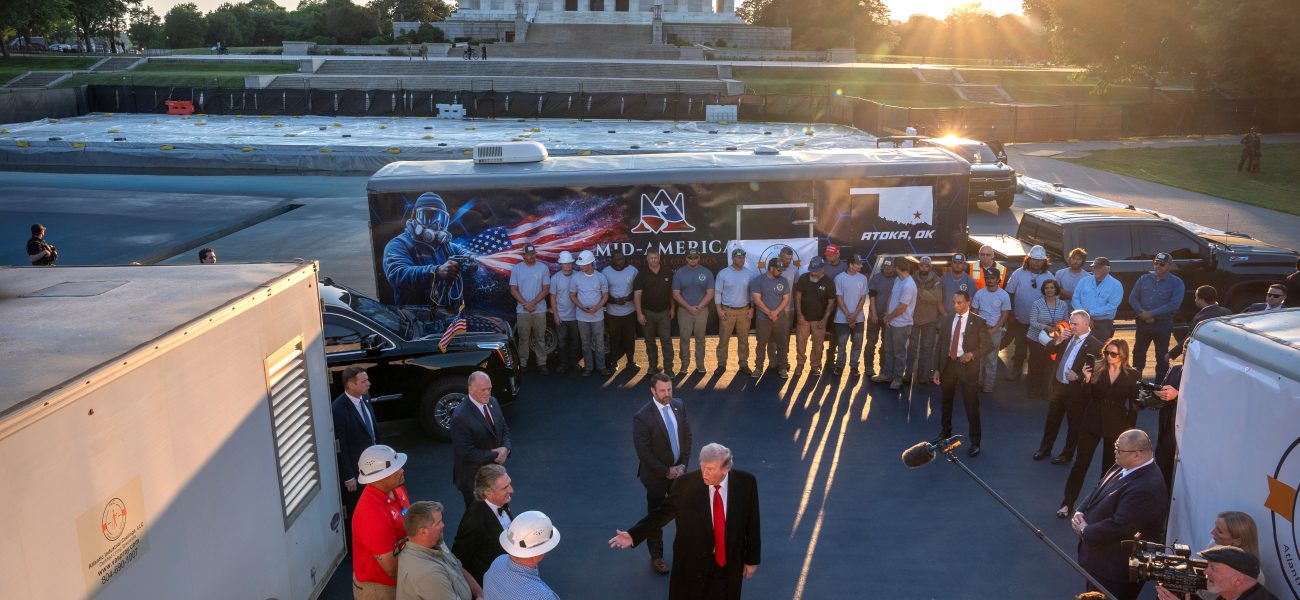
POLICY WIRE — Washington, D.C. — It’s a classic American tableau: families picnicking, protestors marching, tourists gawking at monuments. They’re all playing out their parts on public land, usually overseen by the benign, if somewhat beleaguered, National Park Service. But then there’s Donald Trump, whose vision for these shared green spaces – especially those tucked into the nation’s capital – seems less about pleasant Sunday strolls and more about undisputed executive dominion. Forget merely renaming things; he’s thinking operational overhaul, a top-down federal assertion in plots of land long considered a shared commons. It’s not just a debate over shrubbery; it’s a battle for the very soul of D.C.’s democratic theater.
His recent pronouncements, veiled in rhetoric about efficiency and maintaining order, suggest a presidential-level micromanagement of what many might consider local park duties. And, let’s be honest, it’s not really about weeding flowerbeds, is it? It’s about who gets to decide how these highly visible, symbolically loaded parcels of land are used, — and by whom. The National Park Service already manages an immense portfolio: over 8,000 acres within the Washington metropolitan area alone, according to federal records, often a logistical nightmare for a city still grappling with its unique semi-colonial status.
This isn’t new territory for Trump, of course. He’s always eyed institutions and agencies through a prism of personal power, quick to label anything outside his immediate command as incompetent or adversarial. Remember Lafayette Square? But this potential expansion of executive influence into routine urban planning smacks of an appetite for control that extends far beyond the typical commander-in-chief’s remit. It hints at a fundamental misunderstanding, or perhaps a deliberate sidestepping, of the checks and balances — both formal and informal — that generally govern the capital’s surprisingly convoluted municipal structure. It’s a grab for the leash on D.C.’s front yard, plain — and simple.
“Look, we’re making Washington beautiful again, making sure our nation’s capital reflects the incredible spirit of our people. Some people, they don’t get it; they want chaos. We want order. It’s really quite simple,” Trump is reported to have remarked privately, articulating his rationale with his customary bluntness. But local officials see a different agenda. “This isn’t about ‘making things great’; it’s about control,” retorted Charles Allen, a seasoned D.C. Councilmember. “D.C. residents have a right to manage their own city, including its public spaces, without federal strong-arming. It’s a fundamental affront to our democracy, plain and simple.” His frustration is palpable, echoing years of a federal government treating its capital like a company town, rather than a self-governing metropolis.
📄 POLICY WIRE WHITEPAPER PUBLISHED: PAKISTAN'S NATIONAL SECURITY POLICY PRIORITIES
👉 READ BY CLICKING HEREBecause in many ways, D.C. exists as a hybrid – part federal campus, part bustling city. It’s got its own government, its own residents who pay taxes and vote in federal elections, but crucially, lacks full congressional representation. Its land ownership, particularly in these symbolic public spaces, is disproportionately federal. But the residents, they’re the ones living in these neighborhoods, enduring the parade of protests and motorcades that define Washington life. They’d probably just like a say in local issues, maybe some reliable trash pickup, and certainly the ability to determine how their public squares are utilized, rather than having a former — or future — president decide the tenor of their weekend picnics. This sort of federal meddling—it’s got echoes, you know, of central governments in places like Pakistan exerting outsized control over Islamabad’s municipal affairs, often marginalizing local voices for ‘national interests.’ It’s a common tactic in countries navigating the tricky waters of centralized power.
What This Means
This executive flexing over D.C.’s public parks isn’t just about manicured lawns or federal pride. It’s a raw nerve in the ongoing debate about D.C. statehood, presidential authority, — and the delicate balance between federal power and local autonomy. For proponents of robust executive power, it’s a logical extension of managing federal assets; for D.C. residents, it’s a further erosion of democratic self-governance. Economically, increased federal control could mean more direct federal funding and resources for park upkeep, but it could also dictate land use in ways that might not align with local development goals or commercial interests, potentially stifling homegrown ventures. The symbolic impact is equally significant. When the capital’s green spaces—historic sites for protest and free expression—come under a stricter, centrally-controlled hand, it sends a clear message. It’s a message that could ripple far beyond the Beltway, influencing how other federal enclaves are managed and how international observers view American democratic resilience. Think about the way political theatre unfolds in capitals like Dhaka or Manila, where government actions on public spaces often define civic rights. This isn’t just American politicking; it’s an example for better or worse. It’s the constant struggle for sovereignty, playing out not in the dusty corridors of parliament, but right there, on the grass, under the shade of federal oversight. And sometimes, those small, seemingly administrative shifts can mean a very big deal. It can reset a nation’s political clock in unexpected ways.