

Europe Scoffs as Putin Floats Controversial Figure for Ukraine Talks
POLICY WIRE — Tallinn, Estonia — One almost had to blink twice. Russia, seemingly undeterred by years of escalating tensions and open warfare, lobbed a diplomatic hand grenade into Brussels’...

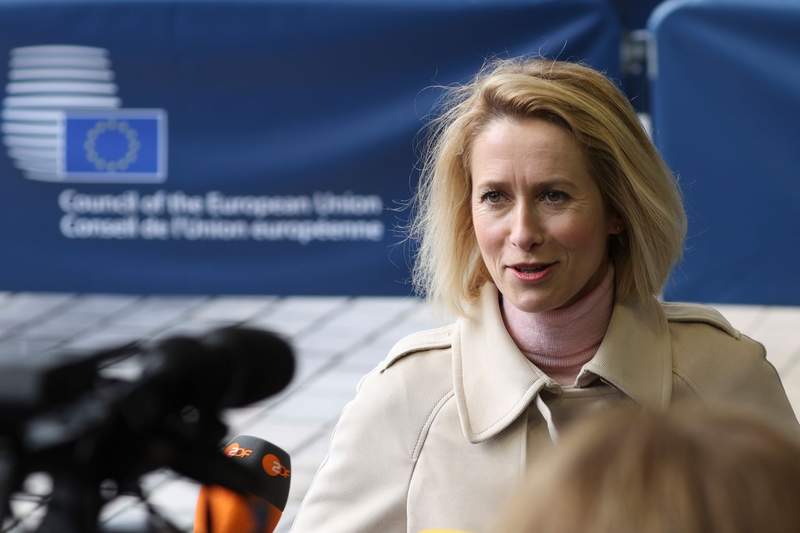
POLICY WIRE — Tallinn, Estonia — One almost had to blink twice. Russia, seemingly undeterred by years of escalating tensions and open warfare, lobbed a diplomatic hand grenade into Brussels’ collective lap: Former German Chancellor Gerhard Schröder as a potential mediator for peace in Ukraine. The response from Europe? A firm, unyielding scoff, perfectly encapsulated by Estonian Prime Minister Kaja Kallas, who’d obviously heard enough.
It’s not often a leader’s political afterlife becomes a punchline in a global conflict, but Schröder’s friendship with Vladimir Putin, paired with lucrative roles on Russian state energy boards, makes him precisely that. The idea itself feels like a deliberate provocation, a test of European unity — and memory. But the pushback was swift, — and frankly, expected. Kallas didn’t mince words. “The European Union doesn’t recognize Schröder as an honest broker,” she stated unequivocally in a press briefing, her tone betraying a profound weariness. “His record, his associations—they speak for themselves. We’re dealing with the integrity of an entire continent here, not just personal favors.”
Schröder, a Social Democrat who helmed Germany from 1998 to 2005, famously called Putin a “flawless democrat” before Russia’s 2008 incursion into Georgia. His post-chancellorship career became a masterclass in cashing in on his political capital, moving seamlessly onto the boards of Russian energy giants like Nord Stream and Rosneft. This coziness with the Kremlin long drew censure, morphing from quiet murmurs into outright condemnation after the full-scale invasion of Ukraine. His own party even considered expelling him, though the effort ultimately failed. That a man so deeply entangled with the very regime Europe seeks to isolate could be offered up as a peace envoy isn’t just ironic; it’s a grim chuckle at the West’s expense.
And that’s exactly how many see it. Moscow clearly understands Schröder’s deep unpopularity across Europe, particularly in the Baltics and Poland, and knows this suggestion would land with a thud. But sometimes, the objective isn’t consensus; it’s confusion. Or maybe, it’s simply signaling to certain elements within Germany—and beyond—that old allegiances aren’t entirely dead.
“We appreciate all credible offers for mediation that can genuinely contribute to peace,” offered a German government spokesperson, requesting anonymity given the delicate diplomatic terrain. “But for such a role to be effective, it requires the absolute trust of all parties involved, particularly Ukraine and its steadfast partners within the European Union. That trust, sadly, isn’t something Mr. Schröder currently commands within broad European circles.” It’s a polite dismissal, but a dismissal nonetheless, reflecting Berlin’s ongoing — if at times painful — martial metamorphosis and distancing from its past energy policies.
Beyond Europe’s borders, in places like Pakistan and other South Asian nations, this bizarre diplomatic play isn’t met with the same incredulous shrugs. For many, Russia’s attempt to project influence through controversial figures or unlikely proposals is just another chapter in a long history of Great Power maneuvering. While some might view the EU’s swift rejection as principled, others — observing the nuances of global power plays — might see it as another instance of Western intransigence. Because in a world struggling with inflation, food insecurity, and persistent regional conflicts, the grand statements from European capitals sometimes sound a little tone-deaf, especially if there’s a flicker of a chance, however slim, at de-escalation.
📄 POLICY WIRE WHITEPAPER PUBLISHED: PAKISTAN'S NATIONAL SECURITY POLICY PRIORITIES
👉 READ BY CLICKING HEREGlobally, Russia’s strategy often involves playing on the perceived divisions within the Western bloc, leveraging historic ties where possible, and presenting itself as an alternative to what some in the Global South see as Western hegemony. The proposal, even if dead on arrival, keeps the conversation about alternatives alive. And it perhaps allows Putin to point to the West as the party unwilling to engage, even with “their own” former leaders, when truly it’s the choice of emissary that’s the issue.
The geopolitical chessboard is ever-shifting. Just consider Germany’s long-term energy dependence on Russian gas, which prior to the full-scale invasion, constituted 55% of its natural gas imports in 2021, a figure now dramatically reduced through Herculean effort. That history forms the uncomfortable backdrop to Schröder’s continued, baffling relevance. Europe has learned, slowly — and painfully, that geopolitical leverage often starts with pipelines.
What This Means
This incident, far from being just a bizarre footnote, paints a clear picture of the ongoing diplomatic standoff and the depth of the distrust. Politically, Moscow’s gambit confirms their continued strategy of trying to exploit European divisions and test the limits of Western resolve. By proposing a figure like Schröder, Russia essentially offers a choice: either engage with someone fundamentally compromised in European eyes, or continue to be seen by some as unwilling to talk. It’s a no-win for the EU in terms of optics, even if the practical decision to reject him is sound.
Economically, the message reinforces that there’s no quick fix to the Russia-Ukraine conflict, and consequently, no immediate return to pre-war stability in European energy markets or supply chains. Investors — and policymakers should internalize that sustained geopolitical friction is the new normal. The very suggestion, however far-fetched, highlights Russia’s isolation but also its persistent attempts to undermine the Western consensus. And this dynamic, where symbolic gestures hold significant weight, reverberates globally, influencing how non-aligned nations view both the West’s unity and Russia’s diplomatic resourcefulness. It suggests a long game, one played with very few truly honest brokers.