

Delhi’s Cautious Call: Modi Advises Remote Work Amidst Persian Gulf Turmoil
POLICY WIRE — New Delhi, India — The ripple effect of mounting instability in the Persian Gulf isn’t just a distant blip on the global geopolitical radar anymore. It’s now hitting the...

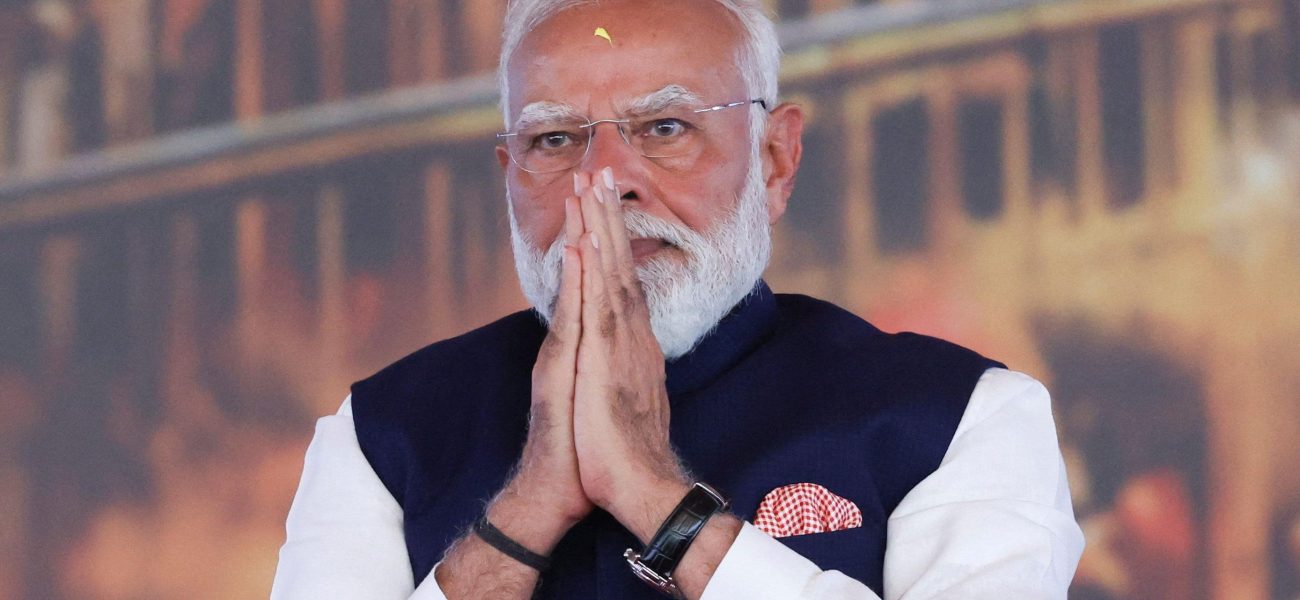
POLICY WIRE — New Delhi, India — The ripple effect of mounting instability in the Persian Gulf isn’t just a distant blip on the global geopolitical radar anymore. It’s now hitting the home front, quite literally. Prime Minister Narendra Modi, a man known for his robust economic ambitions, has discreetly—yet pointedly—asked Indian citizens to embrace remote work where possible and drastically cut down on international travel, especially to the West Asia region, as the war involving Iran grinds on.
It’s a stark turn from the ‘Global India’ narrative that’s dominated Delhi’s foreign policy chatter for years, suggesting that even India’s muscular confidence can’t outrun the cold dread of widespread regional conflict. But this isn’t simply about ensuring individual safety. No. It’s a shrewd, preemptive move to buffer India’s bustling economy from the predictable shocks of prolonged conflict: supply chain snarls, oil price hikes, and remittance jitters. Things could get ugly, fast. And nobody wants that.
“We’re looking at a global economic environment that’s more fragile than many care to admit,” remarked Dr. Suman Kumar, a seasoned economic advisor often close to the Prime Minister’s inner circle, during a private briefing. “Preventing unnecessary disruptions to our workforce and safeguarding our diaspora’s financial contributions—that’s just good housekeeping in times like these. The Gulf alone accounts for nearly 40% of India’s inbound remittances, you know. Can’t risk that for a beach holiday.”
Modi’s advice, disseminated through semi-official channels and reiterated in less direct public addresses, aims to manage a volatile blend of economic pragmatism and strategic positioning. Because, let’s face it, India isn’t merely an observer; it’s a deeply entrenched player in West Asia’s economic web, and anything that shakes that foundation shakes India. The price of Brent crude, for example, which directly impacts India’s massive import bill, has climbed over 15% in the last quarter as regional tensions have waxed and waned, according to Bloomberg data.
For a nation that’s staked much of its recent growth on global integration and its skilled workforce — both at home and abroad — this pivot towards cautious retrenchment is quite a concession. The message is clear: keep the wheels turning, but don’t wander too far from the garage. Especially not if you’re heading towards a region known for erupting like an overheated pressure cooker.
The situation isn’t lost on India’s neighbors, either. Across the border, in Pakistan, Islamabad watches with bated breath. While its direct involvement in the Iran-Israel proxy conflicts is minimal, the country’s economy, already hanging by a thread, can ill-afford any fresh shocks to global oil markets or – even more pertinently – its critical remittance flows from the Gulf. These transfers are often a lifesaver. Regional stability is, after all, a shared commodity.
And because the conflict touches virtually every trade route and energy supply line running through the Strait of Hormuz, countries like Bangladesh and Sri Lanka, just like Pakistan, face the unnerving prospect of higher shipping costs, delayed deliveries, and tighter foreign exchange. Even India’s domestic economic calendar has been rearranged, with some high-profile state visits and cultural exchanges getting an indefinite postponement. It’s not just a vacation-stopper; it’s an economic recalculation.
📄 POLICY WIRE WHITEPAPER PUBLISHED: PAKISTAN'S NATIONAL SECURITY POLICY PRIORITIES
👉 READ BY CLICKING HEREThe call for work-from-home (WFH) measures, meanwhile, speaks to a different sort of vulnerability. India’s corporate sector, having mastered remote operations during the COVID-19 pandemic, is now asked to reactivate those protocols not against a pathogen, but against the specter of a cyber-attack or a sustained physical threat to transport and infrastructure that could affect commuter safety. It’s a logistical shield, not just an advisory. It demonstrates just how seriously Delhi views the kinetic — and asymmetric threats now in play.
“These aren’t panic measures; they’re preventative,” stated Ms. Zarina Bhatti, an independent geopolitical risk analyst based in Mumbai. “Modi’s government understands that economic resilience depends as much on steady consumer confidence and uninterrupted business operations as it does on strong macro figures. If people feel unsafe traveling, or if companies can’t ensure supply lines, that confidence erodes fast. And it takes ages to rebuild.” It’s about perception, isn’t it?
Yet, amidst this carefully choreographed caution, there’s an unspoken narrative playing out: India’s determination to maintain its own strategic autonomy while navigating a dangerously fractured global landscape. Domestic priorities, as always, run deep.
What This Means
This isn’t merely a travel warning. It’s a quiet acknowledgment from Delhi that the West Asian conflict has already moved beyond containment and now carries significant, unavoidable economic implications for India, impacting everything from energy costs to skilled labor mobility and crucially, remittances. For Indian citizens and businesses, it means preparing for sustained uncertainty—higher fuel prices, potentially more volatile financial markets, and disruptions to international business and travel plans. Domestically, expect the government to double down on measures aimed at fostering self-reliance and insulating the economy from external shocks. Politically, it grants the Modi administration latitude to implement potentially unpopular austerity or strategic adjustments, framed as patriotic responses to external threats. For its neighbors, especially those in South Asia, it serves as a sober reminder of interconnectedness—a bellwether of potential regional contagion, economically and perhaps even security-wise, making coordinated regional diplomatic efforts all the more challenging but indispensable.