


The Raw Nerve of India’s Game: Emotional Outbursts, Elite Pressure, and the IPL’s Enduring Grip
POLICY WIRE — New Delhi, India — There’s a particular kind of theatre reserved for India. Not the kind with hushed audiences — and velvet seats, but stadiums roaring, millions transfixed. It’s...

POLICY WIRE — New Delhi, India — There’s a particular kind of theatre reserved for India. Not the kind with hushed audiences — and velvet seats, but stadiums roaring, millions transfixed. It’s the grand, bruising spectacle of cricket, a sport that isn’t merely a game here; it’s a barometer of national mood, a wellspring of both collective ecstasy and crushing disappointment. And every so often, the facade of professional stoicism cracks, revealing the raw human engine beneath. That’s what happened recently in Raipur.
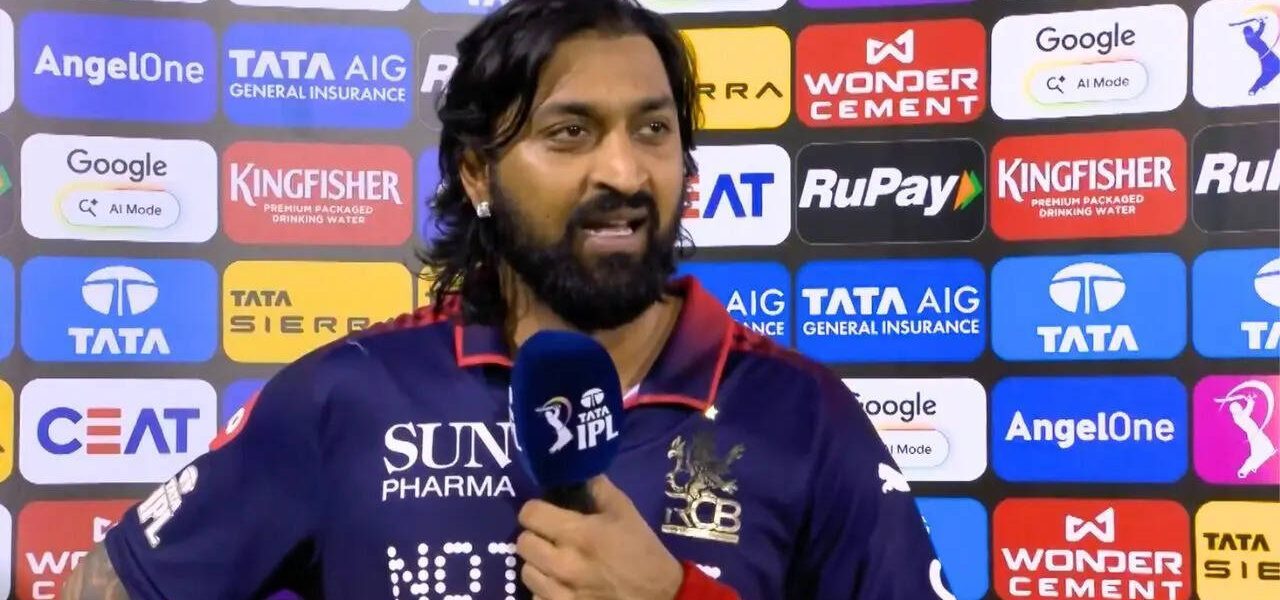
Krunal Pandya, a name synonymous with high-stakes T20 cricket, crumpled. Not from a bad shot, mind you, or a tactical blunder, but from sheer physical exhaustion—the kind that hits you when you’re sprinting on empty. Royal Challengers Bengaluru had just clawed a miraculous two-wicket win against the Mumbai Indians in IPL 2026, chasing 167 with the very last ball. Pandya, against all physiological logic, had smashed 73 runs off 46 deliveries. His body was screaming, cramping from calf to glutes to back. And then, after the dust settled, came the tears.
It’s an unnerving thing to witness: an elite athlete, often viewed as an almost machine-like purveyor of perfect shots and unshakeable nerve, dissolving into emotion on live television. But that’s the Indian Premier League for you; it’s not just about sixes — and wickets. It’s about narratives, about gladiatorial performances, about the unrelenting pressure cooker of a nation of 1.4 billion people—or more, if we count the global diaspora—hanging onto every boundary. You know, that weight, it must be crushing.
Pandya himself confessed to the grind. “I obviously love tough situations and I always prepare and look forward to those,” he stated, even though his subsequent confession about being utterly spent suggests the preparation only goes so far against the physical toll. “Obviously wanted to finish the game but I was not able to do it but the shot that Bhuvi played was the shot of the match. It was a wicket where you have to play cricketing shots. Not the kind of wicket where you line up the bowlers. You have to apply — and grind and play the knock.” The grit was there, absolutely. But so was the fragility.
His emotional floodgates really opened when recalling his time with Kieron Pollard, the West Indian powerhouse and former Mumbai Indians teammate. “Polly (Kieron Pollard) is my big brother… GOAT of this format… and as he says, you can’t keep a good man down,” Pandya recounted, his voice thick with feeling. It wasn’t just gratitude; it was an acknowledgment of mentorship, of brotherhood forged in the unforgiving furnace of high-performance sport. It highlights a rarely seen side of these millionaire cricketers—a deep-seated sense of loyalty and a very human need for validation and guidance.
And that’s the thing about this league: it distills human drama into a few intensely watched hours. The IPL, for example, registered an astounding 505 million unique viewers in its 2023 season, according to BARC India data, cementing its status as arguably the most-watched sports league on the planet outside of a handful of football events. That kind of attention comes with consequences, good — and bad.
📄 POLICY WIRE WHITEPAPER PUBLISHED: PAKISTAN'S NATIONAL SECURITY POLICY PRIORITIES
👉 READ BY CLICKING HEREBut beyond the immediate narrative of triumph over physical duress, this incident speaks volumes about the emotional labor demanded of sports stars in South Asia. In a region where cricket transcends mere entertainment to become a point of national pride, individual performances are often treated as proxies for collective achievement. In neighboring Pakistan, for instance, cricket holds a similar, if occasionally more volatile, status, where public adulation can turn to bitter critique with alarming speed. It’s an entire ecosystem, really, designed to push these athletes to—and past—their breaking point.
Dr. Arjun Seth, a Delhi-based sports sociologist, pointed out the psychological costs. “These emotional displays, while seen by some as weakness, are really windows into the extraordinary psychological pressure these players navigate daily. It’s a testament to the immense stakes, both personal — and national, inherent in every match of this caliber. They don’t just carry bats — and balls; they carry the hopes of millions. Imagine that weight,” Seth commented, articulating what many implicitly understand but rarely vocalize. It’s not just a game; it’s a national mandate.
What This Means
The emotional collapse of an athlete like Krunal Pandya isn’t just a feel-good human-interest piece; it underscores a broader phenomenon within India’s hyper-competitive and emotionally charged sports landscape. It demonstrates the intersection of commercial behemoth — and raw human experience. The IPL, for all its glossy exterior and multi-million-dollar contracts, remains a high-stakes arena where the human element, complete with all its frailties and triumphs, is not just visible but actively marketed. This spectacle sells, big time. It reminds us that even with astronomical salaries, these aren’t robots. And their vulnerability, when exposed, paradoxically enhances their appeal.
Economically, this continuous generation of emotional narratives ensures sustained viewership and, by extension, robust advertising revenues—a staggering economic engine contributing billions to India’s GDP annually. Politically, while seemingly unrelated, the IPL offers a shared national focus, often transcending the sharp social and political divisions that plague the subcontinent. A common enemy on the cricket field, or a shared hero, can momentarily unite disparate factions. This isn’t just about bat on ball; it’s about the very real power of manufactured spectacle to manage public sentiment, even if indirectly.