

Beijing Draws a Red Line: Sports Idols Can’t Be Bigger Than The State
POLICY WIRE — Beijing, China — Picture it: entire shopping malls taken over by jubilant masses, digital billboards blazing with effusive birthday messages, and drone shows painting the night sky, all...

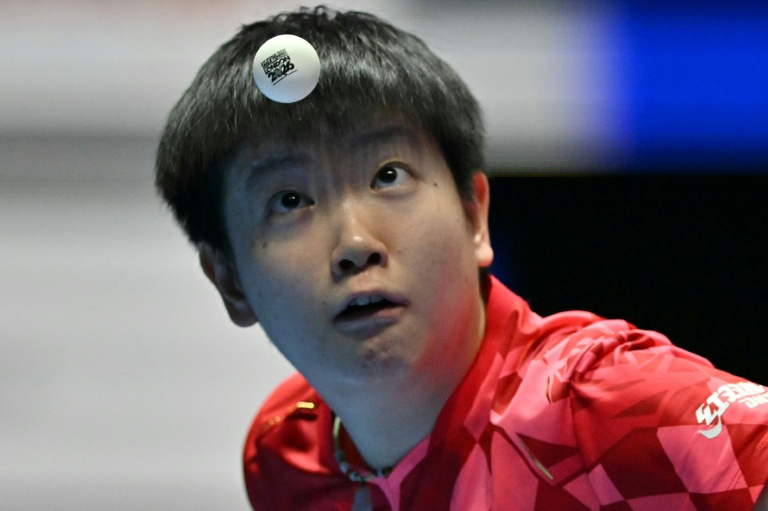
POLICY WIRE — Beijing, China — Picture it: entire shopping malls taken over by jubilant masses, digital billboards blazing with effusive birthday messages, and drone shows painting the night sky, all in devotion to a table tennis prodigy. For years, that’s precisely how China’s hyper-engaged fan communities chose to venerate their athletic heroes, lavishing fortunes and boundless energy on spectacular tributes. Think less fan club meeting, more national holiday. And then, the Party pulled the plug.
It wasn’t subtle, not even slightly. Beijing, ever watchful of independent surges of collective energy, decided these grandiose displays had crossed a line. Officials from the General Administration of Sport recently issued a stern directive, echoing across state media: cool it with the extravagant athlete birthday bashes. Fans, they declared, need to remain “rational” and ditch activities that “use up a great portion of public resources” and, perhaps more pointedly, “easily interfere with athletes’ preparations for competitions.” Because, you know, a drone show for your 25th definitely messes with your backhand.
This isn’t just about tidiness or avoiding traffic jams from excited crowds. But it’s not even primarily about the athletes themselves, is it? The move smacks of a far deeper state unease regarding cultural currents running outside official channels. Fandom in China, like in many Asian nations, operates on an intensity level most Western audiences would find bafflingly extreme. We’re talking millions, sometimes billions, of yuan poured into fan-organized marketing stunts — and celebrations. It’s a parallel economy of devotion, burgeoning with a life of its own.
General Administration of Sport spokesman, Gao Li, made the state’s perspective clear, perhaps with a subtle sniff of disapproval in his simulated tone. “Our athletes serve the nation, not individual cults of personality,” Li stated, according to an internal directive memo reportedly circulated among state-backed sports federations. “Their focus must remain on the arena, unimpeded by extravagant — frankly, wasteful — public displays. We simply cannot permit a deviation from the core values of collective sacrifice — and sporting discipline.”
But the problem, for Beijing anyway, is the optics. These displays are visible, public, — and organized autonomously. And that’s often where the friction really starts. The official line mentions unauthorized use of athlete images — and resource drain. Sure. But read between the lines, and it’s clear: the Communist Party thrives on controlling narratives, especially nationalistic ones around sporting glory. Uncontrolled adulation for an individual, even one draped in the national flag, can mutate into something less predictable. State media has already started demonizing this as ‘toxic fandom’ – a convenient label for anything that strays from the script.
Dr. Anya Sharma, an East Asian political economy scholar at the University of London, articulated the nuanced power play at work. “Beijing’s unease isn’t just about resource allocation or athlete distraction; it’s about control over narratives,” Sharma observed during a recent webinar on global digital authoritarianism. “Fandom, unchecked, can become an alternate locus of public loyalty, generating its own micro-economies and social capital. That’s something authoritarian regimes simply can’t abide. They want to harness patriotic fervor, not let it wander off-leash.” It’s a delicate balancing act – encouraging national pride without fostering too much individualism.
📄 POLICY WIRE WHITEPAPER PUBLISHED: PAKISTAN'S NATIONAL SECURITY POLICY PRIORITIES
👉 READ BY CLICKING HEREBecause ultimately, it’s about power. With over a billion internet users, China’s digital sphere is a laboratory for social engineering, and what happens here often resonates far beyond its borders. Just look at the discussions around content control in places like Pakistan or Indonesia, where similar anxieties about Western influence or unchecked cultural expression often crop up. China’s model of digital regulation and social credit — curbing ‘undesirable’ fan behavior — offers a tempting, albeit authoritarian, template for controlling public discourse, albeit one often filtered through very different cultural lenses.
This state-sanctioned redirection of fervor is perhaps best understood as another cog in China’s grand project of shaping a ‘harmonious society.’ Athletes aren’t just talented individuals; they’re national assets, expected to project an image of stoic discipline and collective spirit. And that’s true whether we’re talking about a table tennis champion or a superstar basketball player whose global brand clashes with the more austere directives from above. Remember when the NBA faced Chinese backlash? This is similar. This entire saga puts Beijing’s constant effort to control the optics of its sports industry – projected to be worth well over $700 billion USD by 2025, according to the State Council – under an unforgiving spotlight.
What This Means
The recent diktat against elaborate fan celebrations for sports idols in China isn’t merely a pragmatic step to conserve resources or prevent athlete distraction; it’s a strategic move to reassert party control over emerging cultural spaces. Economically, it curtails an organic, bottom-up fan economy that the state hadn’t fully centralized. Politically, it reins in any nascent forms of mass organizing or expression not directly sponsored or sanctioned by the Party, reinforcing the idea that collective enthusiasm must always serve nationalistic, rather than individualistic, aims. And, because the Party maintains such a firm grip on all forms of communication, any criticism of its sports figures can morph, quickly, into a larger societal critique — an outcome it strives to avoid. It signals a narrowing space for spontaneous public cultural expression, effectively nationalizing emotional investment in public figures. it exemplifies how Beijing continually fine-tunes its social management tools, leveraging nationalism while simultaneously tamping down on its potential to become unruly. These policies often echo through discussions of digital governance and state control models across South Asia and the Muslim world, where similar struggles for narrative control and cultural purity unfold, albeit through different mechanisms. This isn’t just about birthdays; it’s about who truly holds the reins of adoration in the public sphere, and Beijing won’t compromise on that. The ongoing battle for sporting hegemony and what it represents on a global scale often boils down to these granular controls.