

Denver’s Runway Tragedy: A Perplexing Breach of Ironclad Security
POLICY WIRE — Denver, Colorado — Sometimes, the most sophisticated systems fail not with a bang, but with the quiet, unsettling ease of an unexpected trespasser. This much became tragically clear at...

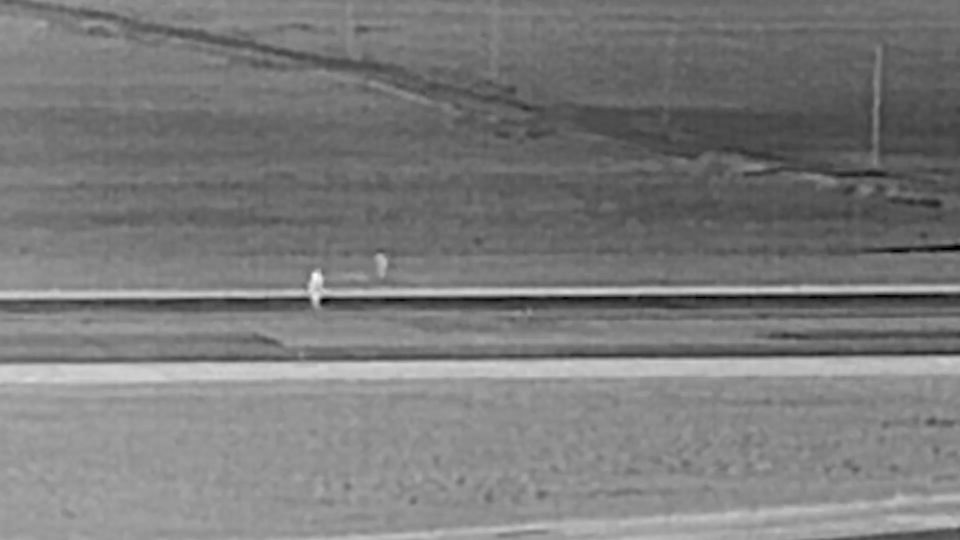
POLICY WIRE — Denver, Colorado — Sometimes, the most sophisticated systems fail not with a bang, but with the quiet, unsettling ease of an unexpected trespasser. This much became tragically clear at Denver International Airport (DIA), where the impenetrable veil of runway security proved alarmingly porous. A lone individual, managing to bypass — or simply defeat — a supposedly robust perimeter, found themselves in the path of a departing Frontier Airlines jet, meeting a grim, immediate end during the aircraft’s takeoff roll.
It wasn’t a terror plot, nor a deliberate act of sabotage in the conventional sense. Instead, it was an unvarnished, brutal collision of desperation (or delusion) with raw, mechanical power, highlighting an acute vulnerability in one of the nation’s busiest air travel hubs. The aircraft, identified as Frontier Flight 636 bound for Cancún, had just begun its acceleration down the tarmac when the unspeakable occurred. And just like that, what should be one of the most secure places on earth became a scene of horrifying chaos.
Airport operations immediately ground to a halt as emergency crews swarmed the runway. Passengers aboard the affected Airbus A320, undoubtedly unnerved, were informed of a collision, though the full gravity of the situation was initially obscured. But details emerged, cold — and clinical, confirming the death of a person yet to be publicly identified. Investigators haven’t wasted time trying to piece together how such a breach was possible at an airport annually handling over 69 million passengers.
Because, frankly, these facilities aren’t designed for casual strolls. They’re layered with fences, cameras, patrols, — and sophisticated detection systems. “We review our security protocols continuously,” stated Alex Thompson, DIA’s Director of Airport Operations, in a carefully worded public address. “This incident, while incredibly tragic, compels us to re-evaluate every single link in that chain. We owe it to our passengers, our staff, and the memory of the individual who lost their life here to ensure this never, ever happens again.” It’s a promise easy to make, considerably harder to keep.
But the questions persist: Was it a mental health crisis? A misadventure? An unthinkable, perhaps impulsive, act? Without definitive answers, speculation, as ever, fills the vacuum. Law enforcement hasn’t released any motive, or even concrete details on *how* the person breached the outer defenses. This kind of event — where a seemingly simple, physical barrier is compromised — echoes unsettlingly with broader debates on critical infrastructure protection.
“Modern airports operate under a permanent state of heightened vigilance,” commented Dr. Zahra Khan, a security consultant specializing in critical infrastructure — and geopolitics. “But what this shows us isn’t a failure of technology as much as it might be a failure of holistic awareness. Even the most technologically advanced systems are only as good as the humans operating them, and the fundamental assumption that nobody would simply wander onto an active runway.” Dr. Khan, who has consulted extensively on security vulnerabilities in rapidly expanding aviation hubs across South Asia — including major airports in Pakistan that contend with their own unique blends of internal and external threats — understands that such breaches, regardless of motive, create global ripples. Security experts, from Islamabad to Amsterdam, pay attention to these things. A successful breach in one place hints at potential weaknesses everywhere.
📄 POLICY WIRE WHITEPAPER PUBLISHED: PAKISTAN'S NATIONAL SECURITY POLICY PRIORITIES
👉 READ BY CLICKING HEREIt’s a chilling reminder that, despite billions poured into post-9/11 airport security enhancements, an elementary vulnerability — a fence line — can still prove fatal. For instance, data from the Federal Aviation Administration (FAA) shows an average of more than one unauthorized perimeter breach incident reported per major U.S. airport each year, though most don’t involve fatalities on active runways. It forces an awkward societal question: At what point does the cost and invasiveness of security measures outweigh the unpredictable risks of human behavior?
What This Means
The Denver incident isn’t merely a local tragedy; it’s a stark, public referendum on airport security efficacy and the allocation of public funds. Economically, even a brief shutdown at a major hub like DIA can cost airlines millions in delays, cancellations, and diverted flights. This ripple effect compounds quickly, stressing supply chains — and frustrating travelers. The psychological impact, however, might be more enduring, eroding public confidence in air travel safety — a cornerstone of the global economy. This isn’t simply about catching smugglers or terrorists; it’s about maintaining a perception of absolute control over enclosed spaces.
Politically, the spotlight will inevitably fall on the Transportation Security Administration (TSA) and local airport authorities. Calls for immediate reviews, increased funding for advanced perimeter detection, and potentially revised security protocols are already echoing. We’ll likely see a short-term boost in visible security, perhaps more patrols or even drones. The challenge, however, isn’t just technical. It’s sociological. The human factor—be it desperation, mental instability, or sheer reckless intent—remains the hardest to predict and counter. And until these root causes are addressed, or at least better understood, no fence will truly be “impenetrable.” Questions surrounding public service efficacy often bleed into national narratives, raising the same sorts of institutional concerns we might see when scrutinizing something like appointments bills and deeper polarization. A sense of unease creeps into the system, — and that’s something no security apparatus can fully legislate away.