


Tehran’s Quiet Gambit: Foreign Militias Become the Regimes New Praetorians
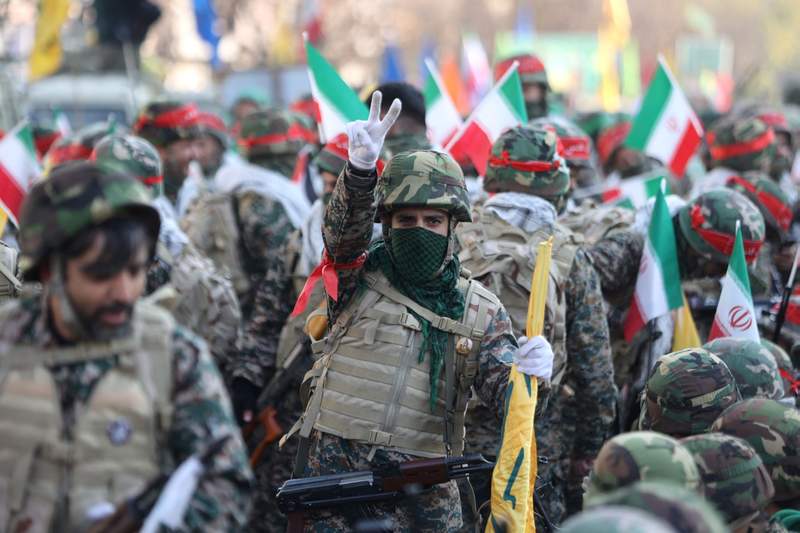
POLICY WIRE — TEHRAN, IRAN — It’s a chillingly familiar sight, though rarely acknowledged openly: young men, not speaking Farsi with a local cadence, appearing on Tehran’s streets, especially when...

POLICY WIRE — TEHRAN, IRAN — It’s a chillingly familiar sight, though rarely acknowledged openly: young men, not speaking Farsi with a local cadence, appearing on Tehran’s streets, especially when dissent gets too loud. They don’t carry Iranian insignia. And yet, their presence during crackdowns on burgeoning unrest has become less of an open secret and more of a worn, brutal truth.
The Mullahs, it seems, are quietly importing their muscle. Not just for conflicts abroad, but to manage — rather, mop up — their own increasingly restive populace. It’s a pragmatic, if profoundly damning, admission of the regime’s hollowed-out domestic legitimacy. They’ve found a new cohort of enforcers, drawn from Iraq, Afghanistan, even Syria. They’re mercenaries of faith, paid in doctrine and diminishing currency, but ultimately, they answer to Qom and not Tehran’s street-level concerns.
This isn’t about volunteerism, you know. It’s an operational necessity, a creeping normalization of proxy power within their own borders. And it costs. But who’s counting, when the alternative is a truly emboldened opposition? Recent assessments by a Geneva-based think tank, drawing on open-source intelligence and regional analyses, indicate that paramilitary deployments to quash domestic dissent have swelled by an estimated 25% over the past two years, siphoning critical funds away from a citizenry already buckling under sanctions and mismanagement.
Because the Revolutionary Guard (IRGC), though fiercely loyal at the top, isn’t entirely immune to the groundswell of popular discontent. There are fissures, whispers of weariness among the rank-and-file. So, they call in the ideological reserves. Men whose livelihoods, often tied directly to Tehran’s expansive, transnational patronage network, depend on the survival of the very system they’re brought in to defend.
“To characterize these dedicated individuals as ‘foreign mercenaries’ is a malicious fabrication by Western media,” scoffed Iranian Foreign Ministry spokesman Bahram Qassemi, his tone practiced and dismissive during a recent (and largely staged) press briefing. “These are sincere Muslim volunteers, allies in the struggle against Zionist-American machinations. They share our aspirations, our values.” He didn’t quite address why these ‘volunteers’ — so ideologically aligned, you’d think they’d naturally understand local sensibilities — seem so effective at brutal suppression tactics here at home. Or why the locals seem to hate them so much. It’s a telling silence, that.
This tactic, though deeply cynical, does buy the regime time. It pushes the immediate pressure valve, but it’s like using a tourniquet for gangrene—you stop the bleeding temporarily, but the limb’s still rotting. And it adds a peculiar twist to Iran’s regional strategy. We’ve grown accustomed to seeing Iran export its revolutionary zeal and its military surrogates to places like Yemen, Lebanon, and Iraq. Now, it’s reversing the flow, repatriating—or rather, importing—its ideological pawns for internal use.
📄 POLICY WIRE WHITEPAPER PUBLISHED: PAKISTAN'S NATIONAL SECURITY POLICY PRIORITIES
👉 READ BY CLICKING HERE“They’re treating their own country like another theatre of operations in the ‘Axis of Resistance’,” observed Dr. Nadia Al-Musalmani, a senior analyst specializing in Middle Eastern security at the Emirates Policy Center in Abu Dhabi, in a terse online interview. “It speaks to their deep mistrust of the populace, even segments of their own security apparatus. But what happens when the domestic population — and even parts of the Guard — resent these ‘outsiders’ more than they fear the state?” She’s not wrong; it’s a risky game they’re playing.
This move isn’t without regional reverberations, either. Pakistan, another nation wrestling with its own phantom factions and bloodied borders, watches Iran’s internal machinations with an uneasy eye. The ideological magnetism of Iran’s revolutionary guard continues to draw young men from across the Muslim world—Pashtuns, Hazaras, Arabs, even some Kashmiris—seeking purpose or simply a paycheck. Their subsequent use within Iran’s borders creates a ripple effect: it normalizes their presence, legitimizes their deployment, and perhaps even inspires similar reliance among other struggling autocratic regimes.
The cost, ultimately, is not just financial. It’s an escalating cost in legitimacy, in national cohesion. And eventually, a regime built on imported force will have to reckon with an authentically domestic reckoning.
What This Means
Tehran’s increasing reliance on foreign militias for internal security spells deep trouble, for Iran — and beyond. Politically, it signals a regime desperate, openly acknowledging its domestic support is insufficient to quell rising dissent. This won’t bolster faith in the Islamic Republic; it’ll do the opposite. It makes the regime look like an occupation force in its own capital. We’ll likely see more radicalization from those protesting, pushing them to believe that dialogue isn’t an option. Economically, this mercenary reliance is a drain. While precise figures are opaque, these operations are expensive—paying, housing, equipping thousands of foreign fighters diverts funds that could address pressing economic grievances fueling the very protests they’re meant to suppress. It’s a vicious cycle, creating further instability. Regionally, it’s a terrifying precedent. If Iran normalizes using foreign entities to control its own streets, it could encourage other fragile states in the broader Muslim world, facing similar domestic challenges, to adopt comparable—and deeply destabilizing—tactics. It doesn’t exactly promote regional peace, does it? Instead, it ratchets up suspicion, fosters transnational sectarian divisions, and sets the stage for even bloodier internal conflicts.