


India’s Grand Cricket Theatre: The High-Stakes Calculus of a Captain’s Knock
POLICY WIRE — Mumbai, India — The evening air still thick with the residue of celebrations, cricket enthusiasts weren’t just dissecting fours and sixes; they were charting geopolitical...

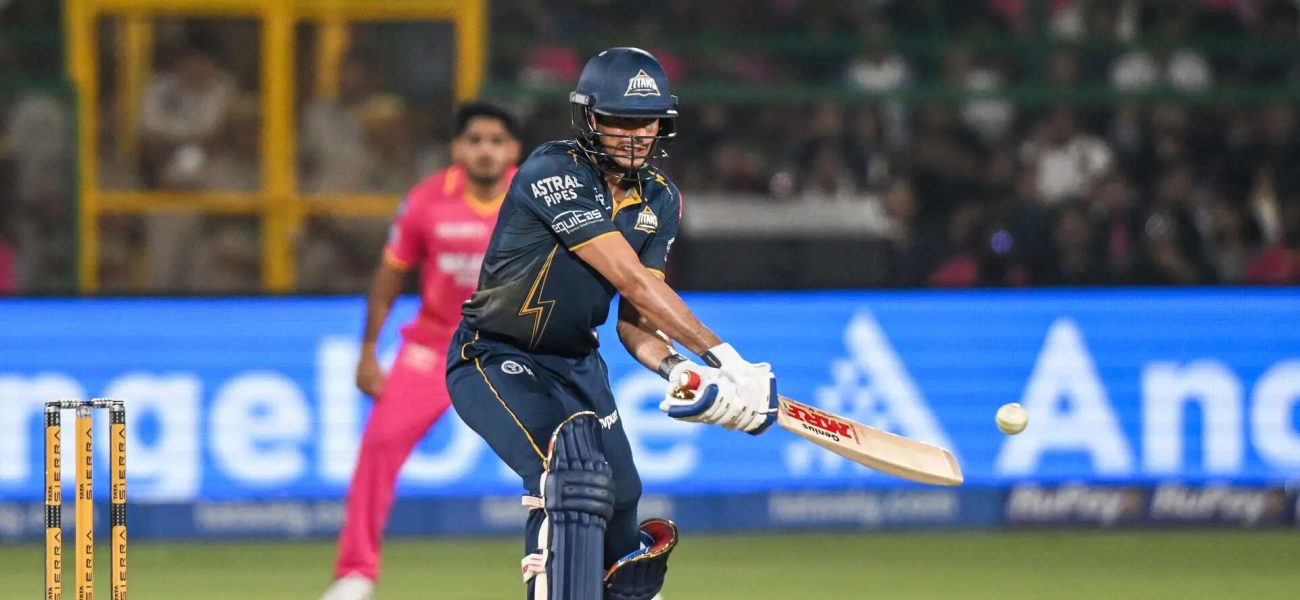
POLICY WIRE — Mumbai, India — The evening air still thick with the residue of celebrations, cricket enthusiasts weren’t just dissecting fours and sixes; they were charting geopolitical trajectories. Because when Shubman Gill, Gujarat Titans’ captain, peeled off an electrifying 84 against the Rajasthan Royals this past Saturday, he didn’t just rattle stumps. He stirred a potent brew of athletic ambition and cold, hard economics that underpins India’s most commercially audacious sporting spectacle, the Indian Premier League.
It’s easy to get lost in the sheer volume of runs, the audacious strike rates that defy gravity, isn’t it? But dig a little, past the confetti — and the thumping anthems. What Gill’s innings did was less about hitting boundaries and more about seizing a narrative, clawing his way up to fourth in the coveted Orange Cap standings. The man’s now sitting at 462 runs from a lean ten matches—a commendable 46.20 average—with a strike rate that screams aggression, a blistering 160.41.
He’s not just playing. He’s making a statement. His efforts culminated in an astounding 118-run opening stand alongside Sai Sudharsan (55), rocketing Gujarat to an almost insurmountable 229/4. That proved an effective death knell for Rajasthan, who eventually succumbed by a bruising 77 runs. The implications, extending far beyond a single match result, are obvious for anyone who’s been following the money.
And this isn’t simply about individual glory; it’s a proxy for team stability, fan engagement, and market valuation in a league that’s become a juggernaut. Heinrich Klaasen of Sunrisers Hyderabad still clings to the top spot with 494 runs from 11 matches, a slight lead. But the gap? A mere 32 runs. Abhishek Sharma, his SRH teammate, is breathing down his neck too, just 19 runs adrift from Klaasen. Then there’s Delhi Capitals’ KL Rahul, snugly in third with 468. It’s a truly congested leader board, where every single-run contribution might decide someone’s fortune—both on the field and in the endorsements afterwards.
But how do these explosive displays affect the larger ecosystem? Vikram Solanki, Director of Cricket for Gujarat Titans, put it succinctly: “Shubman’s innings wasn’t just runs; it was a statement. He’s shouldering a mountain of expectation, and he’s delivering.” It’s the kind of performance that solidifies fan bases and keeps broadcast rights sky-high. Vaibhav Sooryavanshi of Rajasthan Royals, despite his team’s drubbing, continues to impress, holding fifth place with 440 runs at a breathtaking strike rate of 236.55—the highest among the top five. This kind of raw, youthful explosiveness sells tickets; it also shapes India’s image on the global stage. The global obsession with leagues like the IPL isn’t accidental; it’s meticulously engineered.
📄 POLICY WIRE WHITEPAPER PUBLISHED: PAKISTAN'S NATIONAL SECURITY POLICY PRIORITIES
👉 READ BY CLICKING HERE“This isn’t just a cricket tournament; it’s an economic engine and a cultural phenomenon that captivates audiences from Peshawar to Dhaka,” observed Anurag Thakur, a senior figure within the Board of Control for Cricket in India (BCCI). “Its impact stretches far beyond the subcontinent, but it’s particularly resonant in South Asia, including Pakistan, where a similar passion for cricket burns bright.” Indeed, millions across the Muslim world and broader South Asia tune in, mesmerized by the gladiatorial spectacle and the chance to witness homegrown and international talent collide.
As the business end of the tournament looms, the contest morphs into a stark choice between the patient consistency favored by some batsmen and the ruthless explosiveness displayed by others. Gill, with his rejuvenated form, isn’t just pushing for his own personal accolade. He’s actively shaping the playoff aspirations for the Titans.
What This Means
The IPL, beyond its glitzy facade, operates as a profound engine of Indian soft power. Each match, every heroic inning like Gill’s, reinforces India’s dominance in a sport that serves as an unofficial religion across South Asia. The financial stakes, too, are astronomical. For instance, the IPL generated a staggering $1.3 billion in revenue in 2023, according to industry reports—a figure that underscores its commercial might and its role as a key contributor to India’s burgeoning economy. This economic leverage, tied to the league’s immense popularity, subtly but significantly amplifies India’s cultural footprint throughout the region and beyond, often outstripping traditional diplomatic efforts. The strategic choices of teams, even concerning ‘home’ match venues, carry significant commercial weight. A standout performance from an Indian captain like Gill doesn’t merely excite fans; it elevates brand India, showcasing its organizational prowess and entrepreneurial spirit in a truly global context.