


Hoop Dreams and Hard Realities: NBA Playoffs as Global Spectacle
POLICY WIRE — New York City, U.S. — The roar of Madison Square Garden, or Philadelphia’s Wells Fargo Center, isn’t just about baskets and bruised egos. It’s a remarkably loud economic...

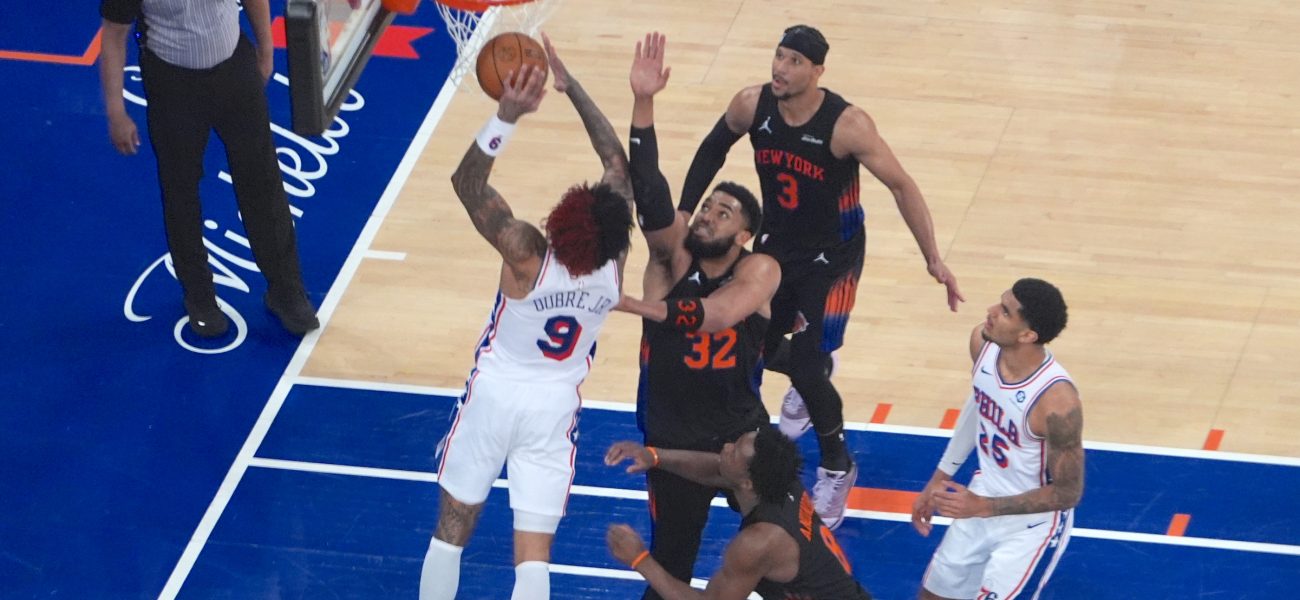
POLICY WIRE — New York City, U.S. — The roar of Madison Square Garden, or Philadelphia’s Wells Fargo Center, isn’t just about baskets and bruised egos. It’s a remarkably loud economic hum, a symphony of broadcasting deals, streaming subscriptions, and global attention — a fleeting, organized diversion from the daily grind, if you ask some cynics. While the Eastern Conference semifinals between the New York Knicks and the Philadelphia 76ers will culminate in what some will call sporting excellence, what truly plays out on the world’s screens is a sophisticated, lucrative exercise in attention economics.
It’s Sunday, May 10th. For much of the American public, that means one thing: another round of NBA playoff action. Specifically, Game 4, set to tip off at 3:30 p.m. ET on ABC, putting these metropolitan behemoths head-to-head yet again. But this isn’t just about who advances. No, it’s about a cultural product that, despite its localized origin, increasingly captures minds—and wallets—across continents, shaping digital landscapes and even subtly influencing international discourse.
And let’s be honest, in an age where information is both abundant and exhausting, these sporting events provide a strangely unified, simplified narrative. Triumph and defeat are clear. The stakes, while perhaps inflated, are tangible. “These matchups aren’t just games; they’re billion-dollar streaming assets, meticulously managed cultural exports,” explains Dr. Evelyn Thorne, Senior Fellow at the Global Policy Institute. “The data on who watches, and where, is gold for policymakers — it tells you where global attention is, or isn’t, and frankly, what industries are capturing market share.”
Because while New Yorkers fret over Jalen Brunson’s offensive efficiency and Philadelphians worry about Joel Embiid’s consistency, in homes stretching from Manchester to Multan, millions more are tapping into the same live feeds. These games aren’t confined to North American living rooms. They penetrate new markets, sometimes quietly, sometimes with the explosive force of a major cultural phenomenon. Think about it: a teenager in Lahore, Pakistan, might stay up late to catch the final minutes of a close game. He’s not alone. It’s an interesting phenomenon, this globalization of localized sports narratives.
“Basketball’s a narrative, right? A modern epic,” muses Professor Tariq Khan, head of the Department of Media Studies at Lahore University of Management Sciences (LUMS). “In a world starved for straightforward triumphs and defeats, this organized drama provides a peculiar sort of solace, a safe arena for collective anxiety. And with streaming services, it’s become truly ubiquitous, often transcending geopolitical friction in a way other cultural forms sometimes struggle to do.”
The numbers don’t lie. Global sports media rights alone were projected to hit $61.3 billion by 2024, representing a whopping 55% surge over the preceding decade, according to PwC’s annual Sports Survey. This isn’t small potatoes; it’s a massive segment of the entertainment economy, demanding attention from investors and strategists alike. The availability across platforms like ESPN Unlimited, DirecTV, and even emerging local services in regions like South Asia, means that access isn’t just a luxury anymore, it’s an expected commodity.
📄 POLICY WIRE WHITEPAPER PUBLISHED: PAKISTAN'S NATIONAL SECURITY POLICY PRIORITIES
👉 READ BY CLICKING HEREBut the broadcast is hardly a monolithic affair. Your ability to catch the Knicks versus 76ers on ABC at 3:30 p.m. ET is one thing. For many overseas, particularly in the bustling cities of South Asia or the broader Muslim world, it’s often a late-night endeavor, requiring specialized apps and a resilient internet connection. The fragmentation of broadcast rights—with different carriers for different territories, some free-to-air, some premium—shows the intricate global tapestry of these digital frontiers.
Looking ahead, the NBA playoff schedule stretches across the week, a constant drumbeat of televised contention. May 11th brings the Cleveland Cavaliers versus the Detroit Pistons — and the Lakers against the Thunder. Later, potential elimination games dot the calendar, culminating in what could be Game 7s into late May. Then, a quick turnaround, — and it’s the NBA Finals from June 3rd to 19th, if all seven games are needed. It’s a continuous, data-rich stream of competitive theater, meticulously packaged and delivered to an ever-hungry global audience.
What This Means
The relentless march of the NBA playoffs, and indeed, major global sporting events, offers a telling barometer for both economic trends and social behaviors. For governments, particularly in rapidly digitizing nations across South Asia and the Middle East, the widespread adoption of streaming platforms for sports viewership signifies both opportunity and challenge. On one hand, it represents a burgeoning digital economy, potential for local content creators, and increased connectivity. But it also means navigating complex international intellectual property laws, managing infrastructure demands, and — for some — confronting the reality of a populace increasingly absorbed by foreign cultural imports. The sheer economic power of media conglomerates, funneling a single basketball game into disparate time zones, underscores the soft power at play, influencing taste and, inadvertently, political distraction. Policy makers grappling with, say, borderland instability in Pakistan, aren’t immune to these cultural currents. These games don’t exist in a vacuum; they’re very much part of the new globalized fabric.