

Digital Dustbowl: New Mexico’s Post-Apocalyptic Fan Project Hits Real-World Bedrock
POLICY WIRE — ALBUQUERQUE, N.M. — It’s a classic narrative, isn’t it? Young, impassioned dreamers—often operating in the dim glow of too many monitors, sustained by instant noodles and sheer,...

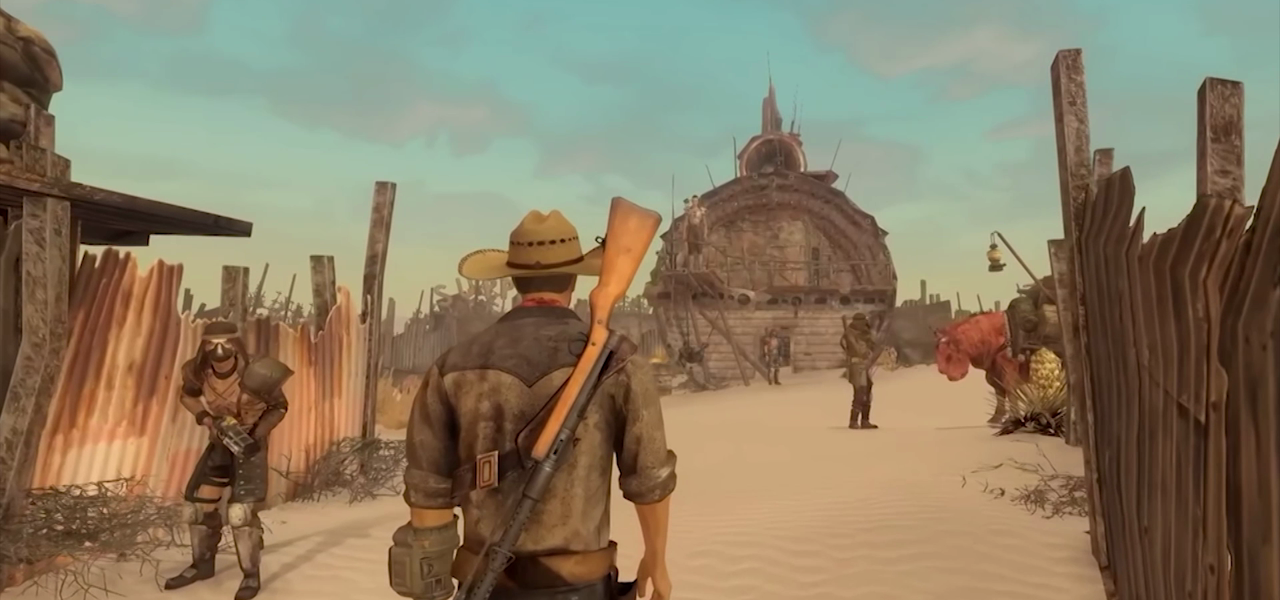
POLICY WIRE — ALBUQUERQUE, N.M. — It’s a classic narrative, isn’t it? Young, impassioned dreamers—often operating in the dim glow of too many monitors, sustained by instant noodles and sheer, unadulterated belief—attempting to mold the digital ether into something grand, something profound. New Mexico, that vast canvas of sun-baked mystique and atomic whispers, recently became the improbable stage for one such modern myth: an ambitious fan-made video game, ‘Fallout: Nuevo Mexico’, a digital love letter to the region’s spectral folklore. But dreams, especially the open-source variety, often butt up against unyielding reality. The project, after years of clandestine development and growing online chatter, has now officially entered a period of indefinite hiatus. Not with a bang, but with a shrug — and a quiet sigh of creative exhaustion.
For those uninitiated in the lore of gaming’s sprawling digital wastes, ‘Fallout’ imagines a post-nuclear America, a retro-futuristic landscape riddled with mutants, political intrigue, and wry satire. But ‘Nuevo Mexico’ wasn’t just another add-on. This anonymous team of digital artisans envisioned a game steeped in the truly eerie — cursed mines, phantom treasures, and the unnerving saga of Red Hill, a tale about a man who, after discovering a hidden fortune, barely stumbled back to civilization only to vanish forever. They called their main character ‘The Dreamer,’ a ghoul whose journey would reportedly weave through Roswell, Los Alamos, and the unsettling expanse of White Sands. Imagine that. An actual game with narrative teeth, built around legends whispered in the dry desert air, not focus-grouped to death by some corporate behemoth.
Bishop, one of the core team members who found himself inadvertently thrust into the role of spokesperson as the project gained notoriety, put it plainly, “It’s not a game for the light of heart.” He found the fledgling concept four years ago, watching it swell from a kernel of an idea into an all-encompassing, near-professional endeavor. He saw the potential, saw how it could capture the darker, less explored aspects of the American Southwest. But even the most passionate endeavors, it turns out, aren’t immune to the unforgiving march of time or—more pressingly—life. The project, Bishop confirmed to KOB 4, didn’t vanish due to a scandalous deportation rumor that rippled through forums. Nope. It just quietly withered. Like so many ambitious side projects, the cruel realities of getting older, gaining responsibilities, and maintaining an entirely volunteer, unfunded team finally took their toll.
“We’re getting older, and people change. That’s just it,” Bishop said, a pragmatic truth bomb. You don’t need an MBA to get that. Passion runs hot, but paychecks keep the lights on, don’t they? And this isn’t an isolated incident. Globally, the independent game development sector is a notoriously fickle beast. An analysis of the Steam platform in 2019, for example, showed a grim reality: only about 15% of indie games managed to break even or turn a profit. A harsh lesson for anyone banking on raw enthusiasm alone.
Because, really, this isn’t just about some fan game. It reflects a much broader phenomenon. It speaks to the ongoing struggle for regional economies, places like New Mexico, to carve out a slice of the lucrative — if volatile — tech industry pie. U.S. Senator Martin Heinrich (D-N.M.), a long-time advocate for tech growth in the state, offered a pointed assessment: “These grassroots creative efforts are where the next generation of innovators often get their start. It’s imperative we cultivate an ecosystem that can capture that energy, give it structure, and connect it to sustainable pathways, rather than see it evaporate.” Heinrich, usually measured, emphasized the need for better educational pipelines and venture capital access, particularly for underserved regions.
And it’s a conversation that echoes far beyond the arid lands of New Mexico. In places like Pakistan, for instance, where a burgeoning but still nascent gaming sector faces its own distinct hurdles of infrastructure, foreign investment, and global market penetration, the narrative of brilliant, localized, yet ultimately stalled projects is painfully familiar. Imagine the cultural wealth locked in local legends across South Asia — from the Sufi mystics of Sindh to the ancient lore of the Himalayas. Developers there face not just resource constraints, but often an uphill battle for recognition and market access against established Western studios. They’ve got the talent, sure, but the support structures? That’s another story entirely.
But the idealism remains, for Bishop anyway. He still finds value in the act of creation, the bouncing of ideas, the collaborative spark that kindles imagination. “That’s the best part,” he maintained, despite the cold silence that now hangs over ‘Nuevo Mexico’s’ digital tomb.
What This Means
The quiet dissolution of ‘Fallout: Nuevo Mexico’ is more than just a footnote in gaming history; it’s a microcosm of the global digital economy’s uneven landscape. For states like New Mexico, desperate to diversify beyond traditional industries and military contracts, nurturing indigenous tech talent is key. But without robust infrastructure – think venture capital networks, dedicated mentorship programs, and strong academic-industry partnerships – even the most passionate undertakings are destined to become casualties of the talent drain to tech hubs like Silicon Valley or Austin.
This project’s fate highlights a policy challenge: how do you translate diffuse, creative energy into sustainable economic growth? Especially when the market, as Lieutenant Governor Howie Morales (D-N.M.) noted recently, isn’t always designed for altruism. “New Mexico offers an authentic cultural depth that’s invaluable, and our policymakers are committed to ensuring these cultural narratives find avenues to the global stage,” Morales stated. “But we can’t solely rely on volunteer spirit; we need real investment, real infrastructure.” And, look, he’s not wrong. Because whether it’s a scrappy indie team in Albuquerque trying to immortalize Red Hill, or a bright startup in Karachi struggling to monetize a mobile game based on ancient Indus Valley myths, the underlying truth is brutally consistent: passion burns, but capital builds. And without capital, those local legends, those unique voices, might just stay locked away, mere whispers on the wind. AI in the Desert: New Mexico’s Quiet Battle for Digital Supremacy provides more insight into these efforts. Policy Paradox: Global Economic Pillars Falter as ‘Sure Bets’ Succumb to Volatility also speaks to the broader economic challenges.