


The £75 Million Gamble: Europe’s Titans Square Off in a Global Talent Auction
POLICY WIRE — London, UK — When does raw potential in cleats translate into a fiscal leviathan worth scores of millions? It’s a question echoing far beyond the manicured pitches of St....

POLICY WIRE — London, UK — When does raw potential in cleats translate into a fiscal leviathan worth scores of millions? It’s a question echoing far beyond the manicured pitches of St. James’ Park, reverberating through the palatial boardrooms where European football’s power brokers, eternally in pursuit of an edge, weigh ambition against stark financial realities. Right now, a particular young Englishman finds himself at the nexus of that complex equation—and a rather heated global talent auction, it seems.
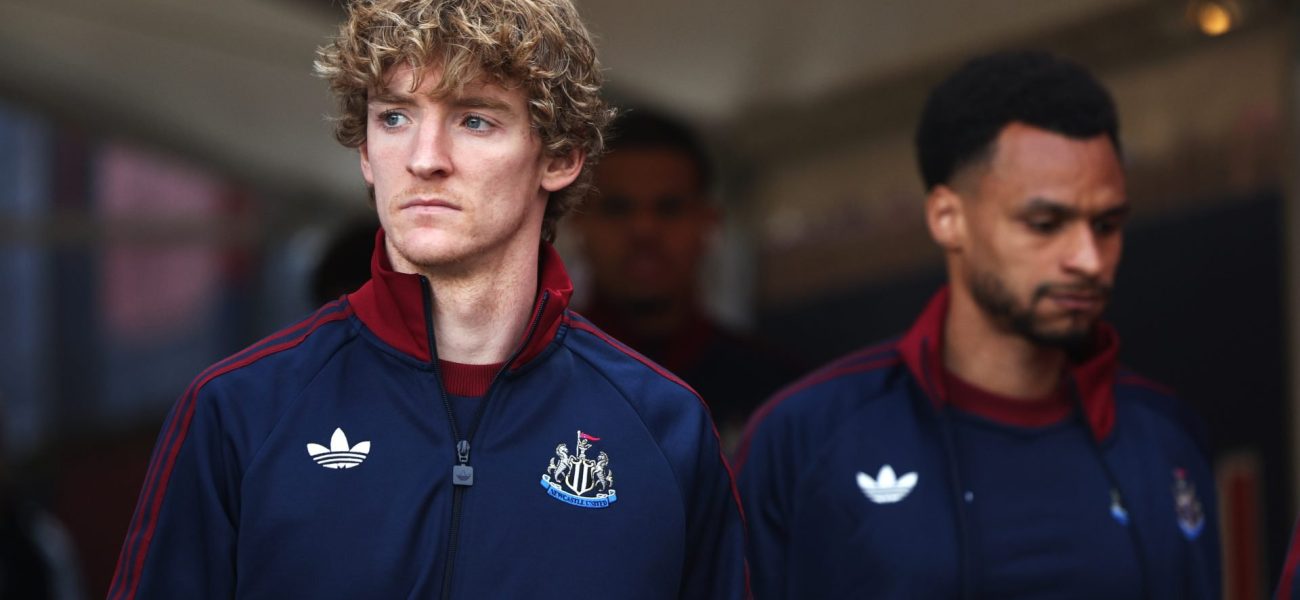
Anthony Gordon, Newcastle United’s winger, isn’t just a player; he’s rapidly become a financial cipher, an asset appraised at a cool £75 million. That number, floated by his current employers, has set off a fresh round of diplomatic negotiations in the high-stakes game of professional football, drawing in titans like Bayern Munich and Barcelona. And it’s not just about who’s faster on the ball; it’s about who blinks first in an increasingly cutthroat market.
Barcelona, fresh off another season of trying to navigate its labyrinthine balance sheets, had eyed a different English export, Marcus Rashford, to bolster its left flank. But at a reported €30 million, even that seemed a bridge too far for the Catalan giants. Now, with coach Hansi Flick presumably mapping out a leaner, meaner future, the club finds itself scrutinizing its targets with a new, less romantic eye. Their former pursuit of Rashford was more a whispered rumor, a speculative foray that fizzled into fiscal sobriety.
But that’s Barcelona, a club whose historical gravitas often masks its current economic vulnerabilities. Across the continent, in Bavaria, Bayern Munich operates with a different sort of strategic ruthlessness. They don’t just observe the market; they often dictate its terms. Sources within the Bundesliga champions confirm they’ve already opened formal discussions with Newcastle regarding Gordon, identifying him as a ‘priority signing’ capable of being a ‘differential piece’ in their tactical puzzle.
The price tag, though—the aforementioned £75 million—remains a sticking point. “We run a club, not a lottery,” Bayern’s former CEO, Oliver Kahn, is rumored to have mused privately, echoing the club’s long-standing philosophy of fiscal pragmatism. “The price must reflect reality, not speculative fever.” And one senses that sentiment holds firm even now. But they’re pushing, making clear that despite the initial sticker shock, they see genuine value, if the price drops a bit. These are clubs with global reach; their every move impacts broadcast rights from Berlin to Buenos Aires, and even generates chatter amongst the massive fan bases sprawling across South Asia, from Karachi to Dhaka, where European football commands fierce loyalty and considerable spending power on merchandise and streaming services.
“We must align our investments with our sporting philosophy and—crucially—our economic realities,” Barcelona’s President, Joan Laporta, asserted in a recent closed-door meeting, sources suggest. “We don’t chase numbers; we chase talent that fits our blueprint.” Yet, the club isn’t entirely out of the picture for Gordon, apparently valuing his aggression in the press and one-on-one prowess. They’re still lurking, assessing, ready to pounce should the Bavarians falter in negotiations or should Newcastle show any inclination to lower its asking price. Because, let’s be frank, that’s often how these high-stakes games are played.
📄 POLICY WIRE WHITEPAPER PUBLISHED: PAKISTAN'S NATIONAL SECURITY POLICY PRIORITIES
👉 READ BY CLICKING HEREThis isn’t just a contest between two European behemoths; it’s a multilateral tug-of-war. Arsenal, Chelsea, and Liverpool are also reportedly monitoring Gordon, adding layers of complexity to an already tense situation. The valuation isn’t entirely without precedent in England’s top flight. Indeed, the English Premier League spent over €2.8 billion in transfers during the 2023-24 season alone, accounting for a staggering 38% of all transfer spending by Europe’s ‘Big Five’ leagues, according to Deloitte’s Annual Review of Football Finance. That’s a lot of dough changing hands, folks, highlighting the sheer financial clout often attributed to English clubs, whether perceived or actual.
What This Means
This escalating standoff over Anthony Gordon serves as a fascinating microcosm of the broader political economy of modern football, reflecting a market where talent is commodified to astonishing degrees. It underscores the ongoing power shift, however subtle, from the traditional European powerhouses—like the financially prudent Bayern or the historically extravagant, now constrained, Barcelona—towards the revitalized English clubs, often bolstered by deep-pocketed owners or surging broadcast revenues. It’s no longer just about scouting the next prodigy; it’s about navigating complex international valuations, often inflated by scarcity and competitive bidding, a dance akin to states vying for critical resources. the fierce bidding over individual players often dictates a club’s broader economic strategy for years to come. One misstep, one overpay, and the ripple effects can echo through future transfer windows, affecting everything from squad depth to, heaven forbid, future European ambitions. It’s a game of brinkmanship, with billions riding on every dribble, every tackle, — and ultimately, every price tag. It’s a reminder that the true value of a strategic asset isn’t always immediately apparent, and its price can fluctuate wildly based on market sentiment and perceived future impact.